Sea turtles have been in our oceans for over 100 million years. They live in many different places, playing a key role in ecosystems around the world. These amazing animals need certain places to live, but they are in danger due to climate change, wildlife trade, and fishing.
Learning about sea turtles and their homes is crucial for saving them. It helps us understand why we need to protect the oceans for these creatures. By knowing where they live, we can work to keep them safe and healthy.
Understanding Sea Turtle Habitats
Sea turtles live in marine environments that are key to their survival. These places give them food and where to lay eggs. The health of these places affects sea turtles and the sea turtle ecosystem they live in. Knowing how important these places are helps us see how ocean life is balanced.
Importance of Marine Environments
Sea turtles need marine environments to survive and for the ocean’s health. They help control the numbers of their food, like jellyfish and other sea creatures. This helps keep the ocean’s balance, making it crucial to protect their homes.
Types of Habitats
Sea turtles live in various marine places, each with its own benefits. Common sea turtle habitats include:
- Shallow Coastal Waters: These areas are full of food and safe for breeding.
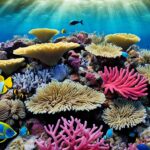
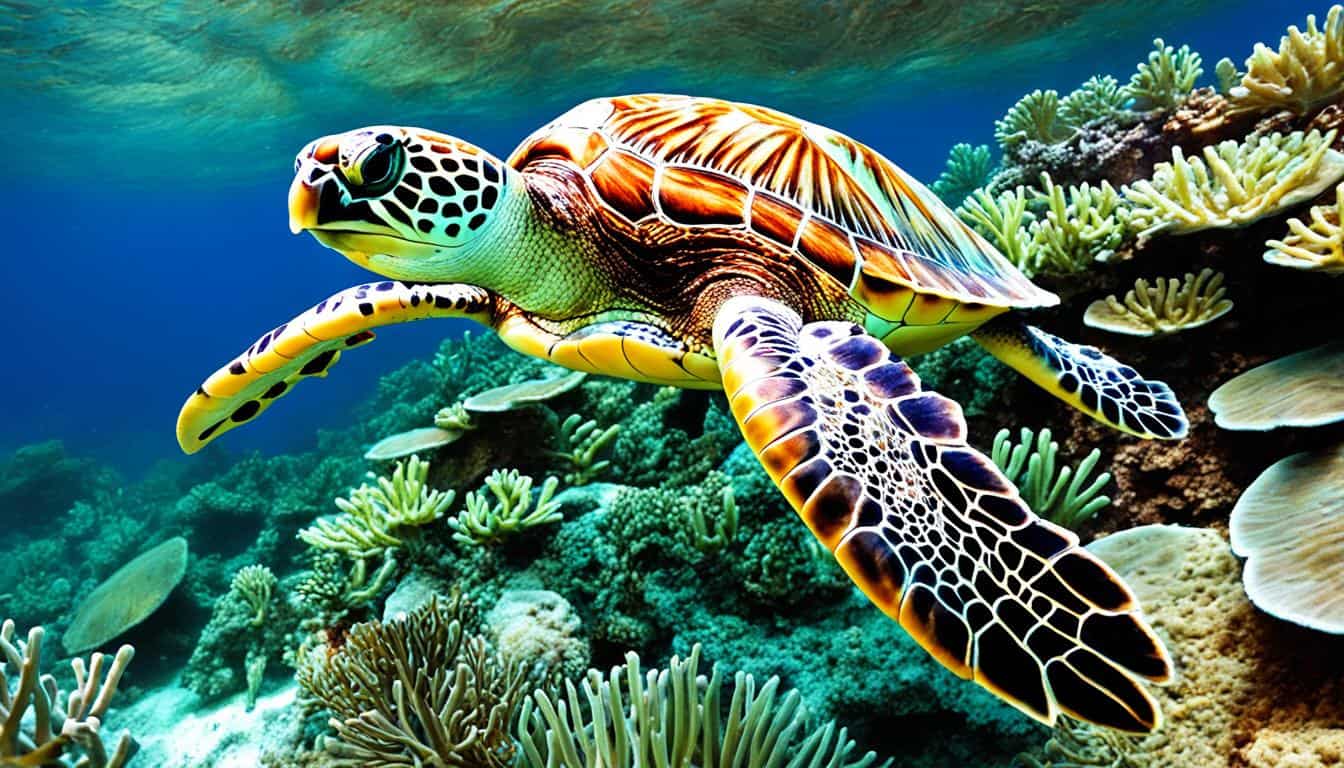
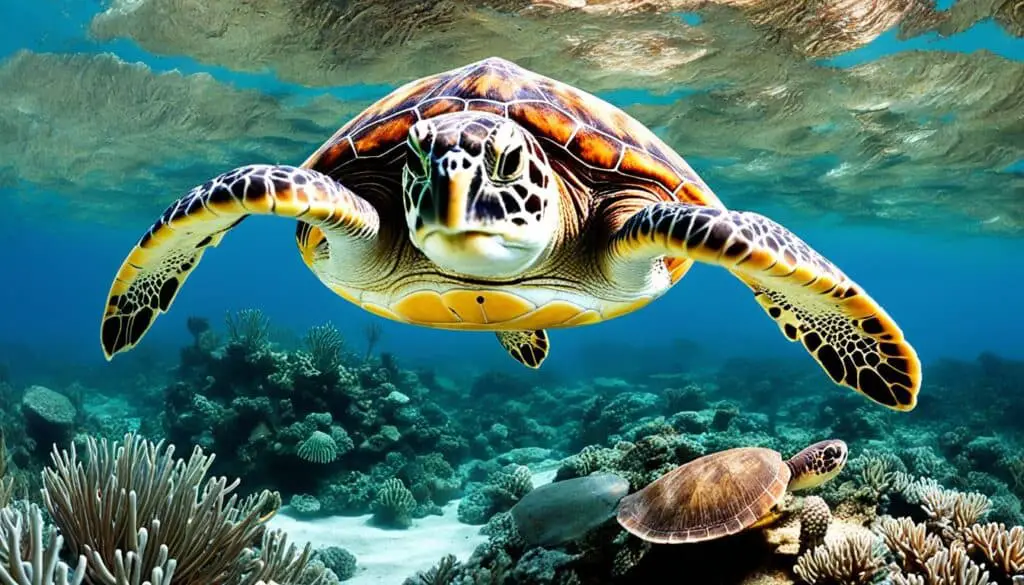
- Coral Reefs: Hawksbill turtles live here because they eat sponges.
- Seagrass Beds: Green sea turtles eat here, making it their main food spot.
- Open Oceans: Some species travel these vast waters for food and to find places to nest.
Knowing about the different habitats helps us protect sea turtles in their preferred habitats in different oceans. By keeping these places safe, we help the sea turtle ecosystem stay strong.
Where do sea turtles live?
Sea turtles live in many marine environments all over the world. They show how connected ocean ecosystems are. It’s important to protect their homes.
Geographical Distribution
Knowing where sea turtles live is key. They are found in oceans everywhere, except Antarctica. They travel long distances, from the Caribbean to North America and more. This shows why we must protect their homes and paths.
Preferred Habitats in Different Oceans
Each sea turtle type likes different places in the ocean. For instance, the green sea turtle loves seagrass beds in coastal waters. The loggerhead turtle goes further, looking for jellyfish in the Atlantic and Pacific.
Knowing where they live helps us protect them better. We can focus on saving their specific homes.
The Seven Species of Sea Turtles
Learning about the different sea turtles and where they live helps us understand their important roles in the ocean. Each of the seven types of sea turtles has its own unique traits. These traits affect where they live and what they do in their ecosystems. Here’s a closer look at each species.
Characteristics and Habitats of Each Species
| Species | Characteristics | Primary Habitat |
|---|---|---|
| Leatherback | Largest species, deep-diving, jellyfish-eater | Open ocean, deep waters |
| Green | Herbivorous, vibrant color, large body | Shallow coastal waters, seagrass beds |
| Loggerhead | Large head, strong jaws, omnivorous | Temperate and tropical waters |
| Hawksbill | Colorful shell, spongivore, reef-dweller | Coral reefs, shallow tropical waters |
| Olive Ridley | Smallest, known for mass nesting | Warm waters, coastal areas |
| Kemp’s Ridley | Rare, olive-colored, small size | Gulf of Mexico, sandy beaches |
| Flatback | Unique flat shell, primarily feeds on soft-bodied prey | Coastal waters of Australia |
The Role of Each Species in Their Ecosystem
Each type of sea turtle is vital to its ecosystem. They help keep marine environments healthy in many ways:
- Green turtles keep seagrass beds healthy, which supports many marine species.
- Hawksbill turtles eat sponges, which helps coral reefs stay strong.
- Leatherbacks control jellyfish numbers, keeping the ocean’s food web balanced.
- Loggerheads move energy through coastal ecosystems with their varied diet.
It’s important to protect these sea turtles and their homes. By doing so, we help keep the sea turtle ecosystem strong and healthy.
Nesting Sites for Sea Turtles
Nesting sites for sea turtles are crucial for their survival. These places are key for reproduction, offering safe spots for female turtles to lay eggs. Around the world, there are specific locations that are perfect for sea turtles. They have sandy beaches and stable ecosystems.
Key Locations Around the World
Some important nesting sites are found in tropical and subtropical areas. These include:
- Florida’s Atlantic Coast
- The Caribbean, particularly islands like Barbados and Bermuda
- Coastal regions of Mexico
- Hatcheries in Hawaii
- Pacific Costa Rica
These places are vital for sea turtles to thrive. Protecting these areas is key to keeping sea turtle populations healthy and diverse.
Factors Affecting Nesting Success
It’s important to know what affects sea turtle nesting success. Several things can change how successful a nest is:
- Climate Conditions – Weather and temperature can affect how turtles nest and the sex of hatchlings.
- Predation – Animals like raccoons and crabs can eat a lot of eggs.
- Human Impact – Things like coastal development and pollution can destroy habitats and disturb turtles.
Understanding these factors helps conservationists make plans to protect sea turtles. This can improve their chances of survival.
| Key Location | Species Present | Nesting Season | Conservation Status |
|---|---|---|---|
| Florida’s Atlantic Coast | Loggerhead, Green | May to October | Threatened |
| Caribbean Islands | Leatherback, Green | April to August | Endangered |
| Pacific Costa Rica | Olive Ridley | August to November | Vulnerable |
Threats to Sea Turtle Habitats
Sea turtles live in our oceans and face many threats. One big issue is losing their homes because of coastal development. Beaches are turned into vacation spots or cities, making it hard for turtles to nest.
Pollution is another big problem for sea turtles. Plastics and harmful chemicals in the ocean harm them and the ocean itself. Eating plastic can make turtles sick or even kill them. Chemicals can mess with their ability to have babies, which is bad for their numbers.
Climate change makes life harder for sea turtles too. It changes the temperature, which affects where they nest and find food. Rising sea levels also threaten their homes. We need to fight climate change to save their homes.
Illegal hunting and getting caught in fishing gear also hurt sea turtles. Supporting sustainable fishing and conservation can help. This way, sea turtles can live in a healthy ocean for a long time.
FAQ
Where do sea turtles live?
Sea turtles live in many marine places, like shallow coastal waters and coral reefs. They like warm, tropical waters. They also travel long distances for food and to nest.
What types of habitats do sea turtles inhabit?
Different sea turtles live in different places. Green sea turtles like seagrass beds. Hawksbill turtles prefer coral reefs with lots of sponges. Each type of sea turtle has its own special place to live.
What is the geographical distribution of sea turtles?
Sea turtles live in oceans all over the world. They nest on every continent except Antarctica. You can find them in the Caribbean, North America, and the Pacific and Indian Oceans.
How do sea turtles contribute to their ecosystems?
Sea turtles are very important to the ocean. For example, green turtles help keep seagrass beds healthy. These beds are important for many fish. Hawksbill turtles also help by controlling sponge populations, which is good for coral reefs.
What are some key nesting sites for sea turtles?
Important places for sea turtle nests are sandy beaches in warm and tropical areas. These include Florida, the Caribbean, and parts of the Pacific coast. These beaches are key for sea turtles to lay their eggs.
What factors affect the success of sea turtle nesting?
Many things can affect how well sea turtles nest. This includes the weather, predators, and human activities like building near the coast and pollution. Warmer sand can make more hatchlings, but human actions can lower their chances of survival.
What threats do sea turtles face in their habitats?
Sea turtles are in danger from many things. They lose their homes because of coastal building and pollution from plastics and chemicals. Climate change also affects where they nest and find food. Poaching and getting caught in fishing gear are other big threats.