Ever wondered how to tell a black bear from a grizzly? It can seem tricky because they share some traits. But, focusing on details like shoulder humps and claw lengths is key. Not only for telling them apart but also for your safety and their protection.
Understanding these key features can stop mix-ups. This is very important, especially if you’re in the wild, and when hunting bears. It’s thrilling to see bears in the wild, but being able to identify them correctly keeps you safe.
This guide will give you the lowdown on North American bears. You’ll learn the important points to separate black bears from grizzlies. Keep reading to find out how to spot them on your next trip into the wilderness.
Introduction to North American Bears
North American bears are a key part of North American wild places. They cover the land from deep woods to wide fields. Knowing them, especially grizzly and black bears, is big for keeping them safe and for staying safe yourself. It’s important to understand their unique traits. This helps in telling them apart and raising awareness about the different types.
Overview of Bear Species
Grizzly and black bears are known all over North America. Despite what you might think, their size and color don’t always help you tell them apart. Instead, you should look for things like shoulder humps or special face shapes to know which bear is which. This way, you can be more sure about who they are.
Importance of Identifying Bears
Getting bears right means you can take the right action, whether for saving them, hunting, or just enjoying the outdoors. It’s important for everyone. Accurate bear ID helps with smart choices and keeps our natural world in balance. Plus, knowing your bears can keep you safer if you meet one. This is because each type of bear acts differently, even in the same situations.
Color Variations in Black Bears
Black bears show a wide range of colors, which surprises many. This variety helps in identifying bears and seeing how special they are.
Range of Colors
Black bears come in many colors, much more than just black. They can be deep black, shining white, or even brown, blonde, and cinnamon. Notably, Kermode bears have a white coat, earning them the name Spirit bears, though they are still black bears at heart.
Color Misconceptions
Many think all black bears are black, but that’s not true. Genetic and environmental factors make black bears colorful. This mix-up can make identifying bears, especially against grizzlies, tricky. Grizzlies share some colors with black bears, making color a tricky guide for telling them apart.
| Bear Type | Color Range | Notable Examples |
|---|---|---|
| Black Bear | Black, Brown, Cinnamon, Blonde, White | Cinnamon black bears, Kermode bear identification |
| Grizzly Bear | Dark Brown to Blonde |
Grizzly Bear Color Range
The grizzly bear’s coat comes in many colors, from deep browns to almost blond. Figuring out grizzly bears by fur color alone can be hard.
Common Colors and Variations
Grizzly bears are known for their “grizzled” look. This means they have white-tipped fur, making them appear lighter. They can range from dark browns to almost golden, which makes identifying them tough.
Impact of Seasonal Changes
Grizzly bears change color and thickness depending on the season. In the summer, they shed and their coat gets lighter with sun exposure. Winter brings a denser, darker coat. This means their color alone isn’t a reliable way to identify them, so we must look at other features.
Body Size Comparison
When looking at bear species, body size is a key detail. Yet, knowing a bear’s true size in the wild is tough. This is because bear weight and height change a lot. These differences especially matter when comparing black bears to grizzly bears.
Weight and Height Differences
Black bears and grizzly bears can have similar weights. But, male grizzly bears are usually bigger, weighing 400 to 800 pounds. Male black bears weigh between 200 and 600 pounds. The size difference in female bears is less clear, showing similar weight ranges. When it comes to height, a grizzly bear might be 8 feet tall. On the other hand, a black bear is generally smaller, reaching only up to 6 feet tall.
Seasonal and Gender Variations
Estimating a bear’s size gets more complicated with the seasons. Bears bulk up before they hibernate in winter. This means a grizzly bear might look much larger in autumn. Black bears also follow this pattern. Additionally, male bears are usually bigger than female bears. This mix of seasonal and gender aspects makes it tricky to use size alone for bear identification.
Knowing the size difference between black and grizzly bears is crucial. But, it’s vital to look at other unique features for correct identification.
Identifying Characteristics of a Shoulder Hump
When telling bear species apart in the wild, their shoulder hump is key. It helps spot the difference between grizzly and black bears.
Grizzly Bear Shoulder Hump
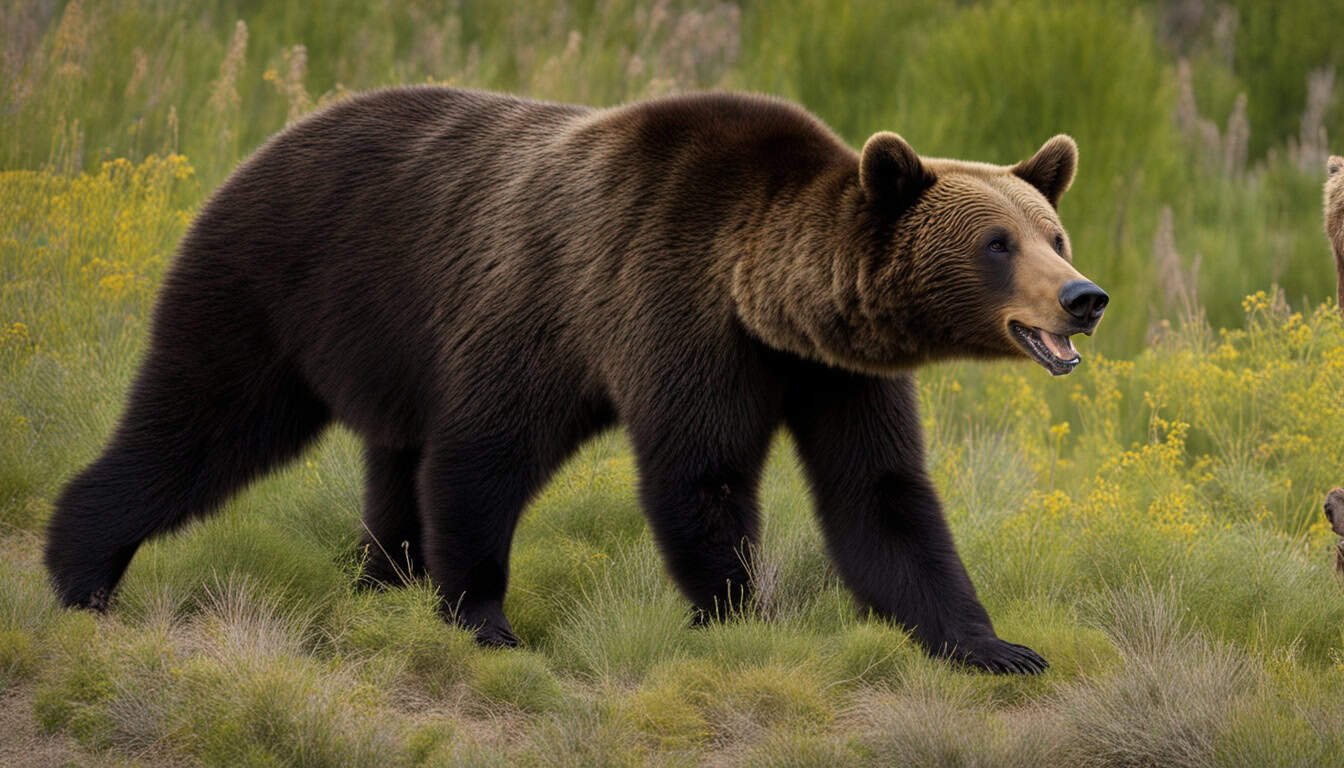
Grizzly bears have a big shoulder hump that sticks out. This hump is full of strong muscles they use for digging and power. The hump stands out and makes spotting a grizzly bear easier because they have a wider and heavier front.
Black Bear Shoulder Comparison
Black bears, however, don’t have a clear shoulder hump. The highest point on a black bear is usually in the middle of its back. Their smoother shape and less beefy shoulders make them look different from grizzlies, even though other features might confuse you.
| Feature | Grizzly Bear | Black Bear |
|---|---|---|
| Shoulder Hump | Pronounced | Absent |
| Highest Point | At the shoulders | Middle of the back |
| Musculature | Strong, developed for digging | Smoother with less muscle prominence |
If you learn about the shoulder hump, you’ll better know the different bear types. It’s a key thing in telling bears apart.
Facial Profile Distinctions
Distinguishing between different bear types involves spotting specific facial features. This skill is vital for correctly identifying bears in their natural habitat. By knowing what to look for, you can tell if a bear is a grizzly or a black bear.
Grizzly Bear Facial Features
A key feature of a grizzly bear is its distinctive face shape, which appears ‘dished’ or concave. This look is due to a slight dip between their eyes and their nose. Also, grizzlies sport smaller ears that are set farther back on their heads than black bears.
These unique characteristics are crucial. They help when the bear’s color or size doesn’t clearly match a certain type.
Black Bear Facial Characteristics
The black bear can be identified by a straight face profile. Their facial line from eye to nose is not concave like the grizzlys’. Black bears stand out with larger, more pointed ears. Using these traits is a smart way to differentiate, especially when appearance features are mix-up.
Ear Shape Differences
Knowing how ear shapes differ can help a lot in telling bears apart. Ears are easy to spot and can tell you if it’s a black bear or a grizzly.
Grizzly Bear Ear Features
Grizzly bears have small, round, and fluffy-looking ears. Understanding their ear shapes is key. It helps in noticing they don’t stand out as much. This is especially true when their ears are wet or seen from certain angles.
Black Bear Ear Comparison
On the other hand, black bears have big, upright, and sharp-pointed ears. These differences are important in telling them from grizzlies. The size and sharpness of black bear ears help make them stand out, even far away. This helps when you can’t rely on color or size alone to tell the bears apart.
The varying ear traits are quite reliable for comparing bears. They are useful in making accurate identifications of these impressive North American animals.
How do you distinguish between a black bear and a grizzly bear?
It’s vital to know how to tell black bears and grizzly bears apart. Looking at the shoulder hump is a big clue. Black bears don’t have a big hump on their shoulders. Grizzly bears do, because they need strong muscles for digging.
Face shape also helps in telling them apart. Grizzly bears have a face that caves in a bit, called a ‘dished’ profile. Black bears have a straighter face. This makes spotting the difference easier when you’re near a bear.
Grizzly bears and black bears have different kinds of claws. The claws you see on a grizzly bear are long and curve a lot. They’re perfect for digging. But black bear claws are short and sharp. They help black bears climb trees more easily.
| Feature | Grizzly Bear | Black Bear |
|---|---|---|
| Shoulder Hump | Prominent, muscle-based | Absent |
| Facial Profile | Concave (‘dished’) | Straight |
| Claws | Long, curved | Short, sharp |
Claw Length and Shape
Grizzly bears and black bears have very different claws. By looking at their claws, you can tell which bear is which. The shape and length of a bear’s claw give big clues about the bear’s species.
Grizzly Bear Claws
Grizzly bears have long, curved claws that measure 2-4 inches. These claws help them dig deep. They can get roots or make a home by digging into the ground. Grizzly bear claws are a key way of knowing if you’re identifying bear species by claws.
Black Bear Claws
Black bears have short, sharp claws. These are less than 2 inches. They are great for climbing trees. This is because black bears need to climb for food in the woods.
| Feature | Grizzly Bear | Black Bear |
|---|---|---|
| Claw Length | 2-4 inches | Under 2 inches |
| Claw Shape | Curved, suited for digging | Shorter, sharper, suited for climbing |
| Main Adaptation | Excavating, scooping out roots | Climbing trees, foraging in forests |
Bear Tracks and Footprints
Looking at bear tracks is key to telling bear species apart. Black bear and grizzly bear footprints have unique traits. By closely looking at these prints, you can tell if it was a black or a grizzly bear that went by.
Grizzly Bear Tracks
Grizzly bear prints look more square. A key feature is that a line drawn across the paw won’t touch the toes. This detail is vital for wild bear track analysis. Plus, grizzly prints often have longer claw marks, perfect for their digging habit.
Black Bear Tracks
In comparison, black bear prints are more circular. Drawing a line through a black bear’s paw pad usually touches the toes on the other side. Also, black bear tracks have shorter claw marks, good for tree climbing. Knowing these details helps in accurate bear track identification.
| Aspect | Grizzly Bear Tracks | Black Bear Tracks |
|---|---|---|
| Shape | Square | Rounded |
| Claw Markings | Longer | Shorter |
| Pad to Toes Line | Does Not Intersect | Intersects |
Learning the main differences helps spot bear tracks better. Identifying bear tracks goes beyond shape to considering the whole scene and environment. This approach is key to accurate bear tracks ID.
Behavioral Differences
Learning about how black bears and grizzly bears behave differently can help us spot them. Even though they both look for food the same way and live in similar places, there are small but important differences.
“In their interactions with humans, black bears are generally more elusive and tend to avoid confrontation, while grizzlies display more assertive behavior.”
Bear behavior comparison focuses on how they react to danger. Grizzlies like to show that they are the boss or protect their space if surprised. But black bears are more likely to run away. These clues can help us tell them apart in nature.
Bear species interactions also include how they eat. Even though they both eat the same foods, they don’t eat in the same way. Watching how they eat can give us hints about what kind of bear they are.
Here’s a table showing some key differences in their behavior:
| Behavior Aspect | Grizzly Bear | Black Bear |
|---|---|---|
| Interaction with Humans | More Territorial | More Evasive |
| Response to Threats | Defensive Actions | Flight Mechanism |
| Foraging Methods | Aggressive Scavenging | Opportunistic Feeding |
| Habitat Usage | Wide-Ranging | Localized Areas |
Habitat and Geographic Range
Black bears and grizzly bears live in different places, which helps tell them apart. Black bears enjoy forests and can live in various kinds, from pine to leafy trees. They might also be seen in swamps or even near people in the suburbs.
Grizzly bears, on the other hand, like open areas and mountains. They are often found in wild, vast lands with few people, such as the mountains or tundra. These bears need a lot of space and are at home in remote, rough places.

Both kinds of bears can be found in some of the same places, like parts of the Rocky Mountains or the Pacific Northwest. While where they live can give clues, it’s not the only way to tell them apart. Knowing about their favorite places and types of habitats is another key to knowing which bear is which.
| Feature | Black Bear | Grizzly Bear |
|---|---|---|
| Preferred Habitat | Forested areas, swamps, suburban regions | Mountains, tundra, open wilderness |
| Geographic Range | Widespread across North America, adaptable to various terrains | Concentrated in remote regions like the Rockies, Alaska, and parts of Canada |
| Range Overlap | Yes, in overlapping regions such as the Rocky Mountains | Yes, particularly in North America’s expansive wild areas |
Safety Tips for Bear Encounters
Seeing a bear in the wild is scary. But, knowing how to stay safe helps a lot. First, stay calm and check the bear out. Always keep a distance of about 100 yards. Move slowly away, without staring right at it. Looking away shows you’re not a threat.
Carrying bear spray is very smart. Make sure it’s easy to grab. Bear spray can stop an angry bear from getting closer. It gives you a chance to get to safety. Knowing bear actions is important too. If a bear stands up, it’s probably just curious, not mean.
Don’t know if it’s a black bear or a grizzly bear? Be careful and act like you’re facing a grizzly. This can be scarier than a black bear. Get big, talk loud, but don’t run. Running can make a bear think you want to play chase. Following these steps makes meeting a bear less risky. It ensures you stay safe when bears are around.
FAQ
How do you distinguish between a black bear and a grizzly bear?
Spot the difference in bears by looking at their shoulder humps, faces, and claws. Grizzly bear claws are long and curved. Meanwhile, black bears’ claws are short and sharp.
Overview of Bear Species
The bear family in North America includes black and grizzly bears. Knowing the physical traits and behaviors of each helps us identify them. This knowledge is key for their protection and our safety.
Importance of Identifying Bears
It’s crucial to tell bears apart for several reasons. First, it keeps us safe when we meet them. Second, it helps keeps bear populations healthy, especially where hunting is common.
What are the color variations in black bears?
Black bears’ colors range from black to white, including browns and cinnamons. The Kermode (Spirit) bears are unique for their white fur. Remember, a bear’s color is not always a clear clue about its type.
Are there misconceptions about black bear colors?
Many think all black bears are black. But, they can be black, white, or any color in between. This makes it tricky to tell them apart from grizzly bears sometimes.
What are common colors and variations in grizzly bears?
Grizzlies can vary from dark brown to almost blonde. Look closely – their hairs often have white tips. These variations in color can change with the season.
How do seasonal changes impact grizzly bear coat color?
Grizzly bear coats change with the seasons. They might look different shades and have white tips. This can make it hard to just rely on their color for identifying them.
How do body sizes of black bears and grizzly bears compare?
Size doesn’t often help tell bears apart. Bears’ weights and heights can overlap. Males and females and seasons play a big role in this.
What causes size variations in bears?
Gender, age, and seasonal weight changes affect a bear’s size. This makes using size for identification hard. Black and grizzly bears can be similar sizes, complicating things further.
What are the identifying characteristics of a shoulder hump?
Grizzly bears sport a big shoulder hump, useful for digging. Black bears, on the other hand, don’t have this hump. They’re highest at the middle of their backs.
How do you compare the shoulder of a black bear?
Black bears don’t show the clear shoulder hump grizzly bears do. So, if you see a bear without this hump, it’s likely a black bear.
What are the facial profile distinctions between grizzly and black bears?
Grizzly bears’ faces sink in a bit and their ears are hidden under fur. Black bears have what looks like a flat face and big, noticeable ears.
What are the distinctive facial features of a grizzly bear?
A grizzly bear’s face looks sunk-in with hidden ears. It differs from a black bear that has a flatter face with more obvious ears.
What are the facial characteristics of a black bear?
Black bears have a flat face profile with large, pointed ears. This differs from the grizzly bear’s sunken face and less prominent, small ears.
How does ear shape differ between black bears and grizzly bears?
Grizzly bears have small, round ears which sometimes look fluffy. Meanwhile, black bears have big, erect ears that point out, making them look bigger.
What are the ear features of grizzly bears?
Grizzly bear ears are small and cute, in a way. They appear rounder than those of black bears. This can help you if you’re trying to figure out which bear it is.
How do the ears of black bears compare to grizzly bears?
Black bears’ ears are quite distinct. They are large and stand out a lot more. This is different from grizzly bears, who show smaller, tamer-looking ears.
What are the claw differences between black bears and grizzly bears?
Grizzly bears have long, curvy claws for digging. Black bears, meanwhile, have short, sharp claws for climbing trees. These claw differences are key in telling bears apart.
What are distinctive features of grizzly bear claws?
A grizzly bear’s claws are long and curved for digging. These claws, 2 to 4 inches in length, stand out as a differentiating factor from black bears’.
How do black bear claws differ?
Black bear claws are short and sharp, made for climbing. This is unlike grizzly bears, which have claws meant for other activities like digging.
How can you differentiate bear tracks?
Grizzly bear tracks look more square, with a unique pad alignment. On these tracks, a line won’t touch the toes. Black bear tracks are more circular, with claw marks that might touch the toes.
What are characteristics of grizzly bear tracks?
Grizzly bear tracks seem more square due to their paw alignment. If you draw a line across, it won’t reach the toes. Their claws also tend to leave longer marks than black bears do.
How do black bear tracks differ?
Black bear tracks are usually rounder, with a line often touching the toes. Their claws leave shorter marks. This differs from grizzly bears, whose tracks have longer claws imprints.
Are behavioral differences reliable in identifying bear species?
Black bears and grizzlies may act similarly, but small behaviors can help tell them apart. Still, looking at their physical traits is the best way to know who is who.
Do grizzly and black bears have different habitats and geography?
Grizzly bears prefer open mountain areas, while black bears favor forests. Their territories sometimes overlap. Thus, their living places aren’t always a clear sign of their type.
What should you do in a bear encounter for safety?
Keep your distance and don’t panic. Slowly back away from the bear. It’s wise to have bear spray with you. If uncertain of the bear type, treat it like it could be a grizzly bear.