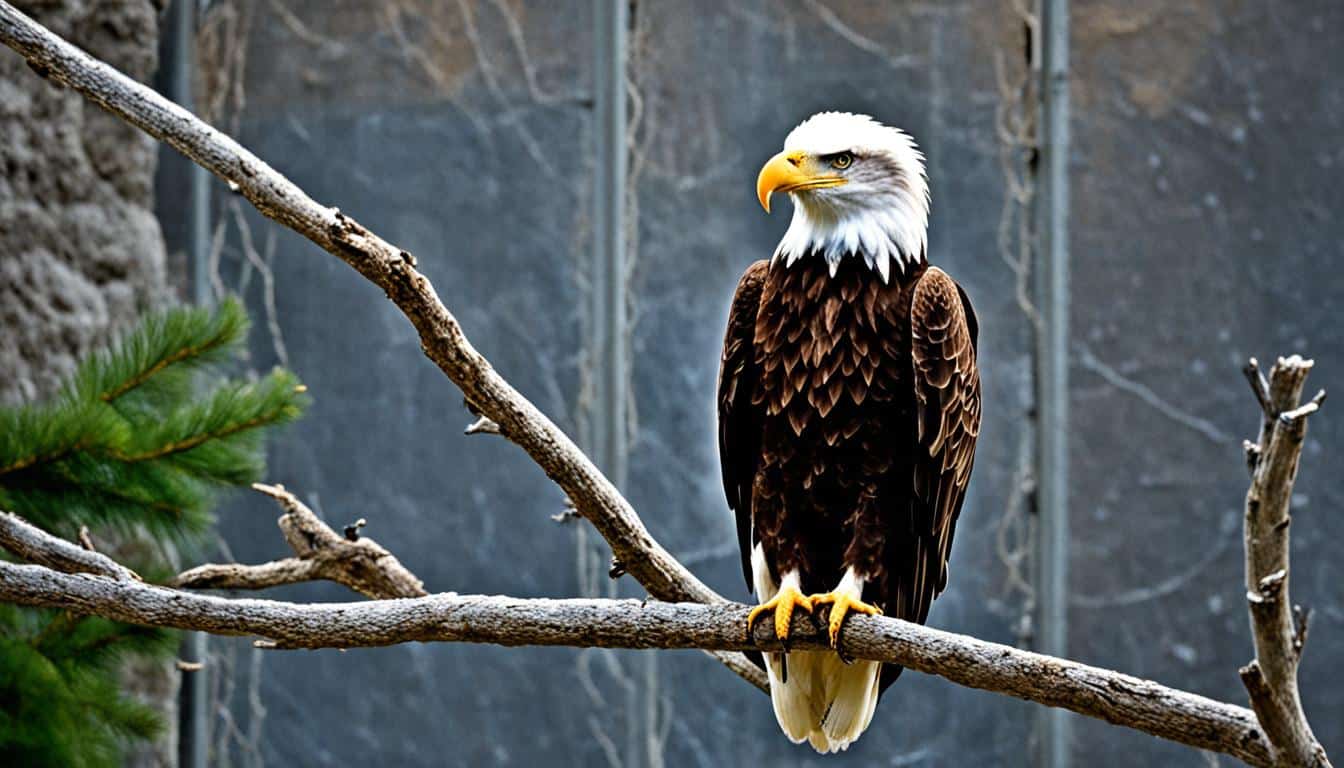
Generally, bald eagles in captivity live longer than those in the wild. Wild eagles usually live for 20 to 30 years. Yet, in captivity, they can live up to 50 years. This is because they are protected from dangers like diseases and predators.
Additionally, wild eagles face threats that can be deadly, especially when they are young. These risks are lower in a controlled environment. So, captivity becomes a place where these amazing birds can not only survive but also grow old.
This shows how important it is to protect eagles. When we take care of them properly, they can live much longer. These efforts point to the value of conservation. By protecting eagles, we also protect a piece of our natural world.
Introduction to Bald Eagles
The bald eagle is a famous symbol of the United States. It’s a large, majestic bird of prey found in North America. These birds live in many different places, from Alaska and Canada to Florida and California. Bald eagles like to be near water and forests. This helps them find food easily and build their nests.
Bald eagles mostly eat fish, but they will also eat dead animals and smaller prey when they find them. In their natural homes, they face challenges that affect how long they live. Despite being at the top of the food chain, they deal with dangerous environments and threats from humans.
Looking at the lifespans of bald eagles, we see a big difference between being wild and in captivity. Even though they face tough situations in the wild, they can live a long time. But, in places like zoos where they are cared for, they can live even longer. Some have lived for many years, showing how well they can do with human help.
Natural vs. Captive Lifespan of Bald Eagles
In the wild, bald eagles usually live between 15 and 30 years. This is because their early years and the dangers in their environment affect them greatly. But, when they’re in captivity, these eagles can live from 30 to 50 years. This is thanks to being away from threats and getting regular care from people.
| Lifespan Aspect | Wild Bald Eagles | Captive Bald Eagles |
|---|---|---|
| Average Lifespan | 15 to 30 years | 30 to 50 years |
| Key Threats | Predation, Environmental Hazards | None |
| Care Factors | Natural Diet, Wild Environment | Regular Feedings, Veterinary Care |
Comparing how long natural lifespan of bald eagles is to their captive life is eye-opening. It shows us the huge impact of stable environments and human help on their life span. This clearly shows how much controlled settings can help these amazing birds live longer.
Factors Influencing Lifespan in Captivity
Several factors play a big role in the lifespan of a bald eagle in captivity. Knowing these key points can ensure these beautiful birds live long and healthy lives.
Diet and Nutrition
A vital part of caring for captive bald eagles is their food. They are given a diet much like what they find in the wild. This includes fish, rats, and mice. Offering the right meals keeps them strong and healthy. It meets their needs as carnivores.
Veterinary Care
Captive bald eagles need regular visits from avian vets. These professionals check the eagle’s health, treat any diseases, and give vaccines. This expert care catches health issues early, helping the eagles live longer.
Living Conditions
It’s crucial to give captive eagles a home that feels like the wild. This means providing tall nest eyries and enough room to fly. Such an environment makes them feel secure and happy. It’s part of ensuring they thrive in captivity.
Comparison of Lifespan: Wild vs. Captivity
Bald eagles live longer in captivity than in the wild. This shows how important it is to understand why. Knowing this helps in their protection, keeping them part of our world.
Threats in the Wild
In the wild, bald eagles face many dangers. They can get hurt by chemicals, electric wires, and hitting buildings. Then, sicknesses like West Nile Virus and bird flu are big threats, making it hard for them to survive. They also have to fight for places to live and food.
Wild bald eagles need to deal with a lot of threats, making their survival a big challenge.
Protected Environment in Captivity
On the other hand, eagles in captivity are safe from these dangers. They get regular care and have enough food without worrying about predators. So, they usually live longer and healthier lives than those in the wild.
| Lifespan Aspects | Wild Bald Eagles | Captive Bald Eagles |
|---|---|---|
| Average Lifespan | 20-30 years | 30-50 years |
| Food Supply | Varied, dependent on prey availability | Consistent, regulated diet |
| Health Risks | Diseases, injuries, environmental toxins | Regular check-ups, prompt treatments |
| Mortality Rate | High, especially in the first year of life | Low, due to protective care |
| Environmental Threats | Electrocution, collisions, habitat destruction | Protected from natural and man-made threats |
This big difference shows how important it is to protect them. Knowing both sides helps us understand and support their survival.
Captive Breeding Programs
Captive breeding is crucial for saving birds like the bald eagle. It helps increase their numbers and ensures their future.
Goals of Captive Breeding
The main goals of eagle breeding include making their genes stronger, growing their population, and helping their recovery succeed. It’s important to keep a wide variety of genes to avoid problems from inbreeding.
Challenges Faced
Yet, there are tough challenges in these programs. Keeping genetic variety can be hard but is key to long-term health. It’s also a challenge to get the birds to mate naturally in captivity. This is because they need specific conditions to start a family.
Finally, getting the young birds ready for the wild is a big step. They must learn how to live and thrive once released, creating more challenges for their conservation.
Role of Zoos and Wildlife Rehabilitation Centers
Zoos and wildlife centers are key in keeping bald eagles safe. They help hurt eagles by giving them medicine and a safe place to live. These places do more than just take care of the birds. They teach people how important it is to protect the eagles and their homes. This is the role of zoos in conservation.
Wildlife centers are leaders in bird care. They make sure saved eagles feel better and have a good life. Their main goal is to keep bird species healthy and strong for years to come.
In addition to helping eagles, these places teach the public. They use fun displays and campaigns to help people learn more about nature. This knowledge makes people want to help the birds more and do things to keep their homes safe.
Impact of Human Activities on Bald Eagle Lifespan
Human actions greatly affect the life and health of bald eagles. Lead poisoning in eagles stands out as a top threat. This comes mainly from bullets and fishing gear. It causes serious problems in the eagles’ brains and often death. It’s crucial to support conservation of bald eagles to counter this threat.
Pollution
Pollution is a significant issue for the eagles, harming their numbers. Chemicals in the water and soil cause problems with eagles having babies and fighting sickness. These can make them live shorter lives.
Conservation Efforts
It’s key to work on saving the eagles from our harm. Using non-lead ammunition and fishing gear is a big step to stop lead poisoning. Plus, making and protecting their homes is vital for conservation efforts.
Advocacy and Education
Spreading the word and teaching others are very important in saving the eagles. Ads about the dangers of lead and losing homes can shake people into better choices. Asking for safer options and teaching the value of saving eagle spots are ways to go.
| Issue | Impact on Eagles | Conservation Actions |
|---|---|---|
| Lead Poisoning | Neurological damage, often fatal | Promote non-lead ammunition and tackle |
| Water Pollution | Reproductive issues, weakened immune system | Implement stricter pollution controls, habitat restoration |
| Habitat Destruction | Loss of nesting and feeding areas | Protect and restore natural habitats |
Health Issues in Captivity
Taking care of bald eagles in captivity means dealing with many health issues. Making sure they get the best care is key for their wellbeing.
Common Diseases
Bald eagles can get sick from various avian diseases when in captivity. Avian pox, a viral disease, can cause blindness and beak changes. Aspergillosis, caused by mold, and West Nile Virus, affecting the nervous system, are also serious. It’s crucial to watch out for these diseases.

Preventive Measures
Keeping eagles healthy involves several steps. They should have regular check-ups by eagle vets. Vaccines and controlling parasites are important to ward off diseases. Good cleaning and control of the environment also help avoid sickness.
Medical Interventions
Swift action is necessary when eagles get sick or hurt. Wildlife vets are skilled in treating them. They use a variety of methods, from surgeries to long-term care plans, to help eagles stay healthy.
| Aspect | Details |
|---|---|
| Common Diseases | Avian Pox, Aspergillosis, West Nile Virus |
| Preventive Measures | Regular Check-ups, Vaccinations, Parasite Control, Hygiene Practices |
| Medical Interventions | Emergency Treatments, Surgeries, Long-Term Management |
The Role of Diet in Extending Lifespan
The lifespan of bald eagles is greatly affected by their diet and how they eat. It’s key to know how important a balanced diet is for their health. This is true for eagles living in the wild and those in captivity.
Natural Diet
In the wild, bald eagles mainly eat fish. But they also eat small animals, birds, and dead animals. This mix gives them all the vitamins and minerals they need to be healthy. The wild is full of these foods, which keeps them well.
Captive Diet
Eagles in captivity have their diet carefully watched and planned. Their food is made to be just like what they would eat in the wild. It includes fish, rats, and other small creatures. This special diet helps them live longer and healthier lives in captivity.
Feeding captive eagcles right means thinking hard about what they need to eat. Knowing how much food and how often to give it to them is very important. This care helps them stay in good shape even without their natural home.
The Importance of Environmental Enrichment
Creating an enriching environment for bald eagles is critical for their well-being. It keeps them both physically and mentally healthy. This includes providing a setting that mirrors their natural surroundings.
Physical Enrichment
Eagles need physical exercise to stay healthy. To help with this, their living space should include items like high perches and water features. These elements let the eagles act as they would in the wild, promoting a better life.
Mental Stimulation
Keeping the eagles’ minds active is as important as their bodies. They benefit from solving problems or working for their food. Toys and different materials for nesting help keep their minds sharp, much like in nature.
Success Stories of Long-Lived Bald Eagles in Captivity
Several captive bald eagles have lived a long time, symbolizing success in eagle conservation. These birds show that with the right care, they can live longer than expected.
‘Patriot’ was a female eagle at the Chattahoochee Nature Center in Georgia. She lived for over 40 years, proving that careful attention in captivity is key.
‘Maggie,’ from the World Bird Sanctuary in Missouri, lived into her 30s. Her long life is a prime example of how eagles can do well under human care.
- Patriot: Over 40 years at the Chattahoochee Nature Center
- Maggie: Well into her 30s at the World Bird Sanctuary
These eagles show that good conservation works. Their lives teach us how to care for eagles and help them live longer.
“The longevity of these eagles in captivity is a powerful reminder of what dedicated conservation efforts can achieve,” said one wildlife expert.
Their success highlights the need for ongoing care programs. They prove that with the right care, eagles can thrive for many years.
Conclusion
Understanding the lifespan of a bald eagle is key for their survival. It’s crucial to know how they live both in the wild and in captivity. This shows us why things like their diet, health care, and where they live matter so much to how long they live. In the wild, many dangers can cut short a bald eagle’s life. Pollution and other animals can be serious threats. But, when they live in a place where they are taken care of, they can live much longer. Some have even lived more than 50 years.
Keeping bald eagles safe is a big job that involves many steps. This includes the work of zoos, wildlife hospitals, and places that help them have babies. These places look after eagles that are hurt or can’t go back to the wild. They also teach people about why eagles are important to save. And don’t forget, making sure these birds have challenging and fun lives helps keep them healthy. This is done by making their living spaces stimulating, like their natural homes.
Everyone plays a part in making sure bald eagles have a future. Efforts to stop pollution and use safer bullets are important. These things make the eagles’ world safer to live in. Understanding how to help and taking action can lead to a brighter future for these birds. With everyone working together, we can make sure bald eagles keep soaring for many years to come.
FAQ
What is the lifespan of a bald eagle in captivity?
In captivity, a bald eagle can live from 30 to 50 years. They enjoy regular feeding and healthcare. Also, they’re safe from their usual predators. This is longer compared to those living in the wild.
What is the natural habitat of bald eagles?
North America is where you find bald eagles. They live in places from Alaska to Canada and down to Florida and California. You’ll see them near open water, perfect for hunting their main food.
How does the lifespan of bald eagles in the wild compare to those in captivity?
Wild eagles usually live 20 to 30 years. The risks they face make their lives shorter. But, in captivity, they might live an amazing 50 years. This is because they’re well taken care of and protected.
What factors influence the lifespan of bald eagles in captivity?
Health and happiness are key for captive eagles. They need good food, regular check-ups, and an environment like their natural home. This makes them feel safe and well.
What threats do wild bald eagles face?
Wild eagles deal with many dangers. These include poisons, getting hurt by power lines, and diseases. They also compete with other eagles for food and places to live.
What are the goals of captive breeding programs for bald eagles?
Captive programs work to help more eagles live. They also want to mix different eagle families to keep them healthy. Some of their baby eagles are set free to help the wild eagle population grow.
How do zoos and wildlife rehabilitation centers contribute to the conservation of bald eagles?
Zoos and centers help sick or hurt eagles get better. They also keep eagles that can’t go back to the wild safe. Plus, they teach the public how to help protect eagles.
How do human activities impact the lifespan of bald eagles?
People’s actions, like making the environment dirty, using harmful bullets, and destroying where eagles live, are very bad for eagles. Working to protect the environment is key to helping eagles live longer.
What common diseases do bald eagles face in captivity?
Bald eagles might get sick from avian pox. This can make them blind or have strange beaks. It’s vital to check them often and keep them from getting sick.
How important is diet in extending the lifespan of captive bald eagles?
Eating the right food, like they would in the wild, is very important. Good feeding practices can help eagles live a long time. This is key to their health and lifespans in captivity.
What role does environmental enrichment play in the welfare of captive bald eagles?
Making sure eagles have things to do is good for their minds and bodies. It helps them stay happy and healthy. This includes playing and using their hunting instincts.
Can you provide examples of long-lived bald eagles in captivity?
Some eagles have lived a really long time in captivity. They show that with good care, eagles can live beyond expectations. Studying these birds is helpful for eagle care and understanding.