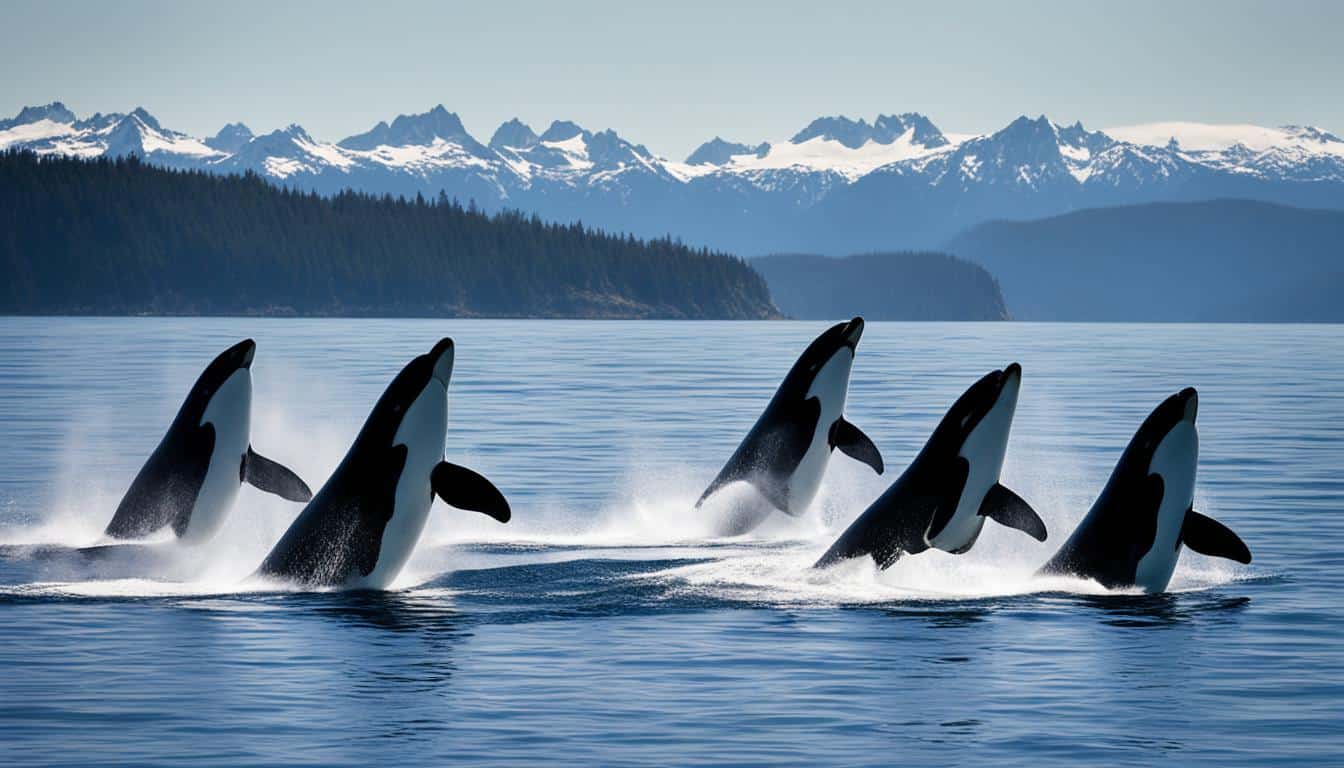
Have you ever wondered what are orcas? Often called killer whales, orcas are the biggest dolphins. They are known for their smarts and how they live together. They are called Orcinus orca and are easy to spot with their black and white look.
Learning about orcas helps us understand their many behaviors, looks, social lives, and what they eat. They are among the ocean’s top predators. As you learn more about orca whales, you’ll find out interesting Orcas facts. These facts show how important they are to the ocean’s balance.
Introduction to Orcas
Orcas, also known as killer whales, are incredibly smart and have complex social lives. They live in many different places, from the cold Arctic to warm temperate seas. This shows how well they can adapt to various environments.
Types of Orcas
Scientists have found different types of orcas, each with its own way of living and eating. Knowing about these types helps us understand how they interact with their world.
| Type of Orca | Dorsal Fin Shape | Primary Diet | Typical Habitat |
|---|---|---|---|
| Resident | Rounded | Fish (especially salmon) | Coastal areas |
| Transient | Straighter | Marine mammals | Near shore |
| Offshore | Variable | Various prey | Open waters |
These different types of orcas show how adaptable they are. Each group has its own way of surviving and communicating in its habitat. They learn from each other, making their social lives richer.
What are orcas?
Orcas, also known as killer whales, are amazing marine mammals in the dolphin family. They are not all the same species but have different subspecies, each suited to its home. They live in pods, which are like big families that work together when hunting.
One cool thing about orcas is what they eat. They can have fish, squid, seals, or other sea mammals in their diet. This shows they are top predators with many hunting styles, similar to wolves.
Orcas are smart and can talk to each other in their own way. They use echolocation to find their way and hunt. Their talks with each other help them stay connected in their groups. Learning about this shows how complex orcas are and their importance in the ocean.
Physical Characteristics of Orcas
Orcas are known for their big size and eye-catching looks. Males are usually 20 to 26 feet long and weigh more than 6 tons. Females are a bit smaller. These Orca species have a black-and-white look that helps identify them. Each orca has its own unique white patterns, making them easy to tell apart.
Adult males stand out with their tall dorsal fins, reaching up to 6 feet high. Females have more curved fins, showing the differences between males and females. Orcas also have big teeth, up to 4 inches long. These teeth help them catch and hold onto their prey, making them top predators in the ocean.
Orcas Behavior and Social Structure
Orcas show complex behavior, shaped by their social setup. They live in family groups called pods, which provide stability and a way to interact. In these pods, orcas use sounds to talk to each other, sharing info, feelings, and warnings.
The way orcas hunt is shaped by their social groups. Each pod has its own hunting style, suited to their area and the animals they hunt. This teamwork makes them better hunters and shows how they can change their ways based on their surroundings.
Orcas in pods form strong bonds that last a lifetime. These bonds help create complex social lives, where members learn from each other and share behaviors over time. This shows how important orcas’ social life is to their identity as smart ocean creatures.
Orcas Habitat and Distribution
Orcas live in a wide range of marine environments. They can be found from the icy Arctic to warm, tropical waters. This shows how adaptable they are to different conditions. Their homes are all over the world’s oceans, leading to varied local populations.
The Orcas habitat changes a lot because of their needs and the food they find. Some pods live in coastal regions, hunting near the shore. Others prefer deeper waters for a richer variety of marine life. This flexibility makes orcas key players in their Orcas ecosystem.
Changes in the environment, like temperature changes, pollution, and overfishing, affect where orcas live. These changes can impact their survival and how they behave and live together. Knowing about these changes helps us understand how orcas adjust to their changing homes.
Diet of Orcas
Orcas have a complex diet that shows their diverse roles in the ecosystem. They change their eating habits based on their surroundings. This shows their smartness and how they learn from each other.
Resident orcas love to eat fish, especially salmon. They have learned hunting strategies over generations. These strategies are passed down, showing how they hunt together.
Transient orcas eat marine mammals like seals and whales. They hunt together using complex methods. This requires a lot of teamwork.
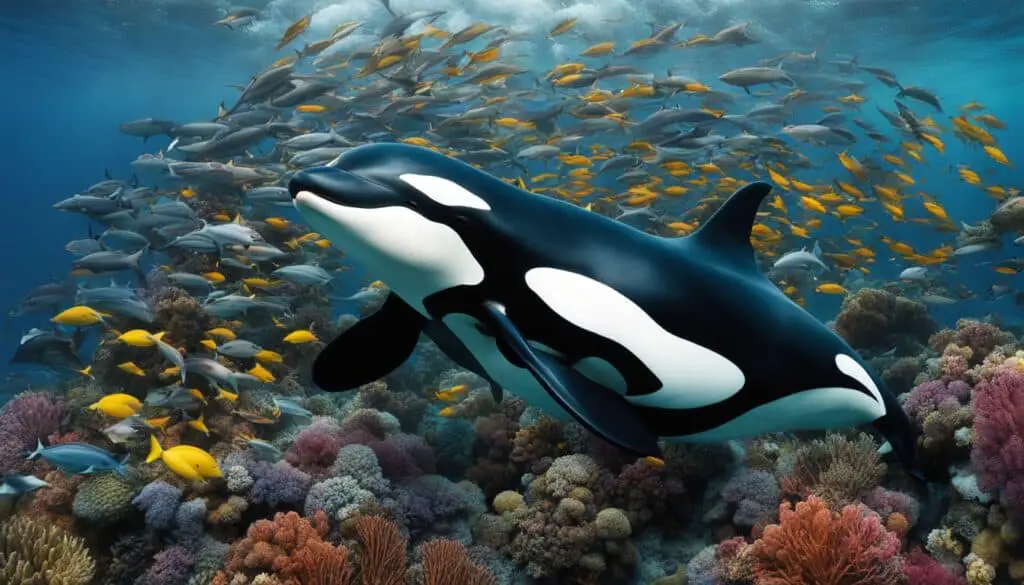
Here is a comparison of the dietary preferences of different orca populations:
| Orca Type | Main Diet | Hunting Techniques |
|---|---|---|
| Resident Orcas | Fish, particularly salmon | Group hunting, echolocation |
| Transient Orcas | Marine mammals (seals, other whales) | Stealth, ambush tactics |
Some orcas have special diets that show their unique ways of living. These special diets help them fit in with their groups. It shows how they learn from each other to survive.
Conservation Status of Orcas
Orcas, also known as killer whales, face many threats. These threats have led to different conservation statuses for their populations. The International Union for Conservation of Nature (IUCN) says some populations are endangered. This shows we need to act fast.
The main challenges orcas face include losing their homes, pollution, and less food. These issues directly impact their survival and health.
Special attention is given to the Southern Resident orcas in North America. They are listed as endangered under the Endangered Species Act. This highlights how vulnerable they are. It’s crucial to have conservation efforts in place for these orcas.
The decline of the Southern Resident orcas is a wake-up call. It shows us the urgent problems these marine animals are facing.
To help orcas, conservation efforts are being made. These efforts aim to protect their health and resilience. By preserving their habitats, reducing pollution, and promoting sustainable fishing, we can help orcas thrive in the wild.
Protecting their homes also helps orcas at risk and keeps marine environments balanced. This is good for orcas and the ocean as a whole.
FAQ
What are orcas?
Orcas, also known as killer whales, are the biggest dolphins and top ocean predators. They are classified as *Orcinus orca*. They stand out with their black-and-white look.
What types of orcas exist?
There are three main orca types: Resident, Transient, and Offshore. Each type looks and eats differently. Resident orcas eat fish, Transient orcas go for marine mammals, and Offshore orcas live in deep waters.
What is the social structure of orcas?
Orcas live in groups called pods, which can have up to forty members. These pods are like big families. They have strong bonds, talk to each other, and pass on knowledge to each other.
What do orcas eat?
Orcas eat a lot, depending on where they live. Resident orcas like fish, especially salmon. Transient orcas eat seals and other sea mammals.
Where do orcas live?
Orcas live in oceans all over the world, from cold Arctic to warm tropical waters. They change their behavior based on where they are and what they can eat.
How do orcas communicate?
Orcas talk to each other with clicks, whistles, and pulsed calls. These sounds help them in their social life, hunting, and working together in groups.
Are orcas endangered?
Yes, some orcas are endangered because of habitat loss, pollution, and less food. The Southern Resident orcas in North America are especially at risk. They are protected by law.
What are some interesting facts about orcas?
Orcas are smart, live up to 90 years, and have complex social lives. They hunt in smart ways. Their black-and-white look helps people tell them apart.