
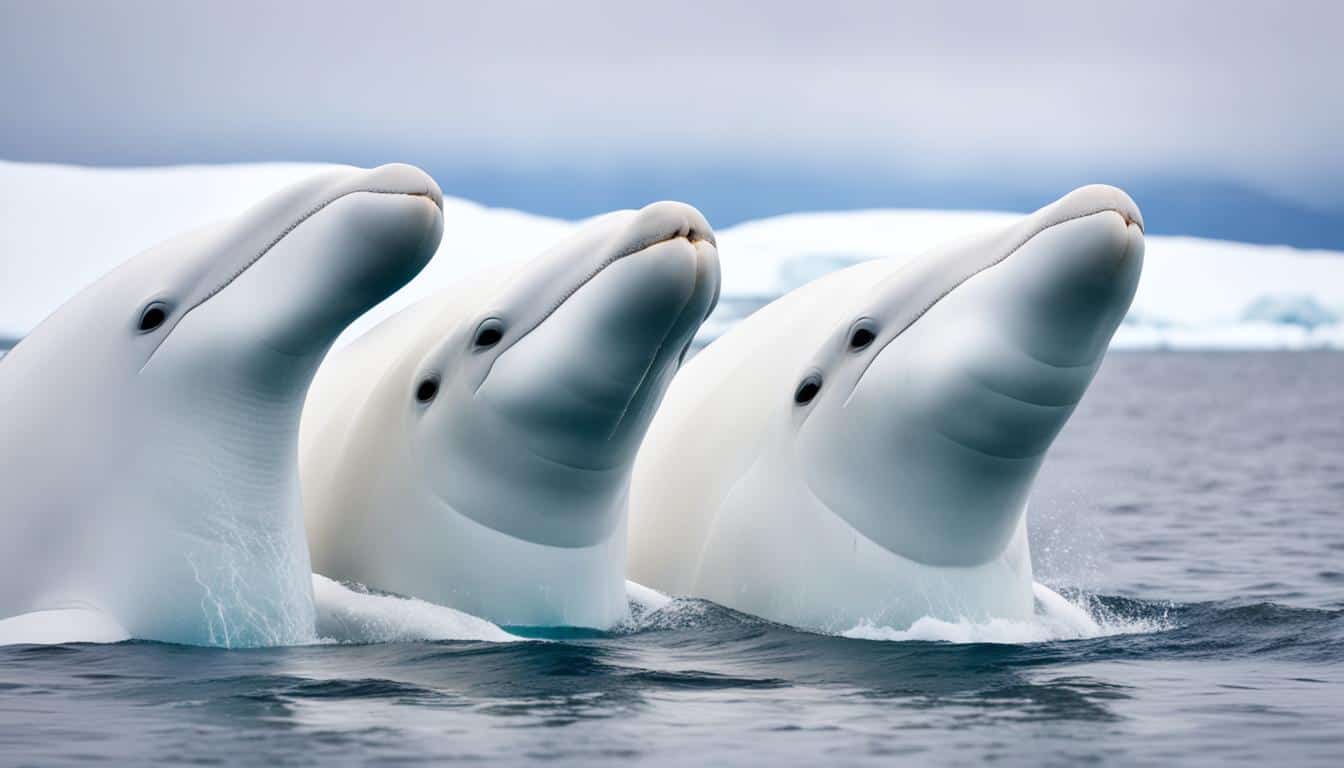
Beluga whales are amazing marine mammals known for their white color and social nature. They are often called the “white whale.” The scientific name for them is Delphinapterus leucas. These creatures live in the Arctic and sub-Arctic regions, enjoying the cold ocean waters.
Belugas can grow from 13 to 20 feet long and weigh 1,000 to 1,500 pounds. They can live up to 50 years in the wild. One of their unique features is their flexible necks, which let them turn their heads in any direction.
Introduction to Beluga Whales
Beluga whales live in the cold waters of the Arctic and sub-Arctic. They have white skin that helps them blend in with ice and snow. Their unique look lets them survive in tough places.
Beluga whales stick together in small groups called pods. They talk to each other with clicks, whistles, and creaks. This helps them stay connected and find their way in icy waters. They seem smart and love to play with each other.
Learning about beluga whales shows us how important their home, food, and safety are. Climate change and human actions threaten their homes. We need to know about these threats to help them.
| Beluga Whale Facts | Beluga Whale Behavior |
|---|---|
| Color: White or gray | Highly social, often found in pods |
| Size: Up to 20 feet long | Use a variety of vocalizations |
| Habitat: Arctic and sub-Arctic waters | Engage in play and social activities |
| Diet: Primarily fish and marine invertebrates | Show evidence of problem-solving abilities |
What are beluga whales?
Beluga whales are amazing marine mammals with a unique look and voice. Learning about their scientific names and common names helps us appreciate them more.
Scientific Classification
Belugas are classified in the kingdom Animalia, phylum Chordata, and class Mammalia. They belong to the order Artiodactyla, infraorder Cetacea, and family Monodontidae. Their genus is Delphinapterus and species D. leucas, named by Peter Simon Pallas in 1776. This classification shows their evolutionary links and their role in the ecosystem.
Common Names and Nicknames
People often call belugas “white whales” because of their pale skin. They’re also called “sea canaries” for their wide range of sounds. These names highlight their special traits and how they live in the sea. For instance, their lack of a dorsal fin helps them move easily in icy waters, showing how they’ve adapted to the Arctic.
Beluga Whale Habitat
Understanding where beluga whales live is key to knowing these amazing sea creatures. They live in Arctic and sub-Arctic waters. These places have the right conditions for them to survive and have babies. Their home range is crucial for their way of life and how they move around.
Geographical Range
Beluga whales live in the cold waters of the Arctic and sub-Arctic. You can find them near Alaska, Canada, Greenland, and parts of Russia. They are very flexible and move in big groups south when the sea ice comes. They go back to their summer spots when the ice melts, showing they need certain seasons.
Environmental Preferences
The home of beluga whales is icy waters, shallow coasts, and estuaries. These places are perfect for breeding and finding food. They like areas with holes for breathing and lots of food. Shallow waters also keep them safe from predators, making these places ideal for them.
Beluga Whale Diet
Beluga whales have a varied and interesting diet. They eat a wide range of foods, changing what they eat with the seasons. This helps us understand how they live and survive in the Arctic.
Feeding Habits and Patterns
Beluga whales are skilled at finding food. They dive deep, using echolocation to find their prey in dark waters. This skill lets them catch food efficiently. Their diet changes with the seasons, depending on what food is available.
Prey Types
Beluga whales mainly eat:
- Fish (e.g., Arctic cod, flatfish)
- Crustaceans (e.g., shrimp, crabs)
- Various invertebrates
This variety of food helps them get the energy they need to live in cold water. Belugas can change their diet and eating habits to survive. This shows how adaptable and resourceful they are.
| Prey Type | Example Species | Feeding Season |
|---|---|---|
| Fish | Arctic Cod | Year-round |
| Crustaceans | Ghost Shrimp | Summer |
| Invertebrates | Sea Urchins | Spring |
Beluga Whale Behavior
Beluga whales live in groups, showing off their social nature. They form pods that make their lives interesting and unique. By studying their behavior, we learn a lot about how they talk to each other.
Social Structure and Pods
Beluga whales have a complex social life, with strong family ties. Their groups, or pods, usually have about ten members but can grow to hundreds during migrations. These groups help them hunt and take care of young whales together.
Communication Methods
Belugas use a variety of sounds to talk to each other. They make clicks, whistles, and clucks. These sounds help them move around and connect with others. Scientists find their communication methods fascinating, especially how they might interact with humans.
Their sounds make their social life richer, helping them live well in their ocean home.
Beluga Whale Adaptations
Beluga whales have many adaptations that help them live in the Arctic’s harsh conditions. These features improve their survival and performance in the cold.
Physical Characteristics
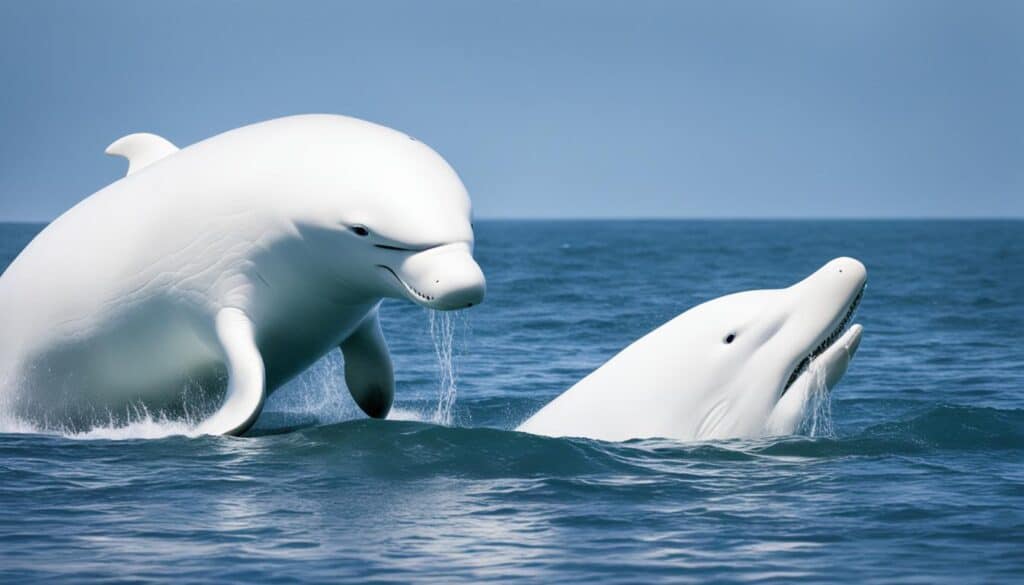
Beluga whales are all white and have a thick layer of blubber. Their white color helps them blend in with the icy landscape, hiding them from predators. The blubber keeps them warm in the freezing Arctic waters.
They also don’t have a dorsal fin. This makes it easier for them to swim under ice. It’s a big advantage in their challenging home.
Behavioral Adaptations for Arctic Living
Beluga whales have more than just physical traits that help them. They change their behavior with the seasons. They move to find food and avoid dangers.
This flexibility helps them survive and thrive. It shows how they interact with their environment and keep their populations stable.
| Adaptation Type | Specific Adaptation | Purpose |
|---|---|---|
| Physical | All-white pigmentation | Camouflage against ice |
| Physical | Thick blubber layer | Insulation from cold |
| Physical | Absence of dorsal fin | Navigation under ice |
| Behavioral | Seasonal migration | Find food and breeding grounds |
| Behavioral | Flexible feeding habits | Adapt to prey availability |
Beluga Whale Conservation Status
The beluga whale is listed as “Least Concern” by the International Union for Conservation of Nature (IUCN). But, this label hides the fact that some groups, like those in Alaska’s Cook Inlet, are in grave danger. It’s important to know the health of each population to understand their conservation needs.
Beluga whales face many threats that threaten their survival. Climate change is changing their home, while pollution and losing their habitat are also big problems. Hunting, both traditional and commercial, is making things worse in some places. We must focus on these issues to save them.
To help beluga whales, we’ve taken steps to protect them. In the U.S., the Endangered Species Act gives them legal protection. It also lets indigenous communities hunt them in a limited way, balancing conservation with culture. Knowing about the conservation status of beluga whales is key to protecting them and keeping them safe in our oceans.
FAQ
What are beluga whales?
Beluga whales, also known as Delphinapterus leucas, live in the Arctic and sub-Arctic. They are famous for their white color and high-pitched sounds, called “sea canaries.”
What are some interesting facts about beluga whales?
These whales can grow 13 to 20 feet long and weigh 1,000 to 1,500 pounds. They have a flexible neck for turning their heads and can live up to 50 years in the wild.
How are beluga whales classified scientifically?
Beluga whales are classified in the kingdom Animalia, phylum Chordata, and class Mammalia. They belong to the order Artiodactyla, infraorder Cetacea, family Monodontidae, genus Delphinapterus, and species D. leucas.
What habitats do beluga whales prefer?
Beluga whales live in Arctic and sub-Arctic waters. They like coastal areas, estuaries, and shallow parts of the Arctic Ocean. They need places with breathing holes and seasonal sea ice.
What is the geographical range of beluga whales?
They live along the coasts of Alaska, Canada, Greenland, and parts of Russia. They migrate to find good places to breed and feed.
What do beluga whales eat?
Beluga whales eat fish, crustaceans, and invertebrates. They change their diet with the seasons and where they are. They dive deep to find food.
How do beluga whales behave socially?
Beluga whales travel in groups of about ten, sometimes in large numbers during migrations. They have strong family bonds and work together.
What methods do beluga whales use to communicate?
They use sounds like clicks, whistles, and clucks to communicate. These sounds are important for finding their way and talking with others in their group.
What adaptations do beluga whales have for cold environments?
They have white skin for hiding in the ice, thick blubber for staying warm, and no dorsal fin for moving under ice. These help them live in cold waters.
What is the conservation status of beluga whales?
The IUCN says beluga whales are “Least Concern.” But some groups, like those in Cook Inlet, Alaska, are critically endangered. This is due to climate change, pollution, and losing their habitat.