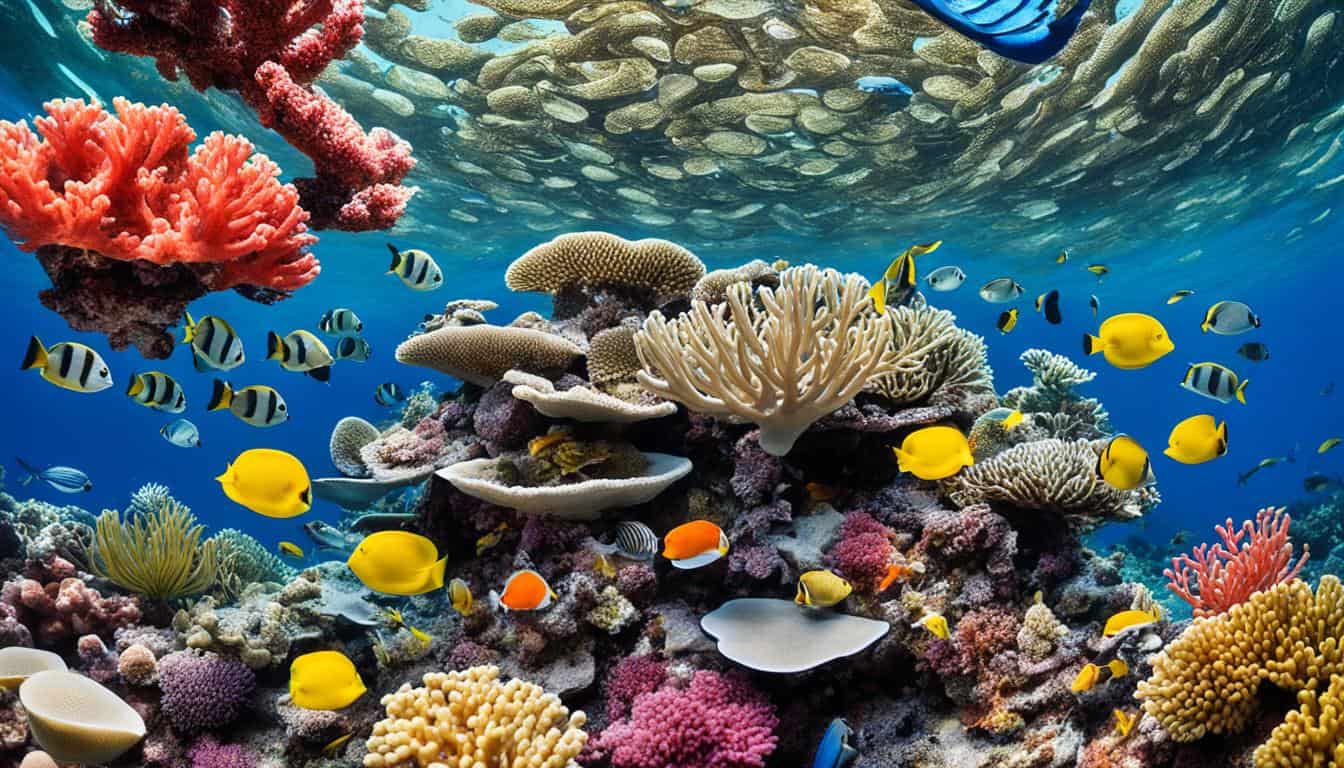
Coral reefs, often called the “rainforests of the sea,” are facing a severe decline. Many wonder: are coral reefs endangered? Scientists warn that up to 90% of coral reefs could vanish by 2050 if we don’t act fast. This crisis is caused by threats like climate change, overfishing, pollution, and harmful coastal development.
The damage to these vital ecosystems puts at risk the rich variety of life they support. It also threatens the communities that rely on them for food and income. It’s more important than ever to focus on saving coral reefs.
The Importance of Coral Reefs
Coral reefs are key to the health of our oceans. They play a big role in keeping marine life diverse and supporting the economy. Let’s dive into why these underwater worlds are so vital.
Essential Marine Ecosystems
Reefs are home to almost 25% of all sea creatures, much like tropical rainforests on land. They keep the ocean balanced by supporting many different species. These relationships are crucial for the survival of many marine animals, helping to protect marine life.
Economic Value of Coral Reefs
Coral reefs are also very valuable to our economy. In the U.S., they add over $3.4 billion each year. This comes from:
- Fisheries: Reefs are essential for sustainable fishing.
- Tourism: Millions visit reefs for fun, boosting local economies.
- Coastal Protection: They help prevent erosion and protect coastlines.
Reefs also save us about $1.8 billion a year by protecting against floods. Keeping these areas safe is key for our planet and our wallets.
| Aspect | Value ($ Billion) |
|---|---|
| Overall Economic Value | 3.4 |
| Fisheries | 1.0 |
| Tourism | 1.6 |
| Coastal Protection | 1.8 |
Are Coral Reefs Endangered?
Looking into whether coral reefs are endangered means checking out some scary stats and what’s hurting them. You’ll see that these vital ecosystems face a big threat like never before.
Statistics on Decline
About 75% of the world’s coral reefs are under stress from many threats. This makes people ask, are coral reefs endangered? Sadly, one-quarter of these reefs can’t be saved. This shows we need to act fast to save them.
Factors Affecting Coral Health
Many things hurt coral health. Climate change is a big one, causing ocean temperatures to rise and coral bleaching. This harms both their looks and their role in nature. Pollution from humans, like chemicals and plastic, makes things worse. Overfishing also messes with the balance of life in the ocean, hurting reefs.
We need to work hard to protect coral reefs. We must take steps to stop the damage and keep them safe.
Threats to Coral Reefs
Have you ever thought about what’s harming coral reefs? Many threats come from human actions and changes in the environment. These threats hurt their health and survival.
Climate Change and Its Impacts
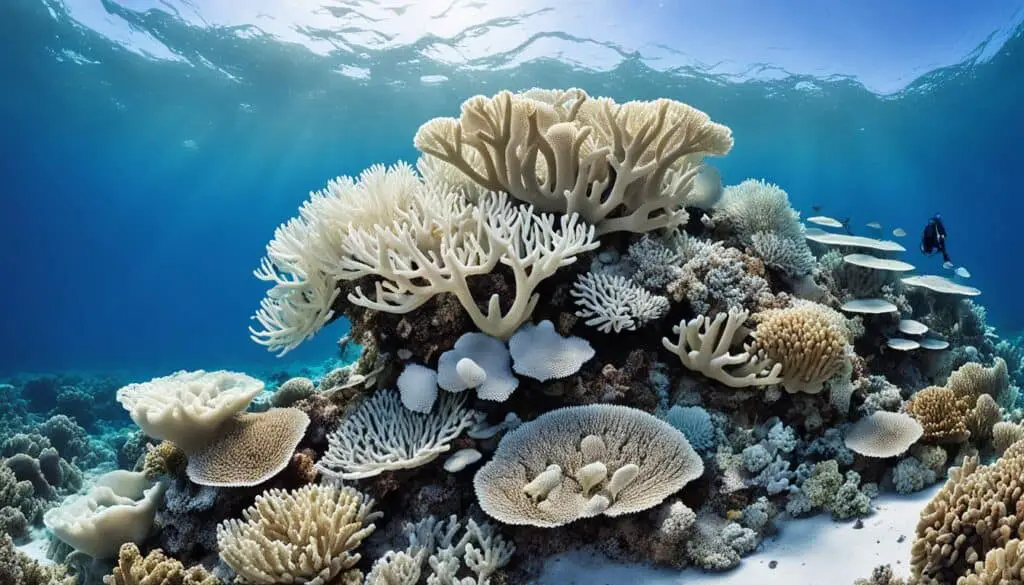
Climate change is a big problem for coral reefs. Rising ocean temperatures cause coral bleaching. This means corals lose the algae inside them, losing color and life.
This has a huge effect on coral reefs. Prolonged heat can destroy entire reefs.
Overfishing and Destructive Fishing Practices
Overfishing makes things harder for coral reefs. It takes away herbivorous fish that keep algae in check. Without them, algae can grow too much and harm the reef.
Destructive fishing, like using dynamite or cyanide, also hurts reefs. It damages the coral habitat badly.
Pollution and Coastal Development
Pollution from land adds too many nutrients to the sea. This leads to harmful algal blooms. Sediment from coastal development blocks sunlight, which corals need for food.
These problems show why we need to protect coral reefs. We must act to save them.
| Threat | Impact on Coral Reefs | Conservation Strategy |
|---|---|---|
| Climate Change | Coral bleaching and mortality | Global emissions reductions |
| Overfishing | Increased algal growth, habitat destruction | Regulated fishing practices |
| Pollution | Nutrient overload, sedimentation | Improved waste management |
| Coastal Development | Habitat loss, decreased sunlight | Establishment of protected areas |
Coral Bleaching: A Severe Threat
Coral bleaching is a major threat to coral reefs today. It happens when corals can’t handle the environment and lose their algae, called zooxanthellae. This loss affects not just the corals but also many other species that live in these areas.
Causes of Coral Bleaching
Several things cause coral bleaching, including:
- Elevated Sea Temperatures: Warmer ocean temperatures, often from global warming, lead to bleaching. Even small temperature increases can cause bleaching.
- Ocean Acidification: More CO2 in the air means more carbon dioxide in the ocean, making it more acidic. This hurts coral reefs.
- Pollution: Chemicals from farms and coastal development harm marine life, stressing corals.
- Overexposure to Sunlight: Too much UV light can stress corals, especially if they’re already weak.
Effects of Bleaching on Ecosystems
Coral bleaching has big effects on the ocean. When reefs bleach, they often don’t get better, which hurts their ability to grow and reproduce. This is bad news for the whole ecosystem, as reefs are key for many marine animals and plants. It also affects fishing and tourism, showing why we need to protect coral reefs fast.
Role of Global Warming
Global warming greatly affects coral reefs and marine life. Rising ocean temperatures, ocean acidification, and sea level rise threaten coral ecosystems. These changes disrupt the balance of life in the ocean.
Increasing Ocean Temperatures
Ocean temperatures are rising due to global warming. This rise can cause coral bleaching, where corals lose their color and nutrients. This harm can lead to big losses in ocean biodiversity.
Impact of Ocean Acidification
Too much carbon dioxide in the ocean makes it more acidic. Coral reefs need calcium carbonate to stay strong. But acidic waters make this essential substance scarce, weakening reefs and making them less resilient.
Rising Sea Levels and Their Consequences
Sea levels are going up as polar ice melts and water expands. This flooding can destroy coral reef habitats. We need to find ways to protect these important ecosystems for the future.
Coral Diseases and Invasive Species
Coral reefs face big challenges from diseases and invasive species. It’s key to understand these threats for effective conservation. Diseases harm reef health, while invasive species disrupt local ecosystems.
Prevalence of Coral Diseases
Coral diseases are becoming more common and severe. Factors like warmer water and pollution stress corals. This makes them more likely to get sick, leading to big problems for reefs.
These diseases don’t just hurt individual corals. They can destroy entire reef ecosystems.
The Threat of Invasive Species
Invasive species, like the crown-of-thorns starfish, are a big problem for reefs. Without natural predators, they can grow out of control. They eat coral polyps, making corals sicker and harming the reef.
We need a team effort to fight these threats. By working together, we can reduce the harm from diseases and invasive species. This will help protect these important ecosystems for the future.
| Coral Diseases | Invasive Species |
|---|---|
| Increasing incidence of disease outbreaks | Crown-of-thorns starfish causing damage |
| Higher susceptibility due to environmental stressors | Rapid population growth without natural predators |
| Impact on coral vitality and reef resilience | Threat to biodiversity and ecosystem balance |
Coral Reef Conservation Efforts
The health of coral reefs is declining, making conservation efforts crucial. Establishing Marine Protected Areas (MPAs) is a key strategy. These areas control fishing and protect vital ecosystems, giving marine life a safe home. By limiting human activities, we help coral reefs stay healthy and resilient.
Marine Protected Areas
MPAs are vital for saving coral reefs. They limit overfishing and pollution, helping ecosystems thrive. These areas protect coral and help damaged reefs heal. By understanding MPAs, you can support efforts to protect these important ecosystems.
Community Involvement and Citizen Science
Your actions can make a big difference in coral reef conservation. Joining community efforts and citizen science projects helps. Groups like the Coral Restoration Foundation use volunteers to restore reefs and research coral species. By learning how to help and getting involved, you can make a real difference in saving coral reefs for the future.
FAQ
Are coral reefs endangered?
Yes, coral reefs are in danger. Up to 90% might not be here by 2050. This is due to climate change, overfishing, pollution, and coastal development.
What role do coral reefs play in marine biodiversity?
Coral reefs are key to marine life. They are home to about 25% of all marine species. This makes them as diverse as tropical rainforests.
How do coral reefs contribute economically?
Coral reefs add over .4 billion to the U.S. economy every year. This comes from fisheries, tourism, and protecting the coast.
What are the main factors contributing to coral reef decline?
Coral reefs are declining due to climate change, pollution, overfishing, and coastal development. These factors harm coral health and ecosystems.
What is coral bleaching and its causes?
Coral bleaching happens when corals lose their algae due to stress. This stress comes from high sea temperatures and ocean acidification. It makes corals lose color and health.
What impact does global warming have on coral reefs?
Global warming leads to warmer ocean temperatures. These cause coral bleaching, damage habitats, and harm coral health.
How do ocean acidification and rising sea levels affect coral reefs?
Ocean acidification makes it harder for corals to build their skeletons. Rising sea levels can drown reefs, adding stress to already vulnerable corals.
What diseases affect coral populations?
Corals get diseases more often because of pollution and environmental stress. These diseases lead to big declines in coral populations.
What are the threats posed by invasive species to coral health?
Invasive species, like the crown-of-thorns starfish, harm coral reefs. They multiply fast and eat corals, causing a lot of damage.
How can Marine Protected Areas (MPAs) help coral reef conservation?
MPAs control fishing and protect reefs. This helps corals stay healthy and diverse by reducing human stress on them.
How can I contribute to coral reef conservation efforts?
You can join community projects and science efforts. Teach others about coral reefs. Support groups working on coral restoration and protection.