Have you ever wondered why the American woodcock doesn’t fly too far from North America? This bird has some interesting migration habits. While some stay in warm places all year, others fly to the Gulf states every night. What makes them travel so much, and how does the place they live in affect this?
To understand the American woodcock, it’s key to look at where they like to be and where they raise their young. They really show off North America’s many lands and climates. From the thick forests up north to the hot Gulf states, this bird seems to be at home anywhere.
Overview of the American Woodcock
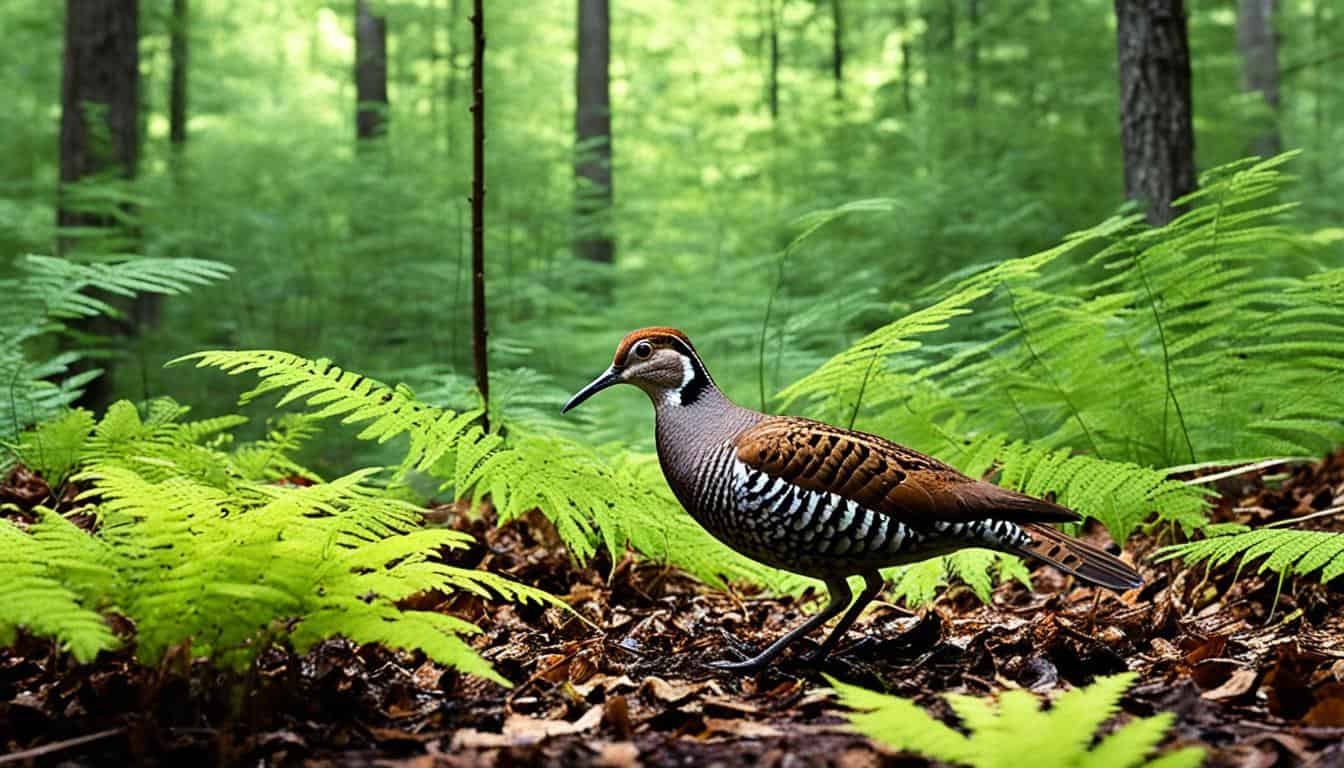
The American woodcock, also known as the timberdoodle, is a plump, well-camouflaged bird. It likes young forests and old fields in eastern North America. This bird is interesting for its special ways of acting and its body features.
Basic Description
American woodcocks have a unique walk and pecking way of finding earthworms. This methodical bird blends in perfectly with its surroundings. In spring, they put on amazing shows in the sky, called aerial displays. These are often seen at dawn and dusk.
This bird’s range covers a large part of eastern North America. Their ability to live in many different places shows how versatile they are.
Physical Characteristics
The American woodcock has some astonishing physical traits. It has big eyes on top of its head, giving it really good vision. This helps it see enemies from far away.
The woodcock is designed to hide in plain sight. It also has a bill for finding food. The fact that the oldest one recorded lived for 11 years shows how tough these birds are.
“The American woodcock, with its remarkable field of vision and unique foraging methods, presents fascinating insights into avian adaptation.”
These birds are found in many places across North America. Knowing about where they live is important for keeping them safe. This ensures that people in the future can still find wonder in them.
American Woodcock Habitat
The American woodcock is a hard-to-find bird. It thrives in places that hide it well and offer plenty of food. This diversity in habitat types greatly affects the woodcock population. They especially like young forests, thickets, and shrubby fields.
These places are shown clearly on the American woodcock range map. They give the birds the cover and right environment for breeding and eating. Areas with moist soil are key. They’re full of earthworms, the woodcock’s favorite food.
Forest and Thicket Habitats
The woodcock loves dense forests and thickets. These places are perfect for finding food and staying hidden. Their feather patterns help them disappear among the forest floor’s fallen leaves. This helps keep them safe from animals that want to eat them.
Moist and Brushy Areas
Moist, brushy spots are vital for the woodcock. The damp soil is packed with earthworms and other small creatures they eat. Their special way of moving, known as body rocking, is ideal for hunting insects. This interesting move is noted on many maps showing where they are found.
What is the range of the American woodcock?
The American woodcock is found in the eastern part of North America. They mainly live in young-forest areas to the east of the 98th meridian. This area helps them survive and breed well. Their breeding area stretches from Atlantic Canada to some midwestern states. They like these places because there’s plenty of cover and the soil is fertile for feeding and nesting.
When seasons shift, the woodcocks start their journey south. They fly along wide paths that lead to the Gulf states. This flight happens at night, with birds either flying solo or in small groups. It’s important to know about their migration and to keep an eye on their numbers. By doing this, we can help protect and keep their populations healthy.
These are the main aspects of the American woodcock’s living range:
| Region | Main Characteristics |
|---|---|
| Eastern North America | Concentration in young-forest habitats |
| Atlantic Canada to Midwest USA | Primary breeding grounds |
| Gulf States | Winter migration destinations |
Staying up to date on the woodcock’s movements and conservation helps a lot. Whether you love wildlife or just enjoy watching, it deepens your knowledge about this bird. And, it helps in the efforts to protect the American woodcock.
American Woodcock Migration Patterns
The American woodcock has an interesting migration behavior. It travels widely across eastern and central North America. Knowing their migration patterns gives us a peek into how they travel and survive.
Migration Routes
Migration routes for these birds span across wide areas. They choose these paths to make the best of the habitats they find. American woodcocks like to travel at night, staying hidden from predators and harsh weather. Their migration path choice depends on the land and weather, showing they are very smart about their trip.
Distance and Speed of Migration
Usually, American woodcocks fly at 16 to 28 miles per hour when they migrate. They prefer flying at night, which keeps them cool and safe from hunters. What’s amazing is that these birds can fly as slowly as 5 miles per hour. They pick the best time to move based on the weather, especially cold fronts and the availability of food. This smart timing helps them find the perfect conditions for their journey.
| Migration Route | Speed (mph) | Key Influence Factors |
|---|---|---|
| Eastern North America | 16-28 | Night-time travel, predator avoidance |
| Central North America | 16-28 | Cold fronts, food supply |
| Slowest Recorded Speed | 5 | Weather patterns, freezing food supplies |
American Woodcock Breeding Grounds
The American woodcock chooses where to breed very carefully. It looks for places with thick plants. These areas let the bird hide and find food easily.
Preferred Breeding Locations
The best spots are close to places where the woodcock sings, no further than 150 yards. The places for singing are crucial for the birds. They show off and find a mate there. In the forests, the ground is covered in leaves and sticks. This makes it perfect for hiding eggs safely.
Nesting Habits
Female woodcocks lay about four eggs in their ground nests. These nests are hidden under leaves. It’s to keep them safe from animals that might eat them. The moms do all the work for the young ones. This means keeping the eggs warm and feeding the chicks. The dads focus on continuing their fancy dances. They might do this to find a good spot for themselves or to get more mates.
You can find out where these birds live by using something like the American woodcock range map. Knowing these places is great. It teaches us how they live and helps us save their homes for the future.
Year-Round Range of the American Woodcock
The American woodcock has a unique year-round range. In the southern U.S., some stay put all year. These birds offer hints about American woodcock population trends and key data for American woodcock conservation status.
Resident Populations
American woodcocks in areas with good conditions don’t need to move. They stay in one place because the climate is stable and there’s plenty of food. This shows how animals can live without the need to migrate, which is important for conservation efforts.
Seasonal Variation
But woodcocks in the north see big changes in the weather. They fly south for the winter, to the Gulf states. This movement shows why suitable wintering habitats are so crucial. It also affects American woodcock population trends.
“Understanding the movements and behaviors of both resident and migratory woodcock populations is essential for developing effective conservation plans.” — National Audubon Society
Studying American woodcocks’ year-round habits gives us a full picture of their needs. This info is vital for conservation work. It helps address challenges and opportunities for keeping woodcock populations strong.
- Identify key habitats for resident populations.
- Monitor seasonal migration routes and behaviors.
- Develop targeted conservation measures for both population types.
By working through these steps, we help the American woodcock thrive. This brings more life to North America’s forests and thickets.
Nonbreeding Range of the American Woodcock
The American woodcock flies south for winter, seeking warmer areas. It ends up in places like the Gulf Coast and states along the Southeast Atlantic. These lands offer great weather and plenty of food, making them perfect for the woodcock.
Its winter home covers states like Louisiana, Mississippi, Alabama, and Georgia. The Christmas Bird Count shows lots of woodcocks in these areas. This proves they’re excellent places for the birds to spend the winter.
Here’s a look at the top states for American woodcocks in the winter:
| State | Features |
|---|---|
| Louisiana | Mild winters, diverse food resources |
| Mississippi | Suitable climate, abundant wetland areas |
| Alabama | Extensive forest coverage, mild temperatures |
| Georgia | Varied habitats, favorable winter conditions |
American Woodcock Distribution in North America
The American woodcock lives mainly in the East of North America. It spans from Canada’s eastern parts to the southeastern U.S. These birds are often seen in places with young forests. These areas are important for their food and raising their young. Knowing where American woodcocks live helps us see how important their habitats are to them.

The way American woodcocks’ homes are linked to wooded areas is interesting. They need the thick cover and wet, bushy ground for finding food. You can find them thriving in places like the northeastern U.S. with its deep forests to the warm southeast.
Here is a summary of key regions where the American woodcock can be found:
- Eastern Canada: From Nova Scotia to Quebec, ideal for breeding.
- Northeastern United States: Throughout New England states, offering dense early-successional habitats.
- Southeastern United States: States like Georgia and Alabama, critical for wintering.
To know more, let’s look at what habitats they like:
| Region | Habitat Type | Season |
|---|---|---|
| Eastern Canada | Young forests and wooded wetlands | Breeding |
| Northeastern U.S. | Thickets and shrubland | Year-round |
| Southeastern U.S. | Moist, brushy areas | Wintering |
Understanding where the American woodcock lives is crucial for its survival. These areas are not just important for them. They also teach us how to protect and improve these valuable spaces.
American Woodcock Range Map
The map shows where American woodcocks are found in eastern North America. It highlights important areas for breeding, traveling, and winter stay. This map helps experts understand the woodcock’s living areas and how they’re doing in general.
American woodcocks love young forests and thickets. These are found from the Atlantic provinces of Canada to parts of the U.S. Midwest. This kind of area is perfect for their nests and has plenty of food they need to live.
The map gives us a look at the woodcock’s favorite places to be, like wet and brushy spots that have lots of earthworms. It also shows their trip to the Gulf coast and southeastern Atlantic states for the winter.
| Area | Main Feature | Importance |
|---|---|---|
| Breeding Grounds | Young forests | Provides necessary cover and food |
| Migration Routes | Eastern and Central North America | Ensures safe travel during migration |
| Wintering Areas | Gulf coast and southeastern Atlantic states | Support during non-breeding season |
These maps are key for saving woodcocks. They help groups working to protect these birds find and keep their important lands safe. Thanks to these maps, efforts to help the woodcock populations grow are smart and likely to work well.
American Woodcock Population Trends
The American woodcock has been watched closely over time. We are keen on knowing its past and current numbers. This focus helps in keeping the species alive and well.
Historical Data
In the past, numbers showed a bit over a 1% drop yearly since the 1960s. This drop is mostly because woodcocks are losing their homes. Forests are growing older, and cities are spreading, taking away breeding spots. This situation made it really important to concentrate on these birds’ well-being. By doing so, we hope to see their numbers grow again.
Current Population Status
Even with past declines, the American woodcock is still a favorite in the U.S. among game hunters. Projects are working to boost their homes and numbers, similar to the 1970s. People and groups are trying hard to keep these birds healthy, ensuring they’re around for the coming generations.
Conservation Status of the American Woodcock
The American woodcock conservation status is currently “Least Concern.” But, it faces several threats. Urban growth and changes in how land is used are big dangers. The bird loves young forests and fields. So, we must work hard to keep and make these places for them.
Threats to the Population
The main dangers for the American woodcock are:
- Habitat Loss: Cities and farms are taking over its natural homes. These open spaces are vital for finding food and raising young.
- Environmental Changes: A changing climate might make some areas too hard to live in. This is especially a worry in the north.
- Hunting Pressure: Hunting, even when controlled, can hurt the bird’s numbers. This needs careful management to not harm them too much.
Conservation Efforts
Many people are working to save the American woodcock. They do this in a few ways:
- Habitat Management: Groups are working together to save the bird’s homes. For example, the Ruffed Grouse Society has plans to protect and make new spaces for the woodcock.
- Regulated Hunting: Setting rules on when and how much can be hunted helps keep the population steady. This way, people can still enjoy hunting while not hurting the bird too much.
- Research and Monitoring: Study and tracking help us learn more about the woodcock. By knowing where they go and what they need, we can better help and protect them.
All these actions aim to keep the American woodcock safe. They also make sure that Americans can still enjoy it as a bird they hunt.
Interesting Facts About the American Woodcock
The American woodcock wows us with its “sky dance” during courtship. The male shows off flying skills at dawn and dusk. It matches this with sweet “peent” calls to attract the ladies. This dance is a top sight in bird-watching.
This bird’s big, high-set eyes allow it to see predators all around. It doesn’t even need to move its head. This is key since it’s most active around sunrise and sunset.
The woodcock has a bill with a special end for pulling up earthworms. It does a little dance while it searches. This dance might actually help it feel when worms move underground.
It’s known by many names such as timberdoodle and night partridge. Each name tells us something unique about it. From its courtship dances to its survival skills, the American woodcock is quite interesting. It’s no wonder why bird lovers and scientists are intrigued by this bird.
FAQ
What is the range of the American woodcock?
The American woodcock lives in the eastern part of North America. They have breeding sites from Atlantic Canada to the midwestern U.S. In winter, they stay along the Gulf Coast and the southeast Atlantic Coast.
What does the American woodcock look like?
The American woodcock is plump and hides well. It has big, high-set eyes. These give it great vision all around. It’s known for looking like it’s taking a slow stroll and for its long, probing bill.
What is the American woodcock’s preferred habitat?
They like places with a lot of bushes and young trees. They need lots of moist soil. This soil is full of earthworms, which is their main food.
How far does the American woodcock migrate?
They fly from the north to the south for winter. Most go to the Gulf Coast area. The trip happens at night. They can fly at 16 to 28 miles per hour.
What are the migration routes for the American woodcock?
They move across the east and central parts of North America. Their flight paths are chosen based on the weather and where they can find food.
Where are the American woodcock’s breeding grounds?
They breed in places with a lot of young trees and bushes. These places have thick leaf and twig litter. This helps hide their nests and keep them safe.
What are the American woodcock’s nesting habits?
The female woodcock lays about four eggs on the ground in hidden nests. Only the females take care of the eggs and the chicks.
What is the year-round range of the American woodcock?
Some stay in the same place all year, usually in the south. But many travel between the north and the south for the seasons.
What is the nonbreeding range of the American woodcock?
In the winter, they move to the Gulf Coast and areas like Louisiana, Mississippi, Alabama, and Georgia.
What factors influence the American woodcock’s distribution in North America?
They live where there are young forests, bushes, and wet soils. These places are ideal for finding food and raising their young.
How is the American woodcock’s range mapped?
Range maps show where they are in eastern North America. These maps are very important for protecting them.
What are the population trends for the American woodcock?
Since the 1960s, their numbers have been slowly dropping. This is mainly because their homes are disappearing. People are working to keep and grow their populations by managing habitats.
What is the conservation status of the American woodcock?
They’re listed as “Least Concern” right now. But, they face danger from losing their homes and changes in how the land is used. Efforts are being made to keep the right kind of habitats for them.
What are some interesting facts about the American woodcock?
They’re known for their special sky dances, amazing vision, and an adaptable bill for catching worms. They’re called timberdoodles, night partridges, and bog suckers. Plus, their swaying walk and eating habits at dusk make them very interesting.