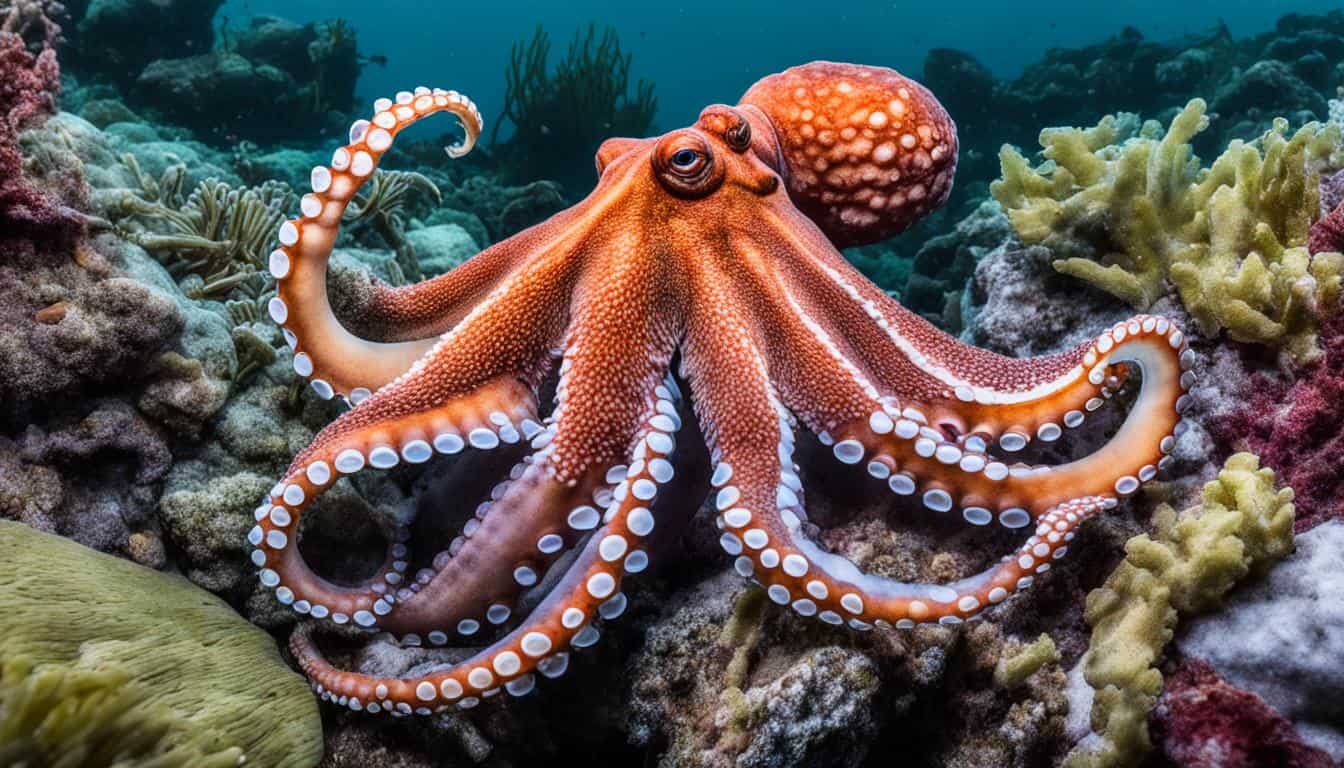
Ever wondered about the biggest octopus in our oceans? It’s the Giant Pacific octopus, known as Enteroctopus dofleini. This amazing sea creature lives in the North Pacific coastal waters. It’s known for its size and smarts.
Exploring its world reveals its special traits and actions. Learning about this species shows its importance in the ocean. It also lets us peek into the ocean’s secrets.
Introduction to Giant Pacific Octopus
The giant Pacific octopus is a true marvel of the ocean. Known as Enteroctopus dofleini, it is the largest octopus in the world. It can weigh up to 15 kg (33 lb) and stretch its arms to 4.3 m (14 ft) wide.
These amazing creatures live in many places, from shallow waters to depths of 2,000 m (6,600 ft). They love cold, rich waters that help them grow and thrive. The giant Pacific octopus is smart and hard to find, making it very interesting to study.
In the ocean, Enteroctopus dofleini is very important. It affects the balance of life by being a hunter and prey. Learning about this biggest octopus helps us understand the ocean’s complex world.
What is the largest species of octopus?
The Giant Pacific Octopus, known as Enteroctopus dofleini, is the biggest octopus type. It can weigh up to 50 kg (110 lb) and stretch its arms to 6 m (20 ft) wide. This makes it a giant among cephalopods.
Overview of the Giant Pacific Octopus (Enteroctopus dofleini)
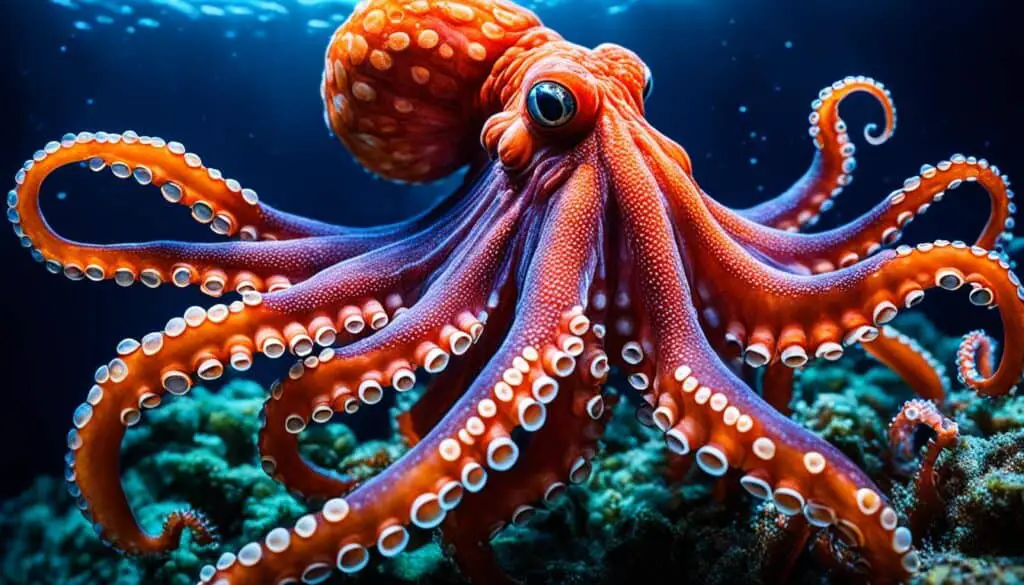
This octopus is not just big; it’s also known for its amazing colors and textures. These help it blend in and catch prey or avoid predators. It has a beak and suckers, making it a skilled hunter in the ocean.
Geographic Distribution and Habitat
The Giant Pacific Octopus lives in the North Pacific Ocean. It’s found from Baja California to Alaska, and even in the Aleutian Islands. It lives in different places like rocky areas, underwater dens, and kelp forests. These places give it shelter and help it hunt.
| Feature | Details |
|---|---|
| Scientific Name | Enteroctopus dofleini |
| Maximum Weight | 50 kg (110 lb) |
| Maximum Arm Span | 6 m (20 ft) |
| Geographic Range | Baja California to Alaska |
| Common Habitats | Kelp forests, rocky areas, sea beds |
Physical Characteristics of the Giant Pacific Octopus
The Giant Pacific octopus, known as Enteroctopus dofleini, is one of the largest octopus species. Its size and unique features help it survive and hunt in the ocean. Let’s explore how its size and adaptations make it special.
Size and Weight Comparisons
The Giant Pacific octopus is surprisingly large. It usually weighs about 15 kg (33 lb), but some can reach up to 50 kg (110 lb). Its arms can stretch up to 6 m (20 ft) long, making it stand out in its ocean home. Here’s a table that shows how big it is compared to other octopus species:
| Octopus Species | Average Weight (kg) | Maximum Weight (kg) | Average Arm Span (m) |
|---|---|---|---|
| Giant Pacific Octopus | 15 | 50 | 6 |
| Seven-Arm Octopus | 10 | 75 | 2.5 |
| Blue-Ringed Octopus | 0.5 | 1.5 | 0.5 |
| Common Octopus | 10 | 35 | 1.5 |
Unique Adaptations and Appearance
The Giant Pacific octopus can change its color and texture to blend in with its surroundings. This skill helps it catch prey by surprise. It’s also very smart, solving problems with ease. Some of its key features include:
- Powerful suckers for gripping and manipulating objects
- A tough beak that efficiently breaks shellfish
- Ability to alter color and texture for camouflage
Ecological Role of the Giant Pacific Octopus
The Giant Pacific octopus is a key player in its ocean home as a top predator. Its complex role in the ecosystem shows how smart these creatures are. It eats mainly crabs, lobsters, fish, and squid, showing its ability to adapt to different food sources.
It uses jet propulsion to surprise its prey, catching and tearing it apart with its suckers and beak. This makes it a formidable hunter in the sea.
Diet and Hunting Techniques
The Giant Pacific octopus has varied and effective hunting methods. It stalks and ambushes its prey, staying at the top of the food chain. Its problem-solving skills help it find the best places to eat in complex environments.
This diet helps keep the ocean healthy by balancing the ecosystem. It’s a key part of maintaining marine health.
Predators of the Giant Pacific Octopus
Even though it’s a top predator, the Giant Pacific octopus faces threats. Large marine mammals and some sharks can be dangers. Octopus eggs and young are also vulnerable to scavengers and filter feeders.
Human activities, like commercial fishing, also affect its numbers. This shows how important this species is for keeping the ocean diverse.
FAQ
What is the largest species of octopus?
The largest octopus is the Giant Pacific octopus, known as Enteroctopus dofleini. It can weigh up to 50 kg (110 lb) and stretch its arms up to 6 m (20 ft) wide.
Where can the Giant Pacific octopus be found?
You can find the Giant Pacific octopus in the North Pacific’s coastal waters. It lives from Baja California, Mexico, to Alaska. It also lives in the Aleutian Islands, the Sea of Okhotsk, and along Japan’s coast.
What do Giant Pacific octopuses eat?
These octopuses eat a variety of things like crabs, lobsters, fish, and squid. They hunt using different methods, from stalking to ambushing, to get their food.
How intelligent are Giant Pacific octopuses?
Giant Pacific octopuses are very smart. They solve problems and show complex behaviors. This makes them a key part of the ocean’s ecosystem.
What are some unique adaptations of the Giant Pacific octopus?
This octopus can change color and texture to hide. It has strong suckers and a hard beak for catching and eating prey.
What threats do Giant Pacific octopuses face?
Even though they are top predators, Giant Pacific octopuses are threatened. They face dangers from big marine mammals and sharks. Human activities like fishing and changes in the environment also harm them.
How do Giant Pacific octopuses contribute to their ecosystem?
These octopuses play a big role in their ecosystem. They keep the balance by controlling the numbers of their prey. They also provide food for larger animals.