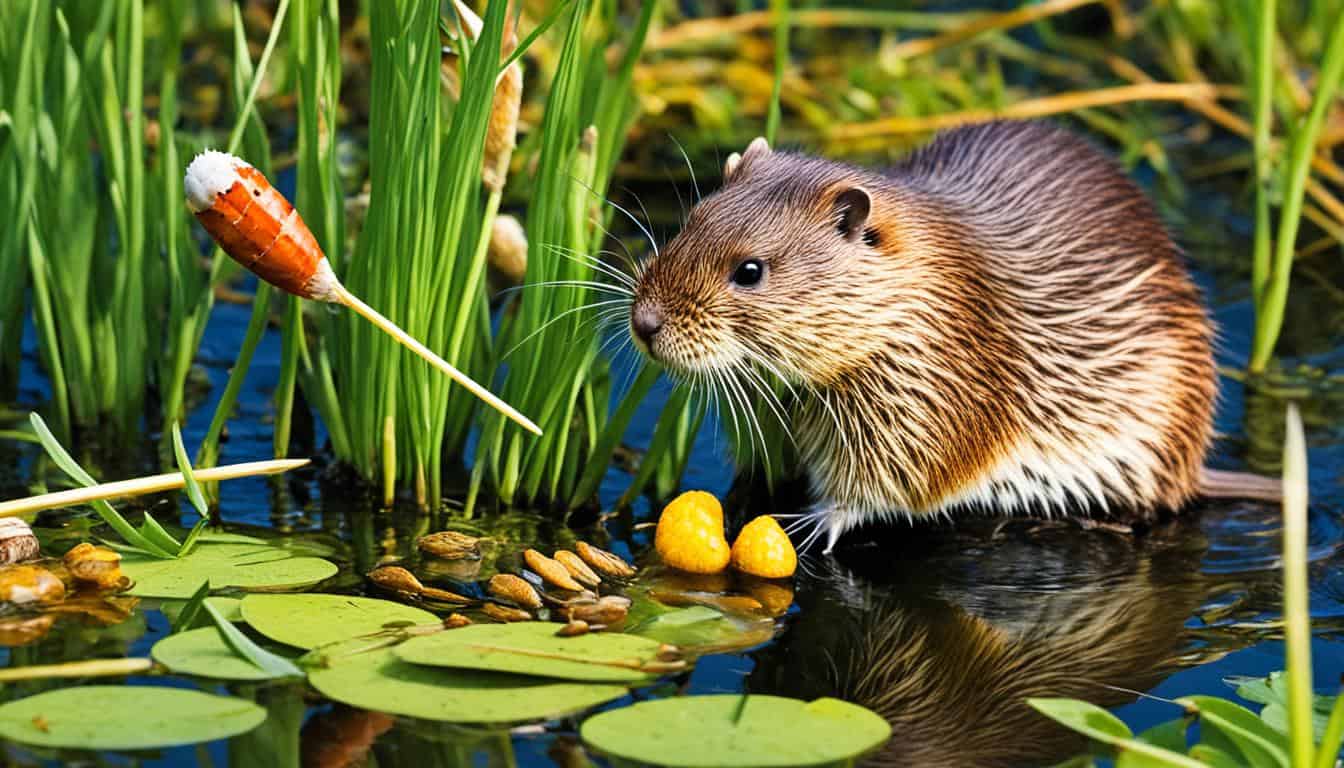
Have you ever thought about what muskrats eat to survive in Minnesota’s wetlands?
Muskrats are called herbivores. This means their diet is mostly plants. But their eating habits are more interesting than you might think. They eat plants, but they also eat small fish, clams, snails, and sometimes turtles.
Finding their food isn’t the hard part. They make their houses in the water. This helps them stay safe and warm during the cold winters. It’s also where they raise their babies.
Muskrats don’t save food for the winter like other animals. They find fresh plants every day to eat instead. Learning about what muskrats eat helps us see their important place in nature. It shows us how they affect the world around them, including farms and the wild.
Introduction to Muskrat Diet
Muskrats are semi-aquatic rodents, meaning they live near water. They play a big role in the environment. This is because they eat and dig in ways that affect plant growth and farms.
Muskrats eat a lot of different things. This includes the roots, stems, leaves, and fruits of water plants. Sometimes, they also eat small animals.
Let’s dive into muskrat dietary preferences. They like eating a specific type of plant. But, they also sometimes eat animals, showing they can adjust their diet.
| Plant Matter | Animal Matter |
|---|---|
| Roots of aquatic plants | Small fish |
| Stems of grasses and sedges | Clams |
| Leaves of water plants | Snails |
| Fruits of aquatic vegetation | Occasional turtles |
Muskrats help keep their environment healthy by eating many foods. Their varied diet balances the ecosystem.
Primary Food Sources of Muskrats
Muskrats love to eat aquatic plants. They need a lot of this vegetation for their nutrition. They are good at collecting and saving plants for all seasons.
Aquatic Plants
Their top choices include cattails, wild rice, and water lilies. These plants are full of necessary nutrients. They also grow a lot where muskrats live. Cattails are especially common and nutritious. Wild rice and water lilies add extra variety to what they eat. This makes sure they get all their needed nutrients.
Other Plant Materials
Muskrats also eat rushes and similar plants. Eating these during the summer helps them prepare for the winter. By saving food during warm months, they make sure they won’t go hungry when it’s cold. This shows how they naturally adapt to changing food supplies.
Animal-Based Food in Muskrat Diet
Although mainly plant-eaters, muskrats also eat animal foods. They do this to add variety to their meals. These animals pick up these foods as they find them in the water.
Small Fish
Muskrats love eating small fish. Fish give them key nutrients. This shows that muskrats are good hunters when they need to be.
Mussels and Snails
Freshwater mussels and snails are a big part of their diet. Eating these water dwellers helps muskrats keep the ecosystem in check. They control how many of these creatures are around.
Other Aquatic Creatures
They also eat things like shrimp and turtles sometimes. This shows how muskrats adjust their diet to what’s around them. They make the best of their habitat.
| Food Source | Type | Nutritional Benefit |
|---|---|---|
| Small Fish | Vertebrate | Provides protein and fats |
| Freshwater Mussels | Invertebrate | Rich in protein and minerals |
| Snails | Invertebrate | Source of protein and calcium |
| Shrimp | Invertebrate | Contains protein and omega-3 fatty acids |
| Turtles | Reptile | Provides fats and protein |
What is the diet of a muskrat during different seasons?
Muskrats change what they eat as seasons change. This lets them get the food they need, even when the environment shifts.
Summer Diet
In warm months, muskrats eat a lot of fresh water plants. These include cattails, water lilies, and rushes. They also enjoy small fish and invertebrates. These add more nutrition to their summer meals.
Winter Diet
When it gets cold, muskrats turn to plants under the ice. They make ‘pushups’ over these plants to get to them. This shows how smart they are about finding food. It also shows how important it is for them to store food for the winter.
Muskrat Foraging Patterns
Muskrats show interesting behavior when it comes to finding food, particularly in winter. They make “pushups” to reach food under the ice. This helps them survive when it’s cold.
Use of Pushups
Muskrats build small mounds over holes in the ice called pushups. Pushups are crucial during winter. They provide a place to rest and a way to get to food under the ice.
This method is key to their survival in winter, ensuring they find enough food even when it’s very cold. It proves how skilled they are at adapting to hard times.
- Shelter: Pushups offer a safe retreat from predators and extreme weather.
- Access to Food: Provides entry to submerged aquatic plants critical for nutrition.
- Winter Survival: Ensures continuous access to food during the winter months.
By studying muskrats’ ways, we learn a lot about how they survive in nature. Pushups are vital for their food-finding plans.
The Role of Muskrats in Their Ecosystem
Muskrats are key in their ecosystems. They keep the balance by eating a lot of aquatic plants. This helps control how many plants there are and stops any one type from taking over. This is good for keeping things diverse and making sure wetlands stay healthy.
They also shape the homes of many species in wetlands. Their digging creates interesting spaces that other animals can use. This includes places for new plants to grow. So, they help move nutrients along and make sure there are many kinds of plants in the area.
But, muskrats can be a problem for farmers. They eat crops near the water, which can cost a lot of money. Their digging can also make walls around fields weaker. This makes it harder to keep the land safe from water.
Even with these issues, muskrats are important in nature’s food chain. They are food for animals like minks, otters, and some birds. Without them, these bigger animals wouldn’t have as much to eat. So, muskrats are more important than just keeping the plants in check.
| Ecological Roles | Positive Impacts | Negative Impacts |
|---|---|---|
| Vegetation Control | Regulates aquatic plant populations | Can disrupt agricultural crops |
| Habitat Structuring | Creates diverse habitats for other organisms | Weakens structural integrity of dikes and levees |
| Predator Prey Dynamics | Supports predator populations | N/A |
Impact of Habitat on Muskrat Diet
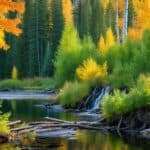
The habitat influence on muskrat diet is very important. It affects what they eat a lot. Muskrats in marshes eat a lot of water plants like cattails and water lilies. In ponds and streams, they have more food options, including plants and small water animals.
Marshlands offer muskrats plenty of water plants to eat, like cattails and water lilies. They also find safety there. This shows how much where they live affects what they eat.
In farm areas, muskrats eat crops and what grows naturally. This shows how adaptable they are. You may see them eating more roots and stems in these places.
The following table shows how muskrat diets change in different habitats:
| Habitat | Main Food Sources |
|---|---|
| Marshes | Aquatic plants (Cattails, Water Lilies) |
| Ponds | Mixed vegetation, Aquatic insects |
| Streams | Plants, Small fish, Mussels |
| Agricultural lands | Crops, Native vegetation |
As shown, where muskrats live strongly affects their diet.
Muskrat Eating Behavior and Time of Day
Muskrats change their feeding habits depending on the time and the place. By looking at what they do at night and during the day, we can learn how they stay alive.
Nocturnal Feeding
Muskrats are mostly active at night. This keeps them safe from predators and lets them find food with less noise. At night, they search for plants, fish, and anything else to eat. Their night feeding keeps them healthy and safe.
Daylight Feeding
Sometimes, muskrats also go out during the day. They do this when their homes are safe, or they can’t find enough food at night. This shows they can change their habits to keep themselves fed and strong. They are smart about when to eat, so they get all the food they need, even when times are tough.
| Time of Day | Feeding Patterns |
|---|---|
| Nocturnal | Primary feeding period, utilizing quieter environments to avoid predators. |
| Daylight | Secondary feeding period, used when nocturnal food sources are scarce or if safety is assured. |
Adaptations for Muskrat Feeding
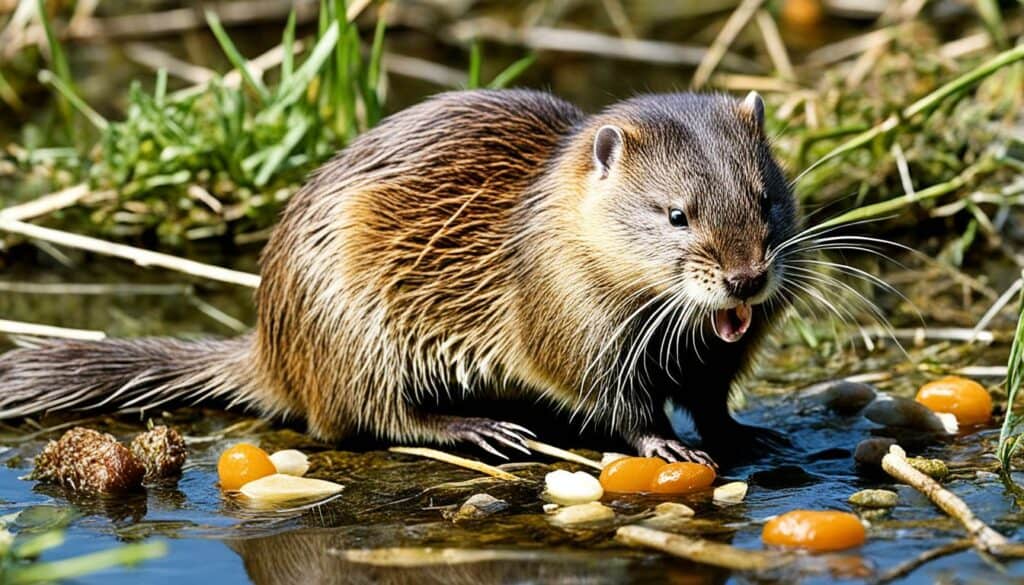
Muskrats have many special traits that help them find food in water. Over time, they’ve developed skills and body parts that are perfect for this. They can gather and eat a lot of different foods because of these adaptations.
Swimming Abilities
Muskrats are great at swimming, which is a key skill for finding food in the water. They move well in the water because of their webbed hind feet and their strong tails help guide them. These tools let muskrats find and eat water plants easily.
Teeth and Digestion
Muskrats need strong teeth to chew through tough plants. Their teeth keep growing so they’re always ready to eat hard foods. Plus, their bodies are good at getting all the nutrients from these plants, which keeps them healthy and full of energy.
| Adaptation | Benefit |
|---|---|
| Webbed Hind Feet | Enhanced swimming ability for efficient foraging |
| Sharp Incisors | Effective gnawing on tough vegetation |
| Strong Tails | Improved maneuverability in water |
| Specialized Digestion | Efficient processing of fibrous plants |
Interactions with Other Species
Muskrats carry out interesting interactions with other species which greatly influence their actions and place in the environment.
Muskrat interactions with predators stand out. Animals like mink, otters, and raptors see muskrats as food. This makes muskrats adjust where they go and where they live to avoid being eaten.
Species relationships are important for muskrats too. They compete with beavers and nutria for food and space. This competition impacts the numbers of these animals and changes the environment.
Knowing about species relationships is key to understanding how muskrats survive. Various animals interact with muskrats in unique ways:
| Species | Nature of Interaction |
|---|---|
| Mink | Predatory threat |
| Otters | Predatory threat |
| Beavers | Competitive interaction |
| Nutria | Competitive interaction |
| Raptors | Predatory threat |
These exchanges create a complex system of muskrat interactions in their home. Each species affects how muskrats survive, eat, and choose their living areas. This makes studying muskrats in wetlands very interesting.
Understanding and Managing Muskrat Populations
Keeping muskrat populations in check is crucial. It’s essential for the environment, agriculture, and our buildings. These creatures live near water and are important but can cause trouble too.
Their digging can weaken dykes and banks, creating safety hazards. By knowing and meeting their needs, you can control how many muskrats are around. This helps protect the environment and our structures.
To control muskrats, changing their living space is key. Making the area less attractive to them can lower their numbers. You can do this by adjusting water levels and limiting their favorite plants. It’s also important to trap them carefully. This ensures their numbers are controlled without causing suffering.
It’s also very important to act at the right time. Muskrats eat and behave differently depending on the season. By timing our efforts to match these changes, we can have a bigger positive effect. Highlighting with this approach, we make sure the environment stays in good shape for both these animals and people.
FAQ
What is the typical diet of a muskrat?
Muskrats mainly eat things like cattails, wild rice, and water lilies. They also eat small fish, mussels, and snails.
How do muskrats’ feeding habits vary with the seasons?
In summer, muskrats eat fresh water plants and animals. In the winter, they eat the plants they save or find under the ice.
They make structures called ‘pushups’ for this. It helps them get food and stay warm during winter.
What are the main aquatic plants muskrats consume?
They eat the roots, stems, leaves, and fruits of cattails, wild rice, water lilies, and rushes.
Do muskrats eat any animal-based food sources?
Yes, muskrats also eat small fish, mussels, snails, and sometimes turtles. Their diet changes depending on what’s available.
How do muskrats forage during winter?
In winter, muskrats build ‘pushups’ over the ice. These help them find food and stay safe.
What role do muskrats play in their ecosystem?
Muskrats help control water plant growth and shape their habitat. They are food for some animals but can harm farms and land too.
How does habitat influence muskrat dietary choices?
Where muskrats live affects what they eat. They choose their food based on what’s in the area, in marshes, ponds, streams, or near farms.
When do muskrats usually feed?
Muskrats prefer to eat at night but will also eat during the day. It depends on if they feel safe and if there is food.
What adaptations help muskrats feed efficiently?
Muskrats are great swimmers. They have sharp teeth for chewing plants and a system that turns plants into useful food.
How do muskrats interact with other species?
They deal with mink, otters, and other animals that want to eat them. They also share their space with beavers and nutria.
What methods are used for managing muskrat populations?
To manage muskrats, people change their habitats. They also trap them safely and know when to act to protect nature and farms.