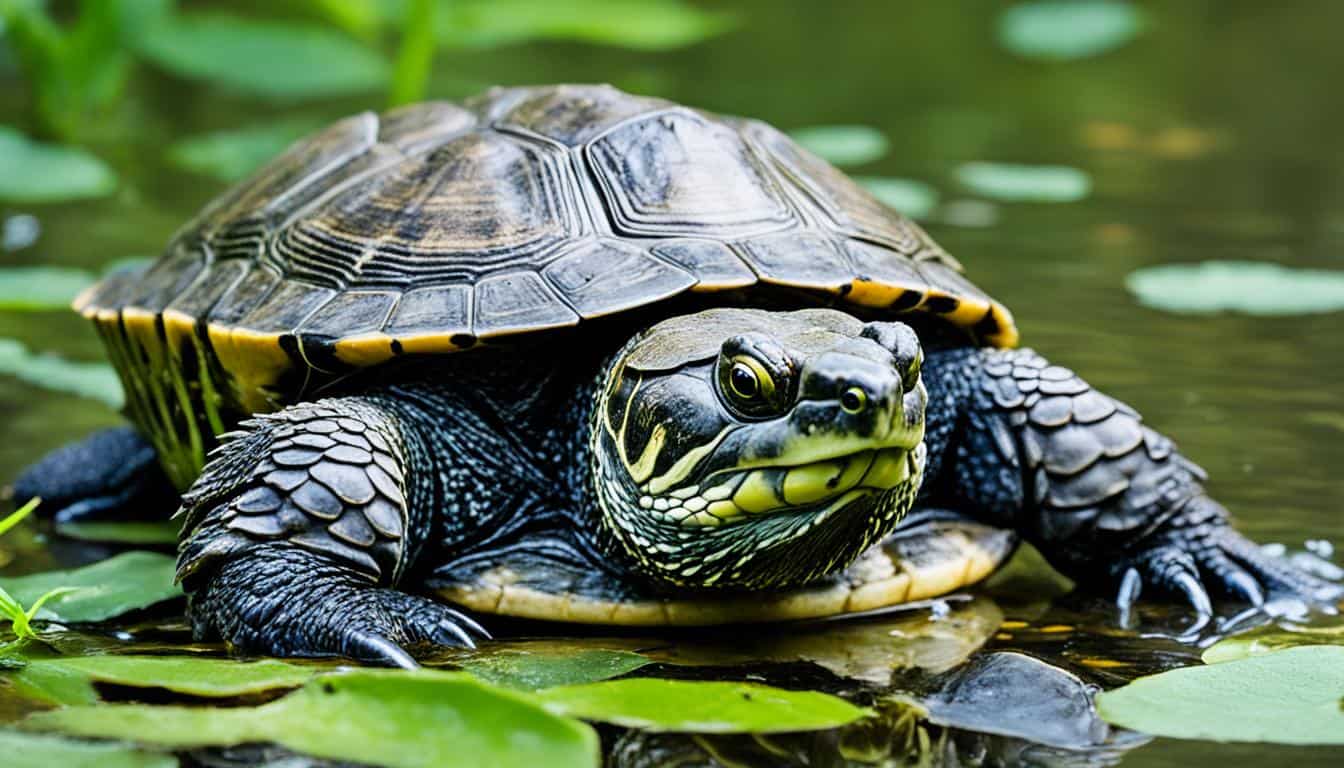
The common snapping turtle (Chelydra serpentina) is an opportunistic omnivore from North America. You can spot them by their long claws and sharp beaks. They have a unique diet that is mostly meat. Worms, snails, fish, and even birds or other turtles make up about 70% of what they eat.
About 30% of a snapping turtle’s diet is plants, especially water plants. This combination allows them to do well in various water homes. They have smart ways of finding food, like looking around or waiting to surprise prey. This shows how they have managed to survive and adapt for so long.
Introduction to Snapping Turtles’ Diet
Snapping turtles have been swimming in North American waters for over 90 million years. They eat a mix of meat and plants, showing how they’ve adapted well over time. This mix allows them to find food in different places and survive.
What’s on a snapping turtle’s menu? Almost anything. They eat live animals, dead animals, plants, and more. This wide diet means they can live in many places and find food even when it’s tough.
Snapping turtles are smart about what they eat. They can hunt for food or pick it off the ground. This skill helps them stay healthy and live a long life, making them strong over thousands of years.
| Food Type | Description |
|---|---|
| Live Prey | Includes fish, birds, and small mammals, showcasing their carnivorous nature. |
| Carrion | Decomposing organic matter that supports their role in the ecosystem as scavengers. |
| Algae | A significant part of their diet, ensuring the consumption of plant-based nutrients. |
| Fish | Includes various aquatic species, underscoring their adaptability in aquatic habitats. |
| Birds | Part of their carnivorous diet, demonstrating their opportunistic feeding strategies. |
The diet of snapping turtles shows how they have lasted for so long. By eating different things, they help keep their ecosystem in balance. This makes them an important part of the natural world.
Snapping Turtle Feeding Habits in the Wild
In the wild, snapping turtles use many ways to find food. Their diet shows they can eat different animals, which lets them live in many places. They mostly eat meat, showing they are true predators.
Snapping turtles eat a lot of different creatures. They go after things in the water, like fish and frogs, and land animals, like birds and small mammals. This wide variety of food helps them find enough to eat all year round and keeps the environment balanced.
Some people worry the turtles eat too much of certain animals, like game fish and birds. But, studies have shown that snapping turtles don’t harm these populations much. They actually help maintain the health of their ecosystem by eating different kinds of animals.
Snapping turtles are both active hunters and scavengers. Their sharp jaws and clever ways of getting food help them survive. Understanding how they eat shows us the important part they play in nature.
Primary Meat Sources for Snapping Turtles
Snapping turtles are top-notch hunters, able to catch many different types of food. This skill helps them live in different places. They choose from a wide menu, which keeps them well-fed and strong in the wild.
Fish and Aquatic Prey
Turtles get a lot of their food from the water, including fish. They eat both small and large fish, whether alive or dead. Snapping turtles are fast and have powerful jaws, making fishing for them easy.
Birds and Small Mammals
Don’t be surprised if you see a snapping turtle catch a bird or a little mammal. They are smart and can catch these animals near the water’s edge or in their homes. This shows how good they are at hunting different food.
Insects and Invertebrates
Besides fish and small animals, snapping turtles also eat bugs and tiny creatures. They do this to get food when big meals are hard to find. Eating these small things shows how flexible they are with their diet.
Plant Matter in the Snapping Turtle Diet
Snapping turtles mainly eat meat but also munch on a lot of plant stuff. This mix makes them great at living in different places. Their diet includes omnivorous turtle feeding, allowing them to adapt and survive well.
Aquatic Plants
A big part of the snapping turtle plant diet is made up of aquatic plants. They eat things like water lilies, pondweeds, and coontails. This aquatic vegetation diet gives them important nutrients and keeps their stomachs healthy. Eating both plants and meat is key for their health and survival.
Algae Consumption
Snapping turtles also snack on algae. It’s important for their omnivorous turtle feeding plan. Eating algae means they get a balanced diet. This helps keep the water clean by eating up the algae.
Below is a table showing what plant foods are in a snapping turtle’s diet:
| Plant Type | Examples | Nutritional Benefits |
|---|---|---|
| Aquatic Plants | Water Lilies, Pondweeds, Coontails | Fiber, Vitamins, Hydration |
| Algae | Green Algae, Filamentous Algae | Proteins, Minerals, Antioxidants |
What is the Diet of a Common Snapping Turtle?
The common snapping turtle diet shows how varied and interesting it is. These tough turtles eat both animals and plants, making them aquatic omnivores. They get a lot of their food from meat. This can be fish, birds, or small creatures that live in water.
But these turtles aren’t just about meat. They also eat plants like underwater plants and algae. This makes them very good at living in many different places.
This mixing of food helps the turtles live in lots of areas in North America. By eating both kinds of food, they show how being flexible helps them survive. It’s a big reason they are found in many different water homes.
Snapping Turtle Foraging Behavior
Understanding snapping turtle foraging strategy reveals how they survive. They mix scavenging with active hunting, changing as they age and with their environment.
Scavenging vs Hunting
Snapping turtles eat opportunistically. They scavenge for carrion like dead fish, making the most of what’s around. This lets them get energy without much work.
Contrastingly, they actively hunt, especially when they’re young. They go after small fish, insects, and crustaceans, using their speed and reflexes. This shows how adaptable they are, letting them do well in different places.
Ambush Tactics
Snapping turtles can sit still for a long time, covered in algae, hidden. They wait for prey to get close, using stillness and their surroundings to their advantage. This shows their smart way of hunting.
When it’s time, they strike with their strong jaws. This mix of scavenging behaviors and ambushes makes them great hunters in water.
Nutritional Needs of Snapping Turtles
Snapping turtles need the right food to stay healthy and live long. They eat a mix of animals and plants to get all their nutrients.
They mainly get their protein from animals. This includes dead animals and small fish. Eating these keeps turtles big and helps their environment stay healthy. Yet, they also need to eat plants to get vitamins and minerals.
Adding plants like algae to their diet is crucial for turtles. This helps them get the minerals and vitamins they need. It makes sure they’re healthy overall.
For a long and healthy life, turtles must have a balanced diet. Knowing what they need to eat is key to keeping them healthy. This also helps them play their part in nature.
Common Prey of Snapping Turtles
Snapping turtles eat a wide variety of animals due to their adaptability. They can be found in many North American waters. This variety is key to their survival and the turtle feeding web.
Variety of Prey
Snapping turtles eat a lot of different things, including:
- Invertebrates like insects, snails, and worms
- Small fish and other water creatures
- Birds and tiny mammals
- Amphibians and small turtles
They can eat so many different animals, showing how important they are in the environment.
Predators of Snapping Turtle Hatchlings
Young snapping turtles have many enemies, including:
- Birds like herons and egrets
- Waterfowl like ducks
- Small land mammals such as raccoons
- Other snapping turtles
All these predators show the challenging world of turtle feeding.
| Prey Type | Examples | Impact on Ecosystem |
|---|---|---|
| Invertebrates | Snails, insects | Controls invertebrate populations, aiding in ecological balance |
| Aquatic organisms | Fish, amphibians | Maintains healthy fish populations, contributing to dynamic aquatic systems |
| Birds and mammals | Waterfowl, small mammals | Regulates prey numbers, preventing overpopulation |
| Predators of Hatchlings | Birds, raccoons | Natural population control, facilitating balanced ecosystems |
Feeding Captive Snapping Turtles
When feeding snap turtle captive diet, try to mimic what they eat in the wild. Giving them a balanced diet is key for their health while in captivity.
Recommended Foods
A mix of recommended turtle foods meets captive snapping turtles’ nutrition requirements. Try to provide:
- Live insects (crickets, mealworms)
- Raw meats (chicken, turkey)
- Fish (whole fish)
- Leafy greens (kale, dandelion greens)
- Fruits (apple slices, berries)
Dietary Adjustments for Captivity
For proper dietary care for captive turtles, make some changes. Combining fresh foods with pellets ensures turtles receive all necessary nutrients. This approach, along with a set feeding schedule and careful portioning, avoids both overeating and nutrient lacks.
| Food Type | Examples | Benefits |
|---|---|---|
| Live Insects | Crickets, Mealworms | High in protein |
| Raw Meats | Chicken, Turkey | Muscle development |
| Fish | Whole fish | Rich in omega-3 |
| Leafy Greens | Kale, Dandelion Greens | Vitamins and minerals |
| Fruits | Apple slices, Berries | Vitamins and fiber |
Adjust the snap turtle captive diet to reflect their natural eating habits. By offering a wide variety of recommended turtle foods, these turtles will do well, even without their wild environment.
Impact of Snapping Turtles on the Ecosystem
Snapping turtles are key to keeping clean water ecosystems balanced. They eat all sorts of things, like sick and dead creatures. This diet helps stop bad germs from spreading, making the water cleaner.
Contribution to Clean Waters
Snapping turtles play a big part in clean water ecosystems. They eat dead animals and trash, which cuts down on dangerous germs and pollutants in the water. This makes the water safer and healthier for everyone, including other animals and people.
Myths and Misconceptions
There are many stories about snapping turtles that are not true. Some people think they eat too many game fish and waterfowl. Yet, research shows they do not harm these animals much. Snapping turtles eat what they find, usually already dead animals, which doesn’t hurt these other populations much. Knowing this is important in understanding their crucial role in nature.
| Factors | Contribution |
|---|---|
| Feeding on Diseased Matter | Reduces pathogen spread |
| Scavenging Behavior | Minimizes ecosystem waste |
| Misconceptions | Minimal impact on fish/waterfowl |
Seasonal Changes in Diet
Snapping turtles can easily adapt to changes in their surroundings. A great example is how they change their diet each season. You will see a big change in what they eat depending on what food is available.
In warm months, snapping turtles love eating fish, insects, and amphibians. These kinds of food are in plenty then. Because of this, they stay very active and store up a lot of energy.
But, when it gets colder, their diet changes a lot. They start eating plants and looking for dead animals. Snapping turtles might even hibernate. This drops their need for food, as they use less energy when they hibernate.
These seasonal feeding patterns are key to their survival. By changing what they eat, snapping turtles stay healthy all year. They are a great example of how animals use their environment to live well.
| Season | Primary Diet |
|---|---|
| Spring | Insects, Fish, Amphibians |
| Summer | Fish, Birds, Small Mammals |
| Autumn | Insects, Plant Matter, Scavenged Meat |
| Winter | Plant Matter, Carrion |
Dietary Preferences of Young vs Adult Snapping Turtles
The diets of young snapping turtles are quite different from that of adults. These young turtles mostly eat small prey and plants. They are always on the lookout, capturing insects, tiny fish, and plants in the water. This active hunting helps them grow and stay healthy.
As they grow, snapping turtles change how they eat. Adult turtles have a more strategic approach. They wait for food to come to them before ambushing it. Their diet includes larger prey like fish, birds, and even small mammals.

As snapping turtles age, their food needs change. This ensures they can live on and adapt in their environment. The differences in what young and adult turtles eat show how they survive and thrive in nature.
| Life Stage | Dietary Components | Feeding Techniques |
|---|---|---|
| Young Snapping Turtles | Insects, small fish, aquatic plants | Foraging, active searching |
| Adult Snapping Turtles | Large fish, birds, small mammals | Sit-and-wait, ambushing |
Conclusion: Ensuring a Healthy Diet for Snapping Turtles
Snapping turtles thrive when they eat meat but also need plants. Their diet mainly includes fish, birds, and insects. They also eat some aquatic plants and algae.
It’s key to feed snapping turtles a mix of food when in captivity. This helps keep them healthy and happy. Try to give them live prey, raw meat, and leafy greens. This mix is good for their health and meets their need to search for food.
These turtles are important for keeping water bodies clean and in balance. They eat different kinds of animals and help manage their numbers. This makes sure water habitats stay healthy for all living in them.
FAQ
What is the diet of a common snapping turtle?
Snap turtles eat a mix of things. They like meat, with about 70% of their food coming from things like worms, snails, fish, and other animals. They also eat about 30% plants, like water plants and algae.
How do snapping turtles forage for food in the wild?
Snapping turtles are good at finding food in different ways. They hunt by lying still, hidden under algae, and then quickly biting their prey.
They also look for food that’s already dead, like birds or small animals. They’re not picky eaters, which means they usually find something to eat.
What are the primary meat sources for snapping turtles?
These turtles love to eat fish the most. This includes not only small, easy-to-catch fish but also birds and small mammals.
They aren’t afraid to eat insects and other small creatures either. This shows they can adjust their diet to find food in different places.
What plant matter do snapping turtles consume?
Although their main food is meat, snapping turtles do eat some plants too. They get about 30% of their diet from plants and algae. This food gives them important nutrients they need.
What is the diet of a common snapping turtle in detail?
These turtles eat a wide variety of things.
They can have fish, worms, snails, birds, and even other turtles.
They also eat plants and algae found in the water they live in.
How do snapping turtles adjust their foraging behavior?
Turtles change how they look for food as they grow.
Young turtles work hard to find their food.
But older turtles prefer to hide and catch their prey by surprise.
What are the nutritional needs of snapping turtles?
The turtles need a mix of meat and plants.
They eat small fish, dead fish, and plants.
This diet helps them stay healthy and contributes to the health of their homes.
What common prey do snapping turtles eat?
Snapping turtles eat many things, like fish and insects.
Even birds and small animals are on their menu.
Young turtles are often food for other animals, showing how they fit into the food chain.
What foods are recommended for captive snapping turtles?
Captive turtles should eat live insects, meat, greens, and fruits.
This diet keeps them healthy, similar to what they eat in the wild.
How do snapping turtles impact the ecosystem?
Snap turtles help by eating dead and sick animals. They aren’t a big problem for other animals, and are actually helpful for the environment.
Do snapping turtles change their diet seasonally?
Yes, what snapping turtles eat changes with the seasons.
They find different food at different times of the year.
This helps them survive all year long.
How do dietary preferences change from young to adult snapping turtles?
Young turtles work hard to find food.
But as they get older, they learn to wait for their food instead.
This change helps them survive and grow throughout their lives.
How can you ensure a healthy diet for snapping turtles?
To keep turtles healthy, give them food that’s natural for them.
This means a mix of meat and plants is key for their well-being.
It also helps keep the ecosystem balanced where they live.