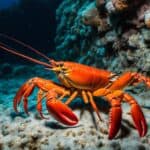
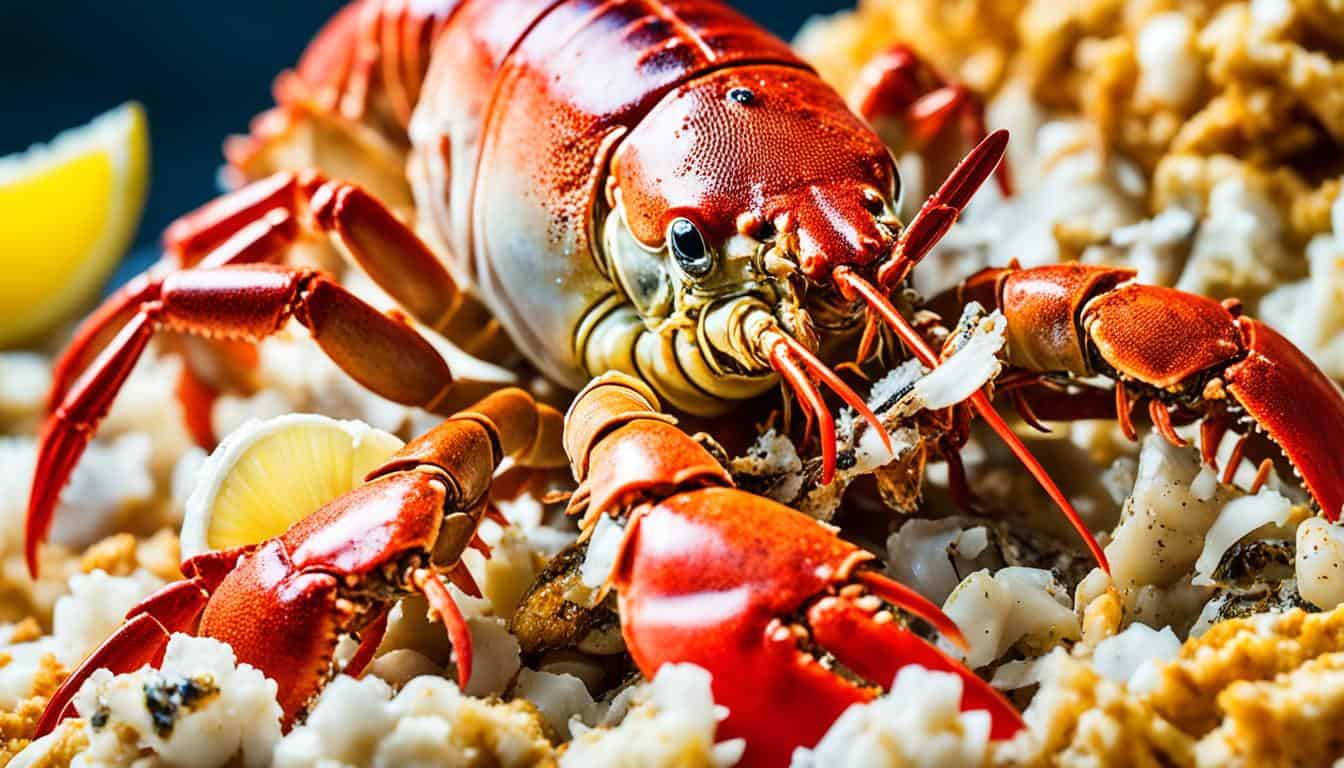
Knowing what lobsters eat is key for the balance of nature and the fishing industry. These marine animals eat a wide variety of foods. They are omnivores, which means they eat both animals and plants. Their diet helps them live in different coastal areas, from rocky shores to deep sea.
Exploring the world of lobsters reveals their eating habits and what they like to eat. Their diet changes based on where they live and what food is available to them.
Introduction to Lobster Diet
Exploring the lobster diet shows how important it is for their health and growth. People used to think lobsters were just scavengers. But, they actually hunt for live food like fish, crabs, and mollusks. This shows they play an active part in the ocean’s ecosystem.
Lobsters hunt at night, which is when they are most active. They look for food that fits their nutritional needs. This varied diet helps them grow and reproduce, which is key to keeping their numbers stable.
Looking into what lobsters eat and how they hunt helps us understand them better. This knowledge is the first step to learning more about their diets. It opens up a world of interesting facts about these sea creatures.
What do lobsters eat?
Lobsters have interesting eating habits that show how well they adapt to life in the sea. They don’t just eat whatever they find. Instead, they actively look for food. Their strong sense of smell helps them find different types of food around them.
They eat fish, crabs, clams, and mussels, showing they have a wide range of food choices. This variety in their diet is key to their survival.
Overview of Lobster Feeding Habits
Lobsters are opportunistic eaters, meaning they eat what they can when they can. They sometimes even eat other lobsters, showing how competitive their world is. Salted fish like herring is a great bait to use in traps because it draws lobsters in easily.
Nutritional Needs of Lobsters
Lobsters need a balanced diet of proteins, fats, vitamins, and minerals to grow and molt properly. Their main source of nutrition comes from animal proteins, which are vital for their health. When food is scarce, like in spring, they might eat sponges and plants too. This shows they can adjust their diet to stay healthy in different seasons.
Lobster Feeding Habits and Behavior
Lobsters are fascinating creatures, especially how they hunt at night. After the sun sets, they become more active. They use their claws to break open shells of other sea creatures, which is a big part of their diet.
They move around using their walking legs, which also help them find food. These legs have taste sensors that guide them to their next meal.
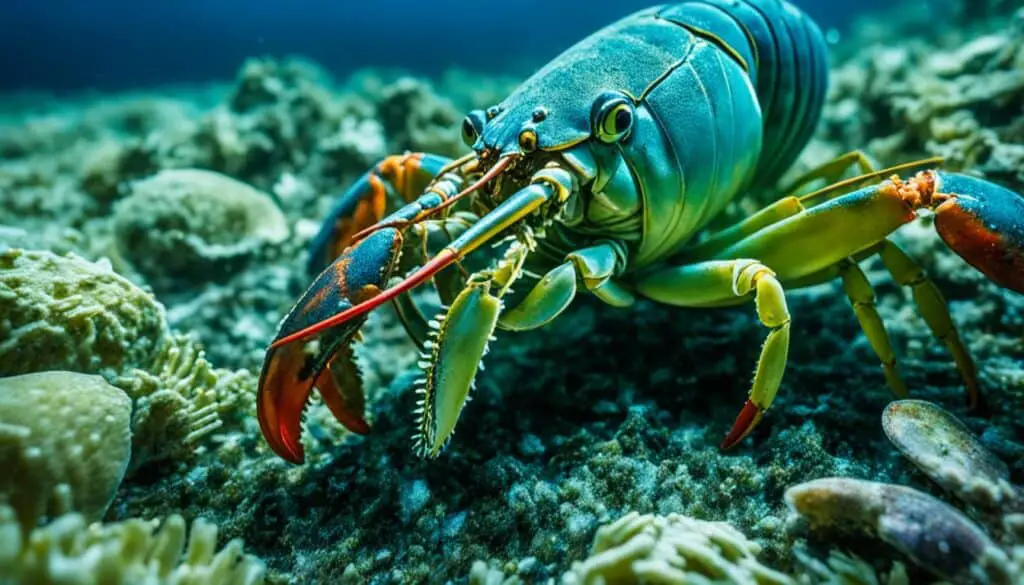
Lobsters are key to keeping the ocean’s balance. They help control the numbers of other sea animals. Their hunting ways show how they adapt and use their instincts to survive.
- Active at night, lobsters have less competition for food.
- They break open hard shells of clams and oysters to eat.
- They can taste food in the water and on the ocean floor.
- Their eating habits change with the seasons, based on what food is available.
This mix of how lobsters hunt and what they eat is crucial for their survival. Learning about their diet helps us understand their role in the ocean and why we need to protect their home.
Types of Food Lobsters Consume
Lobsters are adaptable creatures with varied diets. They eat both animals and plants, showing their flexible eating habits. This helps them survive and play important roles in their ecosystems.
Animal-Based Diet
Lobsters eat a lot of marine animals. They like to eat fish, mollusks, and other crustaceans. American lobsters are great at catching many types of prey, making them top predators in the sea.
They eat fresh animal matter to get the nutrients they need. This helps them grow, reproduce, and stay healthy.
Plant-Based Diet
Lobsters also eat plants when they can’t find enough animals to eat. They eat algae and sea plants during times of scarcity. This shows how adaptable they are in changing environments.
Both their animal and plant diets are important for their health. They use both to get the nutrients they need to survive.
FAQ
What are the primary components of a lobster’s diet?
Lobsters eat a mix of animals and plants, making them omnivores. They mainly eat fish, crabs, and mollusks. They also eat algae and other sea plants sometimes.
Do lobsters actively hunt for their food?
Yes, lobsters hunt for their food instead of just scavenging. They look for live prey like fish, crabs, and clams. Their strong sense of smell helps them find food.
What nutritional needs do lobsters have?
Lobsters need a balanced diet of proteins, fats, vitamins, and minerals to stay healthy. They mainly eat animal proteins, which are important for growth and shedding their skin.
How do lobsters find their food?
Lobsters use their strong sense of smell to find food. They forage on the ocean floor at night.
Are lobsters ever cannibalistic?
Yes, lobsters can eat each other when there’s not enough food. This happens more often during hard times.
Do lobsters eat plant-based foods?
Lobsters mostly eat animals, but they also eat plants like algae and sea plants. They eat these more often in tough seasons.
What are some examples of lobster prey items?
Lobsters eat different fish, mollusks, crustaceans, and sometimes sea urchins. This shows they are opportunistic predators in the ocean.
How do lobsters’ feeding habits affect the marine ecosystem?
Lobsters help keep the ocean balanced by controlling the numbers of their prey. This includes many marine animals.