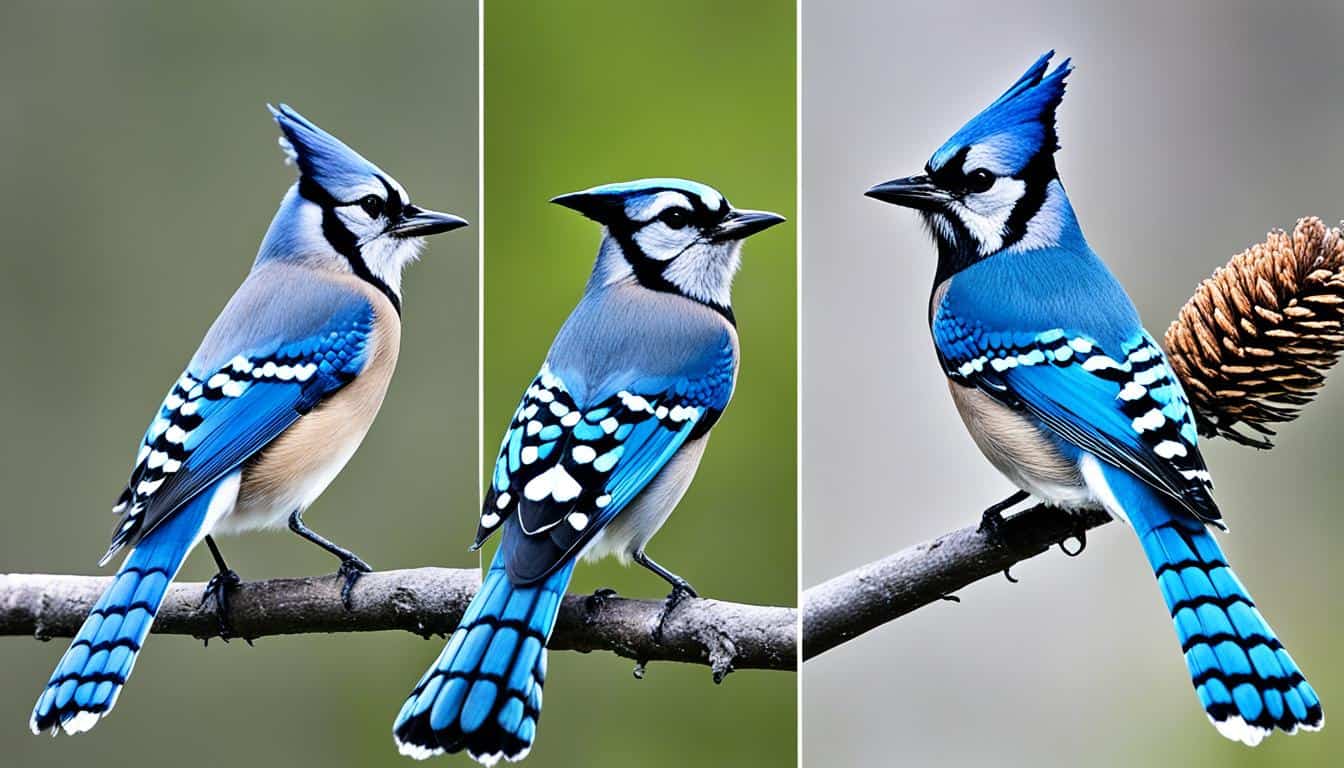
Ever wonder if the bright bird you see is a Blue Jay or a Steller’s Jay? They look a lot alike. But with a close look, you can see the differences. Knowing these details adds joy to seeing these amazing birds.
This guide will help you tell them apart. We’ll look at their colors, sounds, where they live, and how they make nests. It’s perfect for both new bird lovers and those who’ve been watching for a while. You’ll learn to enjoy birdwatching even more.
Introduction to Blue Jays and Steller’s Jays
Blue Jays and Steller’s Jays are from the Corvidae family. This family is known for being smart and having beautiful looks. They make any backyard brighter with their colorful feathers and loud sounds. The main difference between a blue jay vs stellar’s jay is where they like to live and how well they adapt to those places.
Blue Jays have started living in some areas not long ago. They are good at living in cities and places with lots of trees. Steller’s Jays, on the other hand, like to live in forests up in the mountains. Each bird has its own special qualities, which makes bird lovers really interested in them.
If you love corvid family birds, watching them in the wild is a great way to enjoy their beauty and brains. Each type of jay has features that show how well they fit into different parts of North America.
Knowing about these American bird species makes you see our bird life in a new light. Having these amazing jays in your yard or seeing them when you go bird watching is really special.
Physical Differences Between Blue Jays and Steller’s Jays
Blue Jays and Steller’s Jays each have unique looks. They are known by certain identifying characteristics which makes spotting them easier. Steller’s Jays have black crests and dark blue feathers. In comparison, Blue Jays have lighter, grayish chests with white on their wings and tail.
The tail feathers are another noticeable difference. Steller’s Jays have completely blue tails. Blue Jays, on the other hand, have a white band across their tail. They differ in size too, but this is harder to spot just by looking.
| Feature | Blue Jay | Steller’s Jay |
|---|---|---|
| Crest Color | Blue | Black |
| Feather Color | Light Grayish Chest, White Spots | Dark Blue |
| Tail Feathers | White Band | Complete Blue Tail |
Knowing the details can help when birdwatching. These differences guide you in telling Blue Jays and Steller’s Jays apart. Learning these details can make your birdwatching experience more interesting and fun. You’ll be able to spot these beautiful birds with confidence.
Identifying Characteristics: Blue Jay vs. Steller’s Jay
It’s interesting to learn about the Blue Jay and Steller’s Jay. They have different features that make them unique. Bird watchers love to spot these differences.
Plumage Colors
Blue Jays mainly show off blue and white colors. You’ll see them with bright, white wings and tails. This helps tell them apart from Steller’s Jays.
Steller’s Jays, on the other hand, shine in cobalt blue with some black. Their home affects how deep their blue is. This makes noticing bird colors important for IDs.
Crest Shape and Color
Looking at the crest is key for telling them apart. Steller’s Jays have a bold black crest. It has blue or white highlights, changing by area.
Blue Jays always sport a blue crest. Paying attention to how they use their crests helps in spotting who they are.
Recognizing these details is crucial for bird watchers. It helps in accurately identifying these stunning birds.
Habitats of Blue Jays and Steller’s Jays
Knowing the habitat distinction is key for birdwatchers wanting to see Blue Jays and Steller’s Jays. Blue Jays like areas next to forests and suburbs, especially where there are many trees. They also do well in places with a mix of different trees such as in neighborhoods.
On the other hand, Steller’s Jays live in places with a lot of evergreen trees, found mainly in the west. They also enjoy areas with both pine and oak trees in the Southwest. These spots are perfect for them, far from the cities where Blue Jays are more often seen.
The habitat distinction not just affects where you find these birds. It also shows how they’ve learned to live in different blue jay stellar’s jay environments. Knowing this helps in planning birdwatching trips and in understanding their avian ecosystems.
Behavior and Vocalizations
Learning the differences in how Blue Jays and Steller’s Jays act and sound is key to enjoying birdwatching. They have unique calls and eat diverse foods, which tell us a lot about their lives.
Calls and Sounds
Blue Jays are famous for their loud “jaay, jaay” warning calls and softer group chats. They even copy the cries of hawks. Steller’s Jays, on the other hand, make a sharp “shaak, shaak, shaak” noise. These sounds help them talk to each other, marking their territory and socializing.
Feeding Habits
Blue Jays and Steller’s Jays eat a lot, taking in seeds, nuts, bugs, and sometimes even eggs of other birds. They both show smarts when it comes to saving food for later. This cleverness is seen in how they hide peanuts and other treats.
They really like sunflower seeds, peanuts, and suet at bird feeders. This makes them regular visitors where these foods are placed.
How do you distinguish between a blue jay and a stellar’s jay?
When you try to tell a Blue Jay from a Steller’s Jay, look for key differences. A white tail band shows it’s a Blue Jay. Steller’s Jays, instead, have all-blue tails.
Their voices also give them away. Blue Jays make a “jaay, jaay” sound. Steller’s Jays make a harsh “shaak, shaak, shaak” noise.
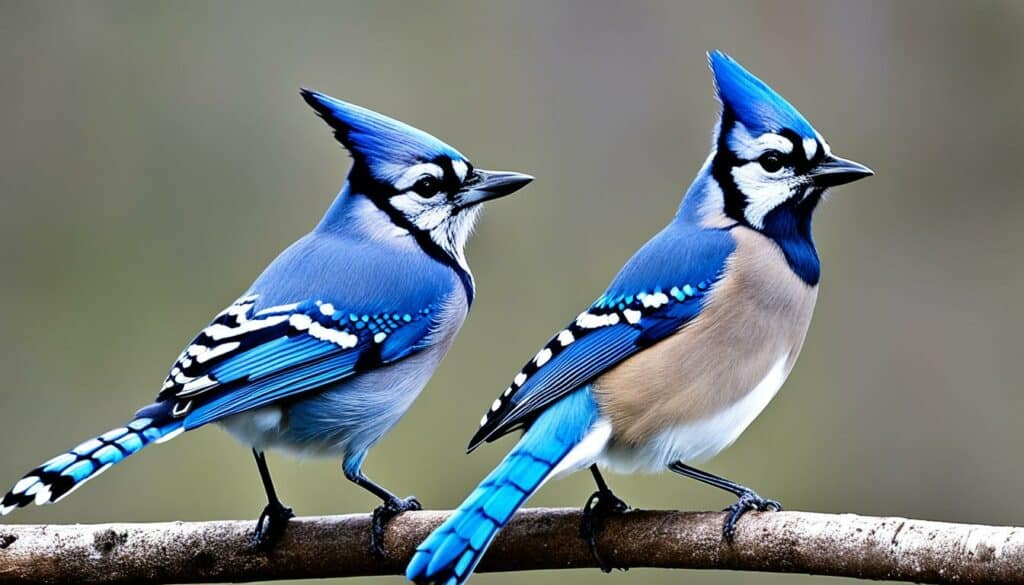
Blue Jays and Steller’s Jays have different diets and places they like. Blue Jays search for food in hardwood forests and suburbs. They eat seeds, nuts, and bugs.
Steller’s Jays live in coniferous forests. Their diet is similar but they eat what’s around in those areas too.
| Characteristic | Blue Jay | Steller’s Jay |
|---|---|---|
| Tail | White Tail Band | All-Blue Tail |
| Calls | “jaay, jaay” | “shaak, shaak, shaak” |
| Habitat Preferences | Hardwood Forests, Suburban Areas | Coniferous Forests |
| Feeding Behavior | Seeds, Nuts, Insects | Seeds, Nuts, Insects |
By knowing these features, you can tell Blue Jays from Steller’s Jays. This helps birdwatchers correctly name what they see. It makes birdwatching more fun and rewarding.
Nesting Practices and Breeding Habits
Learning about Blue Jays and Steller’s Jays and how they nest and breed is fascinating. Both birds have special ways of building nests and caring for their young. This ensures their chicks grow strong and survive well.
Nest Construction
Blue Jays and Steller’s Jays use mud when building their nests. Blue Jays pick deciduous trees, like cottonwoods, for their homes. Steller’s Jays, on the other hand, choose coniferous forests which are found at higher altitudes.
This shows how they each pick a place that suits their needs. It also tells us they are very good at adapting to different environments.
Parental Care
Parenting is a team effort for both Blue Jays and Steller’s Jays. They both help keep the eggs warm and feed the babies. This shows their strong commitment to their family. It also means the chicks get the best start in life.
| Species | Preferred Nesting Trees | Parental Involvement |
|---|---|---|
| Blue Jay | Deciduous trees such as cottonwoods | Both parents participate equally in incubation and feeding |
| Steller’s Jay | Coniferous forests | Both parents contribute to nestling care and ritual feeding |
Steller’s Jay babies stay with their parents longer than most birds. They remain until the first winter. This extra time with parents helps them grow and learn more before they’re on their own.
Geographic Range and Migration Patterns
Looking at where Blue Jays and Steller’s Jays live and how they move tells us a lot. Blue Jays started in the east but have moved west due to human activity. They now do well from forests to cities.
Steller’s Jays, unlike Blue Jays, are more rooted in the west and even reach into Central America. They like mountain areas and forests with pine trees. They tend to stay in their areas, moving a little for food and the weather.
Both kinds of jays move but in different ways. Blue Jays sometimes move for winter but not all do. This leads to changes in where they are at different times. Steller’s Jays don’t go far but will move around close by for food.
These moving patterns show how each bird type deals with changes. They remind us how vital it is to protect their homes to keep nature in balance. We must all play a part in looking after these amazing birds.
FAQ
How do you distinguish between a Blue Jay and a Steller’s Jay?
To spot a Blue Jay from a Steller’s Jay, look for a white tail band on the Blue Jay. The Steller’s Jay has a tail that’s all blue. Pay attention to their sounds, what they eat, and where they like to live for the right pick.
What are the physical differences between Blue Jays and Steller’s Jays?
The Steller’s Jay wears a black cap and dark blue suit. Blue Jays, on the other hand, sport a light gray chest and white wing spots. Unlike Blue Jays, Steller’s Jays have a fully blue tail.
What are the key identifying characteristics of Blue Jays and Steller’s Jays?
Blue Jays stand out with their blue and white color theme. They have clear white wing and tail signs. In contrast, Steller’s Jays shine with deep cobalt and black. Crest shapes and colors also differ; Blue Jays have a blue top, while Steller’s Jays are black on top with blue or white, depending on where they live.
What habitats do Blue Jays and Steller’s Jays prefer?
Blue Jays like forest edges and suburban spots with dense trees. Steller’s Jays favor evergreen and mixed-forest terrains in the west, and pine-oak areas down south.
How do the calls and sounds of Blue Jays differ from those of Steller’s Jays?
Blue Jays call out in a “jaay, jaay” and soft “toolool,” sometimes sounding like hawks. Steller’s Jays’ calls are sharp and quick, which they use for talking to each other and marking territory.
What feeding habits do Blue Jays and Steller’s Jays exhibit?
Blue Jays and Steller’s Jays eat a mix of foods, including seeds and bugs. They’re smart about hiding food for later. You’ll often see them at feeders, enjoying sunflower seeds and suet.
How do Blue Jays and Steller’s Jays construct their nests?
Both use mud to build their nests. Blue Jays pick deciduous trees, especially cottonwoods. Steller’s Jays go for softer nests in the woods. They both take care of their eggs and babies.
What parental behaviors do Blue Jays and Steller’s Jays demonstrate?
Blue Jays and Steller’s Jays share food rituals as couples and show strong parenting roles. They both take turns keeping the eggs warm and feeding their babies. Young Steller’s Jays learn to live alone after their first winter.
What are the geographic ranges and migration patterns of Blue Jays and Steller’s Jays?
Blue Jays have spread from the east to the west because of habitat changes. Steller’s Jays live mainly in the western U.S. and parts of Central America. They move around depending on the weather, which changes how they look and where they are found.