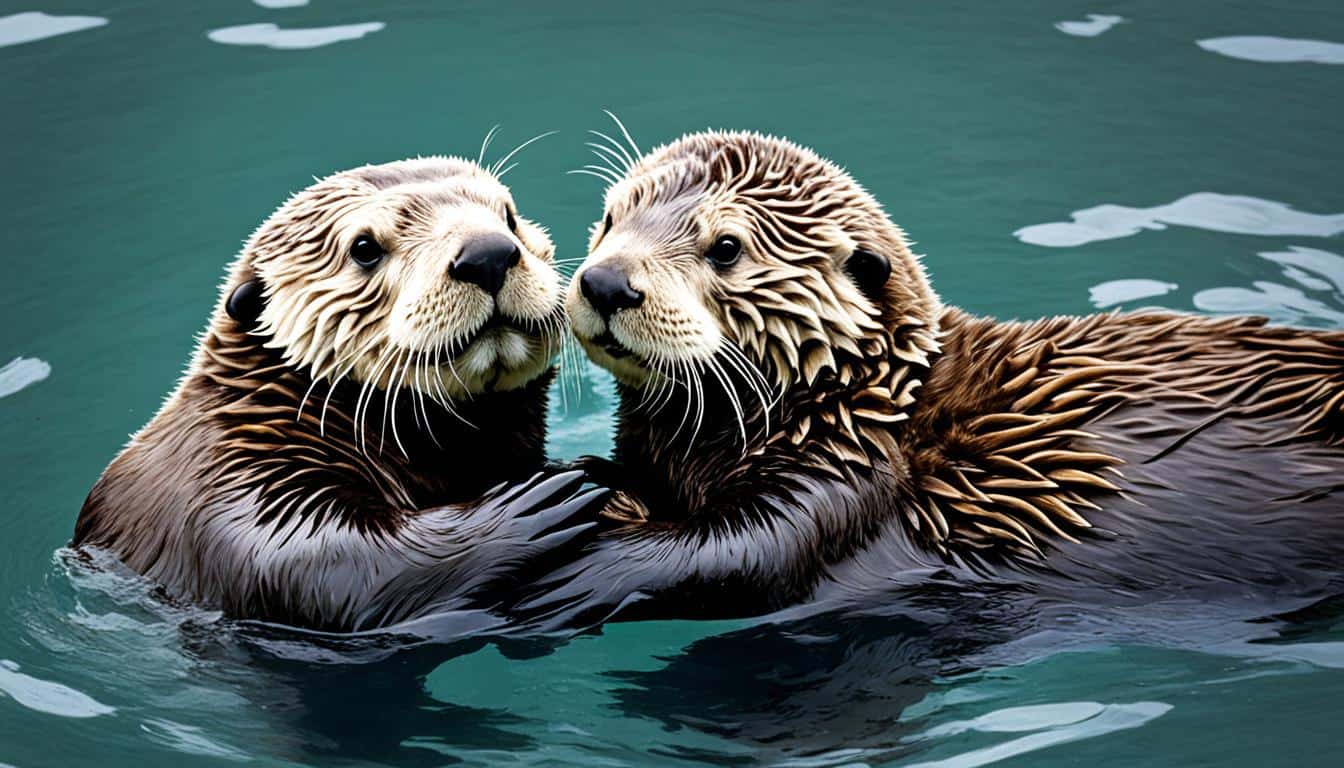
Sea otters are fascinating marine mammals with unique ways of reproducing that help them survive. To grasp how they reproduce, we need to dive into their sea otter mating behavior. We’ll also look at their reproductive cycle and the care they give to their young. This will help us understand their population and the health of their species.
Understanding Sea Otter Sexual Maturity
Sea otters have unique breeding habits that depend on their sexual maturity. This part explains when they become mature and what physical traits show they are ready to breed.
Age of Maturity
Female sea otters usually become ready to breed by four years old. Males take a bit longer, reaching maturity at five to six years old. Many males don’t start breeding until they are five to seven years old. This delay affects their breeding success and the sea otter population.
Physical Characteristics
Physical traits are key to sea otter sexual maturity. Mature females show they are ready to mate by being more social with males. Males grow bigger and stronger, which helps them in mating rituals. These physical changes affect their mating and breeding habits.
| Characteristic | Female Sea Otters | Male Sea Otters |
|---|---|---|
| Age of Sexual Maturity | Approximately 4 years | Approximately 5-6 years |
| Active Breeding Age | 4 years | 5-7 years |
| Physical Signs of Maturity | Increased social behavior | Larger body size |
Reproductive Cycle of Sea Otters
The reproductive cycle of sea otters is key to their survival in the ocean. It includes important stages that help them thrive. The gestation period is a critical part of this cycle, filled with changes that prepare the female for her pup.
This cycle gives us clues about their numbers and how to protect them.
Gestation Period
Sea otters are pregnant for about four to six months. During this time, the mother changes a lot to help her pup grow. Newborn sea otters weigh between 1.8 to 1.9 kg.
This early growth is crucial for the pup’s survival and becoming independent. The length of pregnancy is key to their reproductive success.
Seasonal Patterns
Seasons play a big role in sea otter reproduction. Mating happens in certain seasons, so pups are born when conditions are best. This helps the young survive.
Knowing these patterns helps us manage wildlife and protect sea otters better.
Mating Behavior in Sea Otters
Sea otters have complex mating behaviors that show how they live and reproduce. They are known for their unique body parts and interesting ways of finding a mate. Let’s look into their territorial nature and how it affects their mating.
Territoriality and Copulation
Male sea otters create territories that are key for mating. In these areas, they try to mate with many females. They show sea otter mating behavior by being playful yet sometimes aggressive. This depends on the food and shelter they have in their home area. A strong male may use force to stay on top in the social order.
Behavioral Characteristics
Sea otters also have social ways of mating. During courtship, males show off their strength and health. They make sounds to draw in females and show they’re there. These mating actions create complex bonds, showing how important their body parts are in finding a mate.
How do sea otters reproduce?
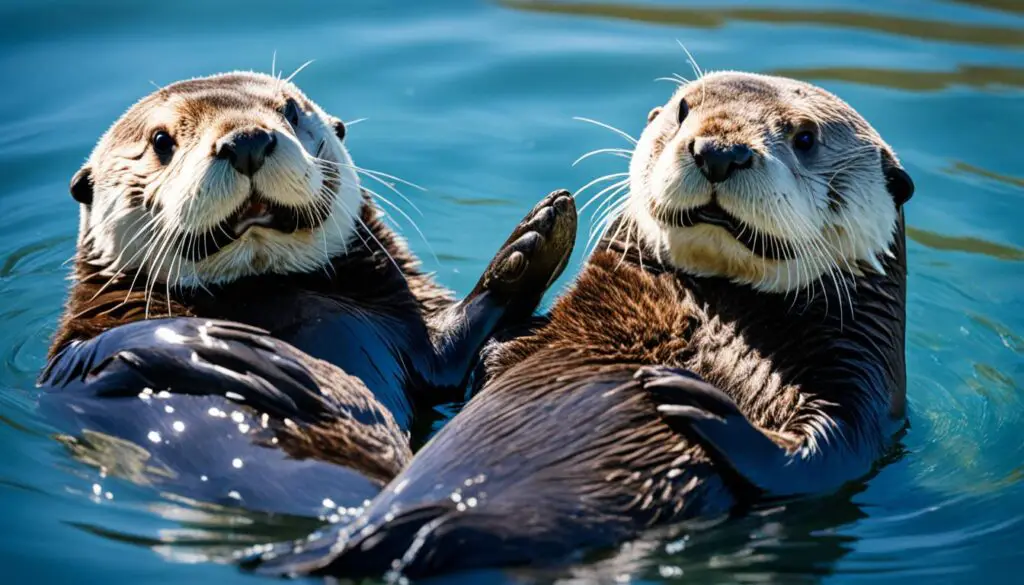
Sea otters have interesting breeding habits that show their unique social life. When it’s time to mate, male and female sea otters form temporary pairs. These pairs are key to their success in making more sea otters.
Mating Pair Bonds
These bonds can last from one to four days. In this time, they groom each other and play a lot. This closeness helps them feel emotionally connected and makes them more likely to have successful mating.
This caring nature of their bond is crucial. It makes sure both partners are ready in body and mind for making more sea otters.
Successful Copulation
Sea otters mate multiple times to increase their chances of getting pregnant. They have many mating sessions in one day. This helps them fertilize more eggs.
They keep interacting with each other during these times. This keeps them close and supports them through the next steps of making more sea otters.
| Aspect | Details |
|---|---|
| Mating Duration | 1 to 4 days |
| Copulatory Acts | Multiple sessions per day |
| Bond Reinforcement | Mutual grooming and play |
Parental Care After Birth
After sea otter pups are born, the mother takes on a key role. She focuses on the care and well-being of her young. This shows her deep commitment to her pups during their early life stages.
Maternal Investment
Female sea otters do a lot for their pups. They nurse them, giving them the nutrients they need to grow. This nursing lasts from five to eight months, facing many challenges in the water.
Grooming is also crucial, keeping the pup’s fur in good condition and helping it stay buoyant. The mother protects her pup from dangers, ensuring its survival in a tough environment.
Pup Development
Sea otter pups grow and develop in stages. At first, they depend on their mothers for warmth and safety. As they get older, they learn how to swim and find food.
The mother guides them, helping them become independent. By six months, pups start to live on their own, but they still rely on their mother’s guidance until they’re fully adapted to their surroundings.
Challenges in Sea Otter Reproduction
Sea otters face many challenges in reproducing, which can make it hard for them to survive. Rising ocean temperatures and damaged habitats reduce their food, affecting pregnant and nursing mothers. This scarcity of food makes it hard for mothers to stay healthy and care for their young.
Humans also harm sea otters by polluting their homes and getting them tangled in fishing gear. This leads to more deaths among female otters. With fewer females, there are fewer chances for males to mate, making it harder for the species to grow.
Male otters’ aggressive mating ways add to the problems. They fight hard for mates, which can hurt or kill females. This makes it even tougher for sea otters to reproduce successfully. To help these animals, we need to focus on solving these issues to protect their numbers in the wild.
FAQ
How do sea otters reproduce?
Sea otters have a special way of reproducing. They form temporary bonds and show playful or aggressive behavior during mating. Males protect territories where they can mate with several females. The success of breeding can be affected by the environment and how aggressive males are.
What is the gestation period for sea otters?
Sea otters are pregnant for about four to six months. This time is important for the growth of the pup before it is born.
At what age do sea otters reach sexual maturity?
Female sea otters become ready to have babies around four years old. Males are ready a bit later, between five to six years old. But many males wait even longer to start breeding.
How do male sea otters establish territories?
Male sea otters pick territories based on where they can find shelter and food. These territories help them attract females and mate successfully.
Do sea otters form lasting bonds during mating?
Sea otters form short-term mating pairs that last one to four days. During this time, they mate and groom each other, which helps them have successful reproduction.
What kind of maternal care do sea otters provide to their pups?
Female sea otters take full care of their pups. They feed, groom, and protect them. This care lasts about five to eight months, helping the pup grow and survive.
What challenges do sea otters face in reproduction?
Sea otters face many challenges that affect their ability to reproduce. These include changes in the environment, not enough food, high death rates, and fighting during mating. These issues can make it hard for their populations to stay stable.