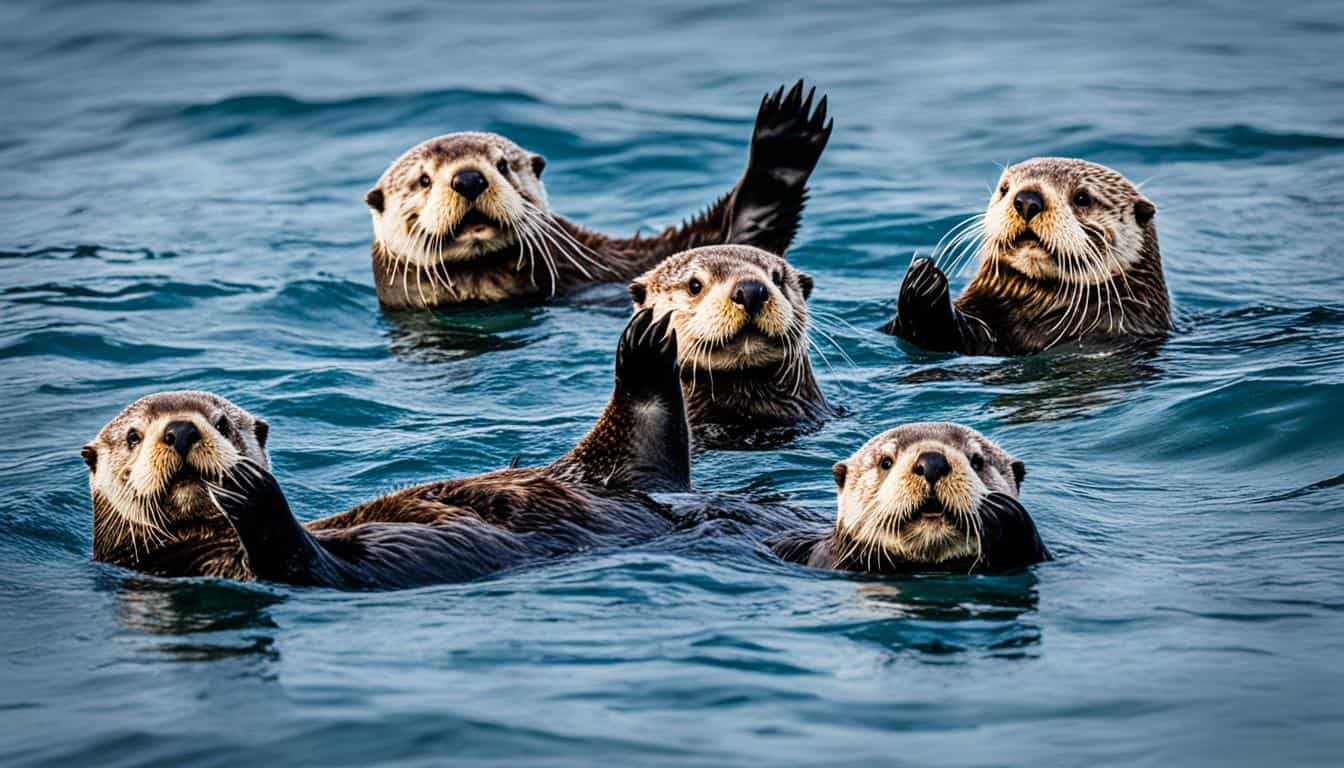
Sea otters play a big role in the ocean’s health. They eat a lot of invertebrates and slow fish. Their sea otters food habits show what they like to eat and how they find it. They need to eat a lot every day to stay healthy, which makes them hunt in a special way.
Their whiskers are super sensitive, helping them find food in cloudy water. This skill is key to their sea otters feeding behavior.
Learning about their hunting ways helps us understand how they survive and affect the ocean.
Understanding Sea Otters’ Diet Preferences
Sea otters have a unique and varied diet that shows how they adapt to different places. Their food choices reveal their individual eating habits and how they affect the environment. Knowing this helps us understand how they survive and is important for conservation.
Primary Food Sources
Sea otters mainly eat slow-moving marine animals. Their main foods are:
- Crabs
- Sea urchins
- Abalones
- Clams
- Mussels
- Snails
What they eat changes with their location and the seasons. This shows how closely tied they are to their surroundings. Sea otters often focus on certain foods to avoid fighting with others for food.
Diverse Nutritional Needs
Sea otters need a lot of food because they have a fast metabolism. An adult can eat up to 15 pounds of food a day. This is key for keeping warm in cold water and helps them survive changes in their environment.
| Prey Type | Nutritional Benefits | Typical Weight (per individual) |
|---|---|---|
| Crabs | Rich in protein and fats | 0.5 – 1 lb |
| Sea Urchins | High in calcium and nutrients | 0.3 – 0.5 lb |
| Abalones | Good source of iron and vitamins | 0.5 – 2 lbs |
| Clams | Rich in amino acids and minerals | 0.2 – 1 lb |
| Mussels | High in omega-3 fatty acids | 0.25 – 0.75 lb |
This variety of food shows how flexible sea otters are in their eating habits. It highlights their importance in marine ecosystems.
How do sea otters hunt for food?
Sea otters have amazing hunting ways that show how adaptable and skilled they are. They use different strategies to find and catch their food. They dive deep into the ocean to search for food, usually staying under 60 feet. But, they can go as deep as 300 feet if they need to.
Sea otters can feel their food moving with their whiskers. This helps them find food better. They mainly eat invertebrates, fish, and some crustaceans. They pick their food carefully based on what’s available and how nutritious it is.
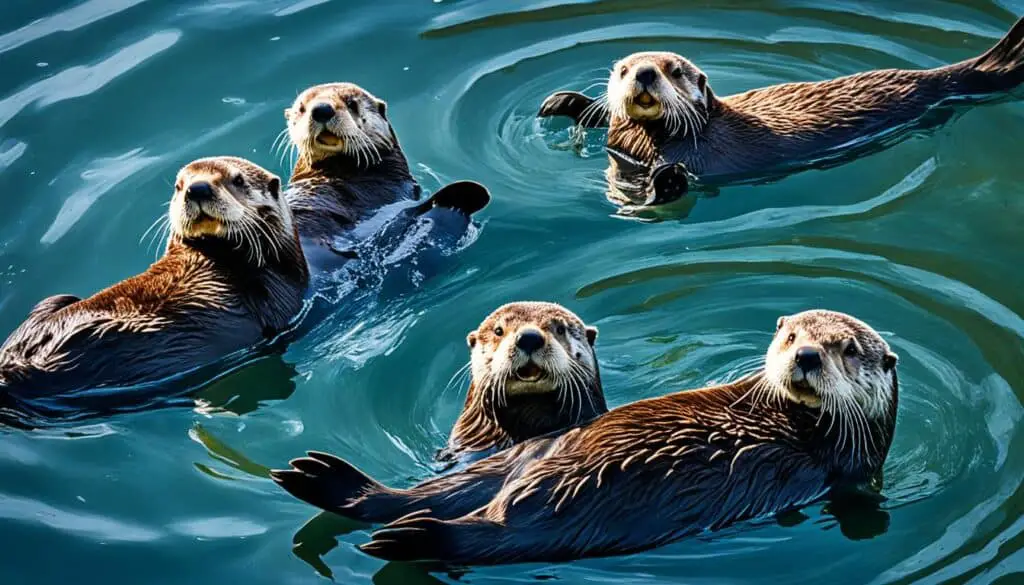
After catching their food, sea otters eat while floating on their backs. This way, they stay stable and can eat and do other things at the same time. Their way of eating shows how they use their hunting skills and eating habits to live well in the water.
Foraging Techniques of Sea Otters
Sea otters have amazing foraging skills that make them stand out. They can open hard shells to get to the food inside. This shows how smart they are and helps them survive.
They use tools in a smart way to forage. This makes them unique in the animal world.
Tool Use
Sea otters are great at solving problems, especially when eating. They use rocks to crack open shells of mollusks and crustaceans. They keep their favorite tools in a special pocket under their arms for easy access.
They pick the right tool for the job, based on the size and strength of the prey. This helps them eat more efficiently and hunt better. By choosing the right tools, they can eat a wider variety of foods. This shows how well they live in their ocean home and helps keep the marine ecosystem balanced.
| Tool Type | Prey Type | Description |
|---|---|---|
| Rocks | Mollusks | Used to break open shells efficiently. |
| Stones | Crustaceans | Hammered against shells to access protein-rich meat. |
| Hard Objects | Sea Urchins | Utilized to pry open tough exteriors. |
Feeding Behavior and Strategies
Sea otters have unique ways of finding and eating their food. They mainly eat at the surface and work together in groups. These actions are key to their survival and how they interact with each other.
Surface Feeding
Sea otters eat by floating on their backs, using their chest as a table. This lets them easily open shells and other food. Their way of eating shows how well they’ve adapted to life in the water.
At the surface, they can grab a variety of food, making the most of their meals.
Social Feeding Hierarchies
Sea otters eat in groups, and who gets the food depends on who’s bigger and stronger. This is called sea otters social feeding. Smaller otters often struggle to get the best food, leading to competition.
This competition shapes their eating habits and affects how well they feed.
| Feeding Strategy | Description | Impact on Social Structure |
|---|---|---|
| Surface Feeding | Otters float on their backs and use their chests to open food. | Encourages competitive interactions for surface prey. |
| Social Feeding | Dominant otters exert control over food access. | Establishes a hierarchy and influences group dynamics. |
| Cooperative Hunting | Occasionally, otters work together to catch larger prey. | Fosters bonds and enhances group cohesion. |
The Impact of Sea Otters on Their Ecosystem
Sea otters play a key role in their ecosystem as a *keystone species*. They greatly affect the health and balance of their environment. By eating sea urchins, they keep kelp forests healthy. These forests are crucial for many marine animals and help absorb carbon, making the ecosystem stable.
When sea otters do well, many other species benefit too. They let more types of plants and animals live in coastal areas. This leads to a healthier environment, thanks to sea otters keeping sea urchins in check.
Sea otters also tell us a lot about the ocean’s health. By watching them, scientists can learn about big changes in the environment. Sea otters show how all living things work together to keep the ocean healthy and diverse.
FAQ
How do sea otters hunt for food?
Sea otters hunt by diving deep into the ocean to find food. They use their sensitive whiskers to feel for prey in murky waters. They have special ways to catch slow-moving sea creatures and fish.
What are the primary food sources for sea otters?
Sea otters eat slow-moving sea animals like crabs, sea urchins, and snails. They also eat clams, mussels, and abalones. What they eat changes with the season and where they live.
What are sea otters’ dietary needs?
Sea otters need to eat a lot because they burn a lot of energy. An adult can eat up to 15 pounds of food each day. This shows how much they need to eat to stay healthy.
What hunting strategies do sea otters employ?
Sea otters dive to depths of about 60 feet to find food. They use their whiskers to feel for prey. Their strong hands help them dig for clams and other food.
How do sea otters use tools while hunting?
Sea otters use tools smartly. They carry rocks under their armpits to open hard shells of prey like mollusks. This makes hunting more efficient for them.
What is surface feeding in sea otters?
Surface feeding means sea otters eat on their backs while floating. They use their chests to open shellfish and eat other prey without sinking.
How does social hierarchy affect sea otters’ feeding behavior?
In sea otters, bigger otters take food from smaller ones. This creates a social order that affects who gets the best food in shared areas.
What impact do sea otters have on their ecosystem?
Sea otters are very important to their ecosystems. They keep sea urchin numbers in check, which helps protect kelp forests. This increases the variety of life in coastal areas.