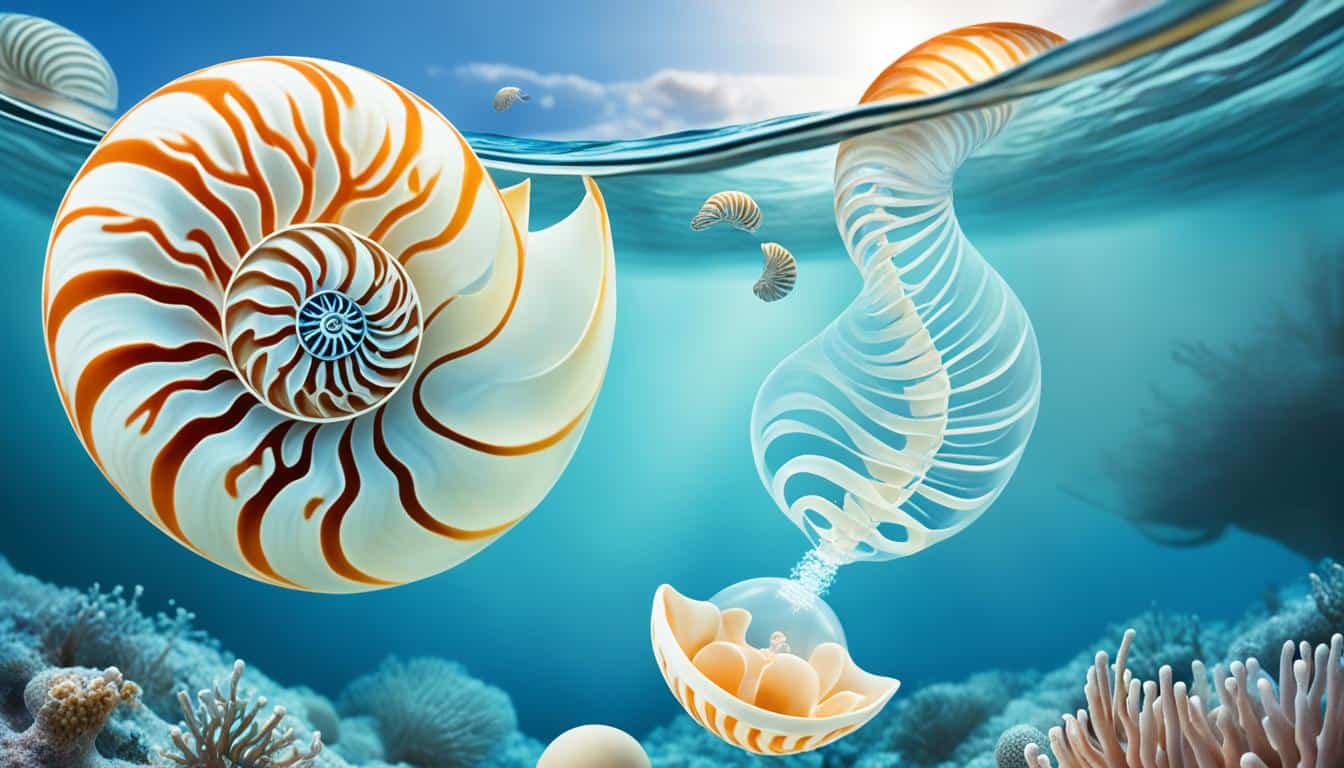
Nautiluses are fascinating creatures known for their spiral shells and unique ways of reproducing. They live mainly in the Indo-Pacific region. They don’t have specific mating seasons, so they can reproduce all year round. When they are between 10 to 12 years old, they start their reproductive journey.
Most of what we know about nautilus reproduction comes from studying them in captivity. This is because they live deep in the sea, making it hard to observe them in the wild. The number of males often exceeds females, which adds an interesting twist to their mating habits. Learning about how nautiluses reproduce helps us understand these amazing sea creatures better.
Nautilus Mating Behavior
Nautilus mating is unique among cephalopods. Captive studies have shown how they interact and mate. They don’t have fancy courtship rituals. Instead, they use smell to find and attract mates.
Insights from Captive Observations
Studies in captivity show that mating is simple for nautiluses. Males use a special organ to give females sperm. These mating sessions can last for hours. They mostly use smell, not sight, to communicate.
Sense of Smell in Mating
Smell is key for nautilus mating. They have poor eyesight but a strong sense of smell. This helps them find mates. Unlike other cephalopods, they don’t use sight to mate.
How do nautiluses reproduce?
The way nautiluses reproduce is quite fascinating. They have a special mating ritual. This process helps us understand their reproductive behaviors and the biology behind it.
Mating Process Overview
Male and female nautiluses go through a complex mating process. They start by swimming close together, often facing each other. This closeness lets them communicate with each other through body language and chemical signals.
Once connected, the male uses a special organ called the spadix to transfer sperm into the female’s body. This organ is made from modified tentacles. It’s key for successful fertilization.
The Role of the Male Spadix
The spadix is crucial in the mating of nautiluses. It helps the male deliver sperm packets, called spermatophores, during mating. These mating sessions can last for hours.
This long mating time might help increase the chances of successful sperm transfer. It also strengthens the bond between the mating pair. Knowing about the spadix helps us understand how nautiluses reproduce.
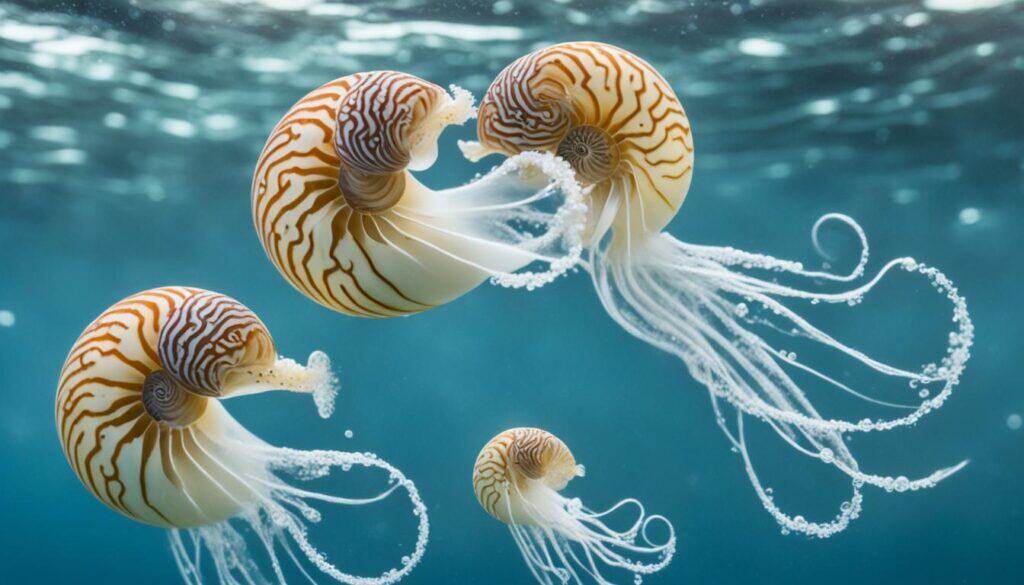
Nautilus Breeding Habits
Nautilus breeding habits show how they reproduce in unique ways. They don’t have set mating seasons like some other sea creatures. Instead, they mate whenever they find a suitable partner. This is because they are mostly alone, which makes finding a mate harder for females.
Occurrence of Mating
In the wild, nautiluses don’t mate often. This is mainly because they like to be alone. But in places where they are kept together, they try to mate more. This shows that finding a mate might be harder for them in the wild than we thought.
| Factors Affecting Mating | Wild Habitat | Captive Environment |
|---|---|---|
| Solitary Nature | Reduces encounters between males and females | Increases chances of finding partners |
| Mating Frequency | Infrequent, sporadic mating occurrences | Higher frequency of mating attempts observed |
| Environmental Factors | Limited due to competition and avoidance behaviors | Controlled conditions promote mating opportunities |
Learning about their breeding habits helps us understand more about nautilus behavior. It also shows the challenges they face in reproducing in their natural world.
Nautilus Reproductive Cycle
The nautilus reproductive cycle is quite interesting. It shows how long it takes for them to become sexually mature and how they lay eggs. This gives us a peek into their life cycle and how they reproduce.
Time to Sexual Maturity
Nautiluses take a long time to become ready to reproduce, usually 5 to 10 years. This long time lets them grow and develop fully. They are ready for reproduction after a lot of growth.
The time it takes to mature can change. This depends on things like food, their home, and the environment.
Egg Laying Process
Laying eggs is a key part of the nautilus life cycle. Female nautiluses lay one egg at a time. They use their tentacles to stick the egg to a hard surface.
This way, the eggs are safe and secure. The eggs are covered in a leathery membrane for 9 to 12 months. This protects them from harm and helps them survive.
| Stage | Details |
|---|---|
| Time to Sexual Maturity | 5 to 10 years |
| Eggs per Laying | One egg at a time |
| Protection Duration | 9 to 12 months |
| Egg Description | Leathery membrane |
Nautilus Offspring Development
The journey of nautilus offspring starts with the hatching of their eggs. These young ones are about 3 centimeters long at first. This size is bigger than many other cephalopods, giving them an advantage in the ocean.
Their early development is crucial for survival. They learn to control their buoyancy early on. This skill helps them move through the ocean’s depths, which is key for their growth.
Nautilus offspring show amazing behaviors and traits early on. Their soft, coiled shells protect and support them as they explore the ocean. They rely on their instincts and the ability to find food at this stage.
Watching these young nautiluses grow teaches us about their life cycle and challenges. It shows how they adapt to their environment.
The growth of nautilus offspring is complex, involving biology and the environment. As they grow, they become stronger and more independent. They turn into adults ready to face their ocean habitats. This shows how resilient and adaptable nautiluses are, helping them overcome underwater challenges.
FAQ
How do nautiluses reproduce?
Nautiluses reproduce in a unique way, without specific mating seasons. They can mate all year after reaching maturity at about 10 to 12 years old. Mating involves the male transferring sperm packets, called spermatophores, into the female’s mantle cavity using a special organ called the spadix.
What is the mating behavior of nautiluses?
Nautilus mating behavior is unique. Males use strong olfactory senses to attract females. In captivity, they tend to mate after being brought together, with interactions occurring without elaborate courtships.
What insights have been gained from captive observations of nautilus mating?
Captive observations show that mates often engage for several hours. This might be to facilitate sperm transfer and establish a bond. This gives us a better understanding of their mating interactions, which are less documented in the wild.
How does the sense of smell contribute to nautilus mating?
Nautiluses rely on their strong sense of smell to find potential mates and hunt for food. Their primitive eyes are not very effective in deep-sea environments.
What is the overall mating process of nautiluses?
The mating process starts with a male and female swimming face-to-face. The male uses his spadix to deliver spermatophores into the female, marking the beginning of their reproductive interaction.
What role does the male spadix play in nautilus reproduction?
The spadix is a specialized organ that allows male nautiluses to transfer sperm to females effectively. This unique adaptation is crucial for successful fertilization.
What do we know about nautilus breeding habits?
Nautilus breeding habits are opportunistic, with mating occurring whenever potential partners are encountered. Mating can be infrequent in the wild due to their solitary nature and female avoidance of each other.
How common is mating among nautiluses?
Mating occurrences in nautiluses are relatively rare in the wild, showing their solitary behavior. In captivity, however, they mate more frequently when gathered.
What does the nautilus reproductive cycle look like?
The nautilus reproductive cycle is prolonged, taking five to ten years to reach sexual maturity. This slow maturation process impacts their overall breeding frequency and success.
How do nautiluses lay eggs?
Mature females lay one egg at a time, using their tentacles to attach eggs to hard surfaces. This method is essential for the protection and development of the embryos.
What is the development stage of nautilus offspring like?
Nautilus offspring, when hatched, are larger than many other cephalopod species, measuring around 3 centimeters. They depend on their buoyancy control to navigate their environment during their early developmental stages.
Why is understanding nautilus offspring development important?
Understanding nautilus offspring development helps us see their adaptations and the challenges they face as they grow into adulthood. This is crucial for understanding their life cycle.