
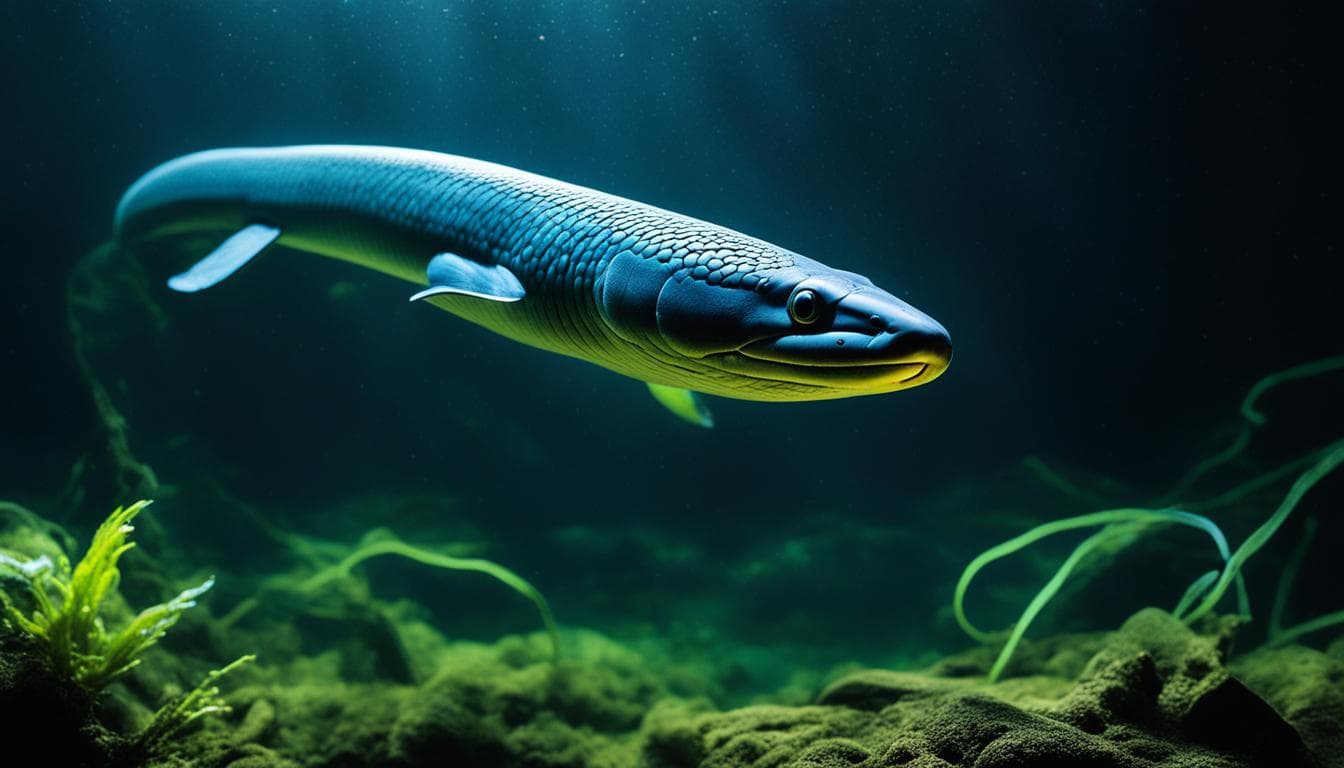
Electric eels are amazing creatures that live in the dark waters of the Amazon and Orinoco Rivers. You might ask, how do they find their way around in the dark? These fish have developed special ways to move through the water, helping them hunt and avoid obstacles. Let’s dive into their navigation skills, behavior, and adaptations that help them survive in the dark.
Introduction to Electric Eels
Electric eels, known as Electrophorus electricus, are part of the knifefish family. They are not true eels. These creatures can grow up to 8 feet long and have poor eyesight, like many other fish. They live about 15 years on average, which is quite long for their kind.
Living in murky waters, electric eels have special features. They can send out electric signals to talk to each other and find their way. This electric power helps them feel around and find food in the dark. Being active at night helps them hunt better, even when it’s hard to see.
Studying electric eels shows how they move through the muddy bottom. They are amazing hunters because of their unique skills. This makes them top predators in their world.
| Attribute | Description |
|---|---|
| Scientific Name | Electrophorus electricus |
| Length | Up to 8 feet |
| Average Lifespan | 15 years |
| Habitat | Murky freshwater environments |
| Sight | Poor eyesight |
| Key Adaptation | Electric signal emissions |
Electric Eels and Their Habitat
Electric eels live in northern South America’s special places. They are found in slow-moving waters like ox-bow lakes, streams, and flooded forests. These places often have dark waters with little light, perfect for the eels’ hunting and survival.
These amazing creatures like habitats with low oxygen levels, found in murky waters. As the seasons change, their home and behavior change too. In the rainy season, they move into more areas because of the rising water levels. But in the dry season, they stick to smaller pools, making them more at risk from predators.
Knowing about their underwater world helps us understand electric eels better. Their survival depends on the balance of their home, affected by things like the rain. This shows how electric eels can adapt to their dark, mysterious world.
| Season | Environmental Changes | Electric Eel Behavior |
|---|---|---|
| Rainy Season | Increased water levels | Expansion of territories |
| Dry Season | Smaller, isolated pools | Increased vulnerability to predators |
Understanding Electric Eel Behavior
The electric eel’s behavior is closely linked to its electric signals. These signals are crucial for survival in dark waters. They help the eel detect obstacles and find food without sight.
When hunting, electric eels boost their electric signals. They use weak pulses to find prey and strong jolts to stun it. This shows how important electric signals are in their hunting.
Electric signals also help eels communicate. They use them to mark territories or set social hierarchies. This shows how vital these signals are for social life.
Electric signals are also a defense mechanism. When threatened, eels release high-voltage discharges to scare off predators. This shows how electric eels have adapted to protect themselves.
Learning about electric eel behavior shows how they’ve adapted to tough underwater life. Their skills in navigation, hunting, and communication through electric signals are key to their survival. This highlights their importance in aquatic ecosystems.
How do electric eels navigate in dark waters?
Electric eels can move through dark waters thanks to their special electric signals. These signals help them find their way since they can’t see well. It’s a key way they get around in the dark.
The Role of Electric Signals in Navigation
Electric signals are key for electric eels to navigate. They send out low-voltage pulses to make a map of their world. This lets them know about obstacles, the size of things, and where other creatures are.
The strength and pattern of these signals give them important info for moving around. This skill is crucial in places where it’s hard to see.
Comparison with Other Electric Fish
Electric eels are known for their electric powers, but other electric fish have their own ways to navigate. Here’s a look at some differences:
| Species | Electric Signal Type | Voltage Output | Primary Uses |
|---|---|---|---|
| Electric Eel | Pulse and Wave | Up to 600 volts | Navigation and Predation |
| Electric Catfish | Pulse | Up to 350 volts | Defense and Hunt |
| Knifefish | Wave | Up to 60 volts | Navigation and Communication |
This table shows how different electric fish have unique electric abilities. The electric eel stands out for its skills in navigating and hunting in tough water environments.
Electric Eel Anatomy and Adaptations
Electric eels have amazing ways to live in their world. Every part of their body helps them survive and hunt. They are truly adapted to their environment.
Unique Respiratory System
Electric eels have a special way to breathe. They need to come up for air often because their homes have little oxygen. Their mouths have many blood vessels to help them breathe better.
This lets them live in places where other fish can’t. They get enough oxygen from the water to stay alive.
Body Structure and Electrical Organs
Electric eels are shaped for moving and shocking their prey. They are long and move smoothly through the water. Most of their body has electrical organs that can make strong electric shocks.
These organs have cells that work like batteries. The eels use these to hunt and protect themselves. Their body is a marvel of nature.
The Importance of Electric Signals
Electric signals are key for electric eels, helping them survive. They use these signals to move through dark waters where they can’t see well. By sending out electric pulses, they learn about their surroundings, like finding food or spotting dangers.
This skill helps them hunt and talk to other electric eels. As they swim, electric signals help them know where they are and what’s around them. This makes it easier to dodge obstacles and find food.
In murky waters, electric signals are even more important. They help eels avoid predators or other eels they might run into. Electric eels have learned to hunt using this special sense. This lets them live well in complex underwater worlds.
Survival Strategies in Murky Waters
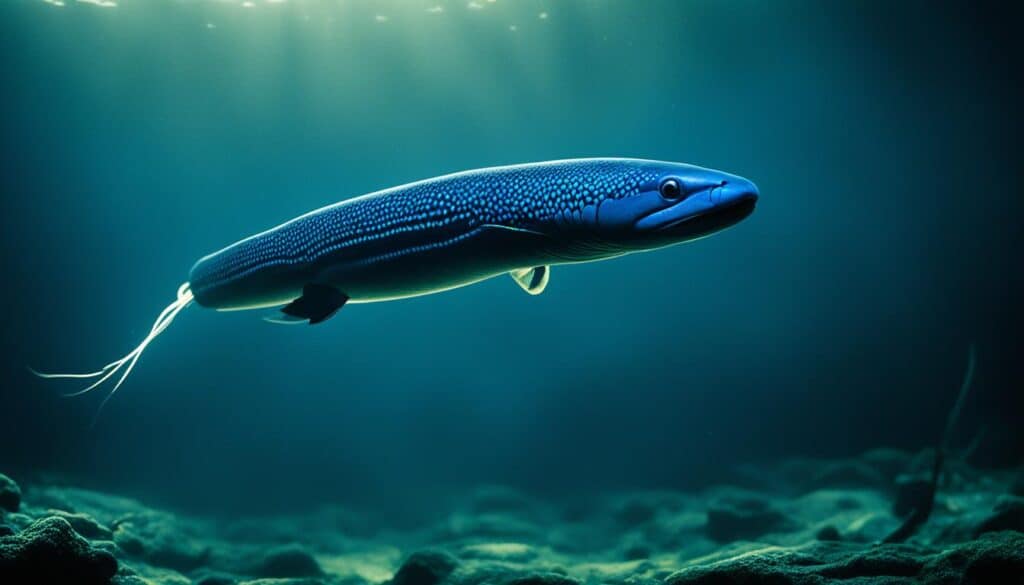
Electric eels have amazing ways to survive in dark waters. They use their special electroreception to find food in the dark. By creating electric fields, they can spot small fish even in deep, murky water. This makes hunting successful for them.
Electric eels also have strong defense tactics. They can send out electric shocks to keep away from big predators. This keeps them safe and shows they are top animals in the water world.
Let’s look at some key ways electric eels survive:
- Electroreception: They can feel electric fields from other animals, helping them move and hunt in the dark.
- Electric Shocks: They use electric shocks to defend against big predators.
- Camouflage: Their color helps them hide in murky water, giving them more protection.
- Behavioral Adaptations: They change how they hunt based on what prey is around and the water conditions.
These strategies show how electric eels can do well in tough environments. They adapt to the dark waters and make the most of it.
| Strategy | Description |
|---|---|
| Electroreception | Ability to detect electric fields produced by prey. |
| Electric Shocks | Method to repel predators and protect themselves. |
| Camouflage | Blending into surroundings to avoid detection. |
| Behavioral Adaptations | Adjusting hunting methods based on the environment. |
The Impact of Seasons on Electric Eel Behavior
Understanding how seasons affect electric eels is key. In the wet season, they can move into new areas. This lets them find more food and breed, which is crucial for their survival.
But the dry season is tough for them. With less water, they’re stuck in small pools, away from their usual homes. This makes finding food and avoiding predators harder. It also means they face more competition for what little resources are left.
Watching how electric eels change with the seasons teaches us about their survival skills. It shows us how they adapt and how we should protect their homes. This helps us understand their lives and why we need to save their habitats.
FAQ
How do electric eels navigate in dark waters?
Electric eels use electric signals like sonar to navigate in the dark. They send out weak electric pulses to find objects and prey. This helps them map their surroundings and move around even with poor eyesight.
What adaptations do electric eels have to thrive in murky waters?
Electric eels have long bodies for easy movement and electrical organs for high-voltage shocks. They can also breathe air in low-oxygen environments. These features help them survive in tough habitats.
What role do electric signals play in electric eel hunting behavior?
Electric signals are key for hunting. They help the eels find prey in the dark. By sending out weak pulses, they can detect nearby creatures. They can also deliver strong shocks to catch their prey.
How do electric eels communicate with each other?
Electric eels use electric signals to talk to each other. These signals share info about their location and status. This helps them stay connected, especially when they’re breeding.
Where are electric eels commonly found?
Electric eels live mainly in northern South America. They like slow-moving waters like ox-bow lakes, streams, and flooded forests. These places often have poor oxygen and a lot of mud.
How do seasonal changes affect electric eel behavior?
Seasonal changes affect electric eels a lot. In the wet season, they can move into new areas and find more food. But in the dry season, they get stuck in smaller areas and fight over food. This makes them more likely to be eaten by predators.
Are electric eels true eels?
No, electric eels aren’t true eels. They belong to the knifefish family, which is related to carp and catfish. They have their own unique body and physiology that makes them different from true eels.
How do electric eels protect themselves from predators?
Electric eels defend themselves by giving electric shocks to predators. This stops bigger animals from attacking them. It helps them stay on top of the food chain in their world.