
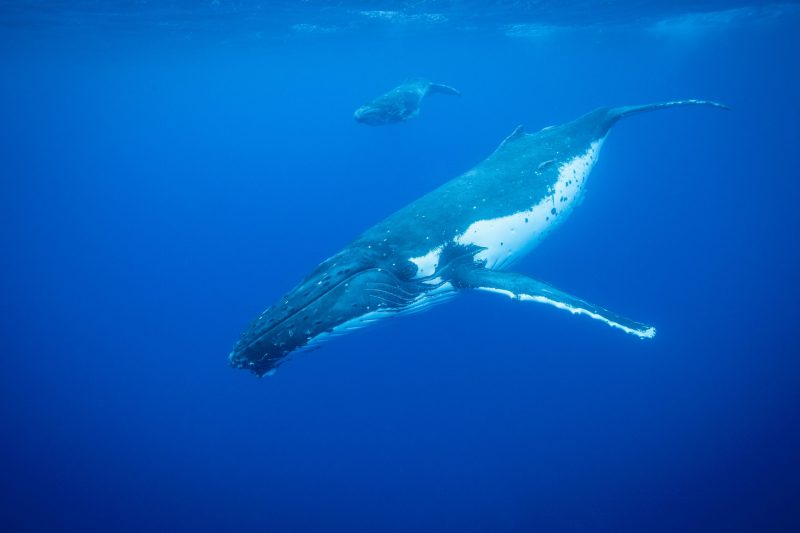
Whales are considered very cute but very sensible at the same time. They spend their whole lives in the ocean and mostly their diet depends on the small arctic creatures.
Well. If we talk about their reproduction then we will come to know how they reproduce. Female whales give birth to live babies and nurse them for several months, making them polygamous mammals.
During the breeding season, the male, also known as a male whale, mates underwater with the female, sometimes known as a cow whale, in a complex mating ritual that varies greatly from species to species.
Long migrations lead to oceanic breeding areas, vocalizations or songs, and, in certain cases, violent displays of dominance by large groups of male whales, such as humpback whales, are all part of the mating process.
So Do Whales lay eggs? No, that is not the case. Because whales are sea mammals, their offspring are carried in their uteruses and born alive! However, because whales are aquatic creatures, their birthing processes differ significantly from those of semi-aquatic and terrestrial animals. From courting to pregnancy, birth, and caring for the baby whale calf, this page will take you through the complete life cycle of the whale and the reproduction process.
How Do Female Whales Get Pregnant?
What causes whales to become pregnant? Many whales will travel to warmer waters during whale mating season, especially if they live in a cooler ocean location. Whales, like other mammals, have their unique courting activities during mating season to attract female whales.
Male whales compete for getting female attention by singing, calling, and sometimes caressing them. Female whales can be picky about who they mate with, and they have even been documented avoiding mating sounds for several days.
When a female whale is ready to mate, the female whale will mate with multiple different mates over several hours. She does this to boost her chances of becoming pregnant, as she only gives birth once every 1 to 5 years.
When a female whale gets pregnant, the length of her pregnancy varies substantially. A whale’s gestation cycle can last anywhere from 9 to 16 months, depending on the species.
How Whale Calves Are Produced?
During the migration, several whale calves can be produced as female whales try to reach warmer waters so that their progeny can be born in much more temperate settings.
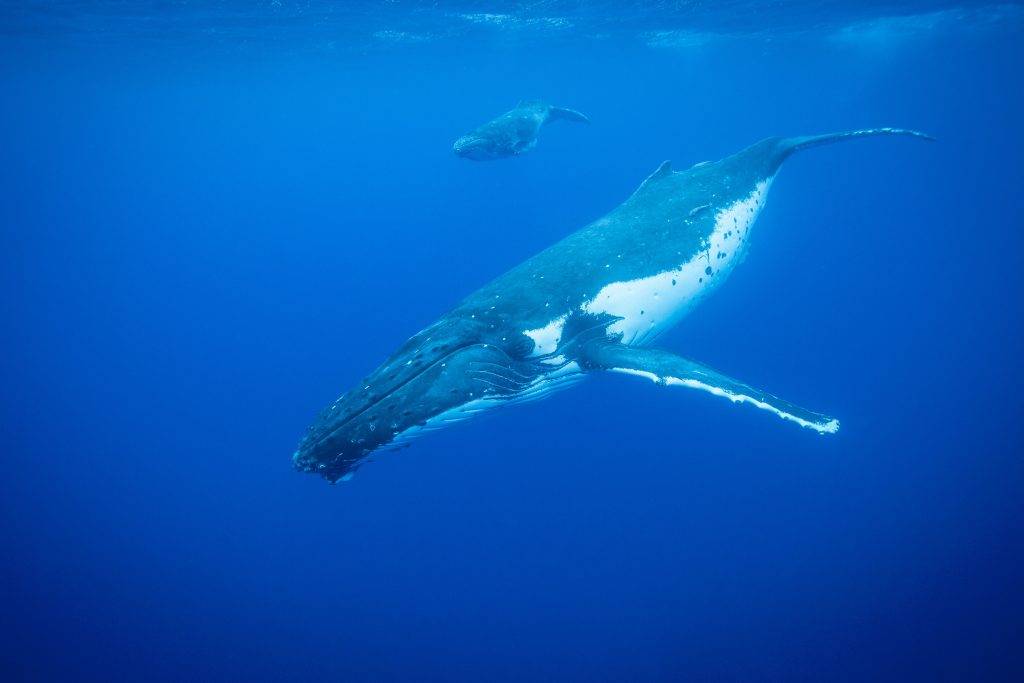
What is the process of giving birth to a whale?
Whale calves develop inside their moms and are produced through live births because they are mammals. During the birth of a whale, the calves will emerge with their fins first. The growth of a whale calf varies depending on the mother’s size, but you can predict it to be roughly 1/14 of the mother’s length.
As a result, a blue whale calf (the biggest whale) will be substantially larger than a grey whale calf, for example. When a female whale goes into labor, she usually nudges her calf to the surface of the water so that it can take its first breath.
What is the Reproduction Process of Whales?
Whales have a unique reproduction process. They are mammals and give birth to live young. However, you may wonder how whales get pregnant. Well, female whales have a reproductive system similar to humans. They release eggs and are impregnated by male whales. The fertilized eggs then develop inside the female until she gives birth to a calf.
Do Whales Give Live Birth?
Why whales do give birth to live calves. It can take from a few hours to many hours and mostly it happens during the migration of the females.
The calf emerges tail initially, the umbilical cord simply disconnects (I believe), and it begins swimming around almost immediately, aided by the mother. It must swim towards the surface to breathe immediately after birth.
Lactation in whales is fascinating. The calf does not drink the milk; instead, it hooks its mouth onto the nipple, and the mother produces the milk in a flow into the calf’s mouth. Because the milk is so fat, it doesn’t dissolve as easily in the ocean.
Some whale calves can use their tongue to make a half “seal” around the nipple, although there is often a cloud of milk flowing out into the water. So, the calf stays with her mother for at least 6 months and learns to swim and other essential things. In this way, it also stays safe from other predators.