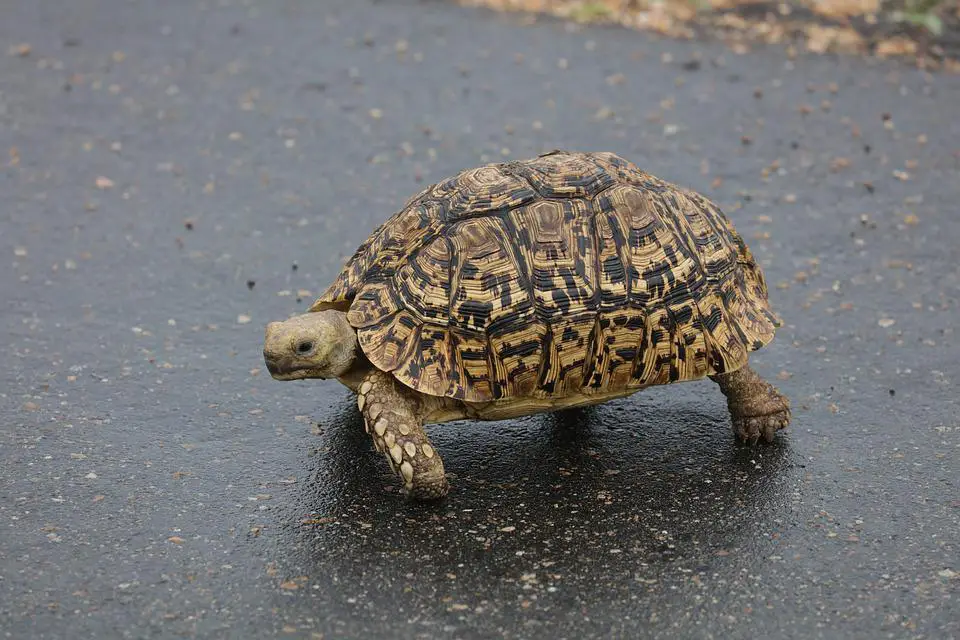
No, when the nighttime temperatures dip below 15 degrees Celsius (60 degrees Fahrenheit), leopard tortoises do not hibernate; thus, they require additional warmth.
How long does a leopard tortoise hibernate?
Leopard tortoises do not hibernate. In certain sections of their territory, they may be forced to seek refuge in animal burrows when the temperature drops below freezing, but in the majority of their range, they encounter a considerably smaller range of temperatures. In most cases, that corresponds to temperatures between 21 and 38 degrees Celsius.
Why do leopard tortoises not hibernate?
Leopard Hibernation is not an option for tortoises. They originate from a place where the temperatures are generally warm and stable. The biological mechanism for these tortoises to attempt hibernation is still present, but instead of their metabolism slowing down, it just ceases to function altogether. They are unable to hibernate due to their physical makeup.
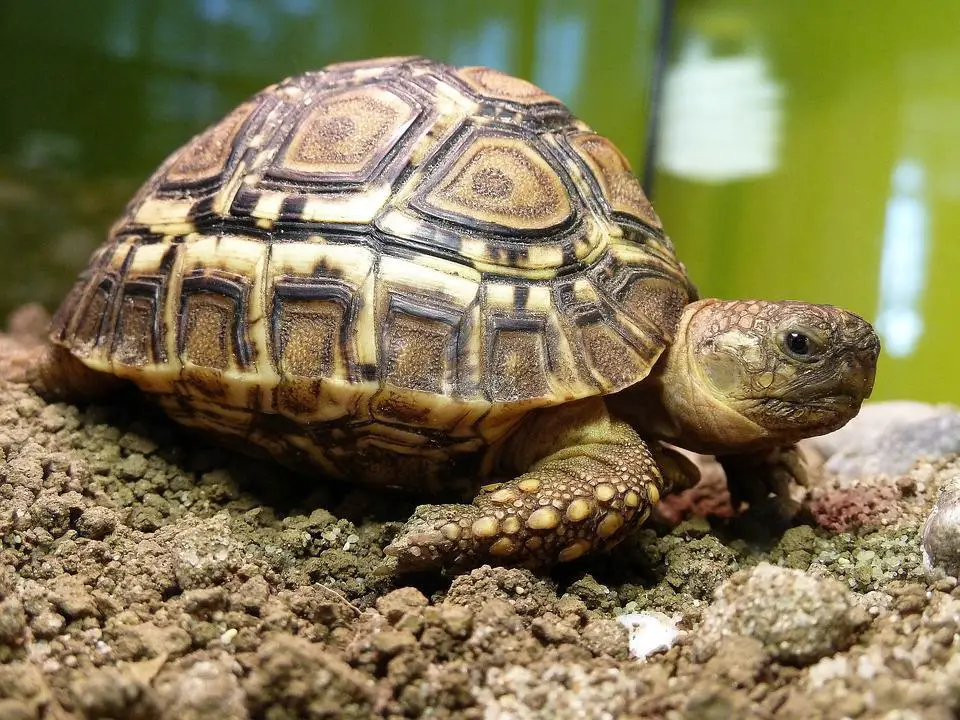
How cold is too cold for leopard tortoises?
In most cases, that’s between 21 and 38 degrees Celsius (70 and 100 degrees Fahrenheit). The ideal temperature range for an indoor leopard tortoise is between 75 and 90 degrees Fahrenheit, with a basking temperature of 95 degrees Fahrenheit.
How do I know if my tortoise is too cold?
In order for the tortoise to survive hibernation, the environment must be maintained at a temperature of between 38 and 48 degrees Fahrenheit. They are at risk of dying from freezing to death if the temperature drops below 38 degrees for an extended period of time. Even if they do not perish as a result of extreme temperatures, they may be rendered blind or have tissue damage that is irreversible. It may end up drowning.
How do I keep my leopard tortoise warm at night?
When the temperature dips below 45 degrees Fahrenheit at night, tortoises require a heat lamp or another alternate source of heat. Tortoises will make the appropriate adaptations by burrowing into their bedding in order to retain body heat if the temperature is maintained at this level and the tank is insulated.
Is a leopard tortoise a good pet?
The majority of the time, they have a kind disposition but are not the most interesting of pets. Although leopard tortoises are not aggressive toward humans, larger tortoises are more likely to mistake a human finger for food. They like to avoid being handled too frequently. If they perceive that they are in danger, their natural defensive mechanism is to withdraw into their shells.
Are leopard tortoises hard to keep?
Tortoises shouldn’t be kept as pets by very young children, and even experienced owners shouldn’t handle them too frequently. Tortoises with leopard markings tend to be timid and will hide their heads and limbs when approached. They will, however, usually learn to know their caretakers over time and will come to them for food.
What is the lifespan of a leopard tortoise?
Any person who is considering keeping a leopard tortoise as a pet needs to keep in mind and give serious consideration to the fact that these tortoises, like many other species of tortoise, are capable of living for a very long period of time. It is not generally known how long they live in the wild, although it is estimated that their typical lifetime is anywhere between 80 and 100 years.
How often do you feed leopard tortoise?
Feed adults two to three times each week, and feed hatchlings every day. It is recommended that grasses and straw make up between fifty and eighty percent of your tortoise’s diet. However, dark, leafy greens such as kale and collards are excellent alternatives for additional foods.
Can Pacman Frogs Hibernate in Captivity Like Leopard Tortoises?
Yes, pacman frogs can hibernate in captivity. Unlike leopard tortoises, pacman frogs don’t experience a true hibernation period; instead, they enter a state of inactivity due to cooler temperatures and reduced feeding. This hibernation-like behavior helps them conserve energy and cope with seasonal changes. Hence, does pacman frogs hibernate in captivity.
Do leopard tortoises need heat lamp?
Because they are cold-blooded, often known as ectothermic, tortoises are unable to independently control their body temperature. Therefore, they need a heat source that is external, and a heat lamp emits ultraviolet light, which is necessary for maintaining healthy bones and shells.