
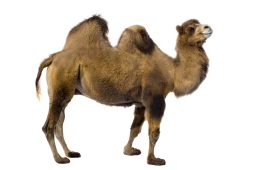
A Dromedary has one hump and a Bactrian Camel has two humps. They live in very different places – but both are technically camels. It is all about the humps!
What Is The Difference Between A Bactrian Camel And A Dromedary?
As with most animals in the world – lots of them look very similar – but aren’t actually the same. However, these two camels – or camelids – are very closely related. And weirdly there are actually three of them, check below.
Distant relatives of the Llama and Alpaca – these Old World camelids can easily be told apart by their humps. One species only has one hump and the other type (currently split into two different species) has two humps – big hairy ones too.
Dromedary (Camelus dromedarius):
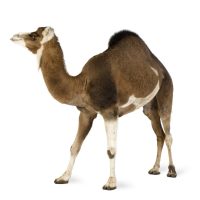
The Dromedary is a common camel across northern Africa and Arabia and is often used for both riding and as pack animals – incredibly well suited to life in dry climates. They are very tall (reaching around 1.8m (5ft 9″) in height at the shoulder) – and the hump can add up to another 20cm (8″) to that.
They are perfect for traveling slowly over the desert and rocky habitats – and can go for some time without drinking. A dromedary can easily go for a week and potentially up to a month without drinking. They soon rectify this at an oasis – where they are able to guzzle 10-20 liters of water a minute through an intricate biological system they have evolved.
Dromedaries don’t need to eat every day either – and can also lose 30% of their body weight with no ill effects.
Bactrian Camel (Camelus bactrianus)
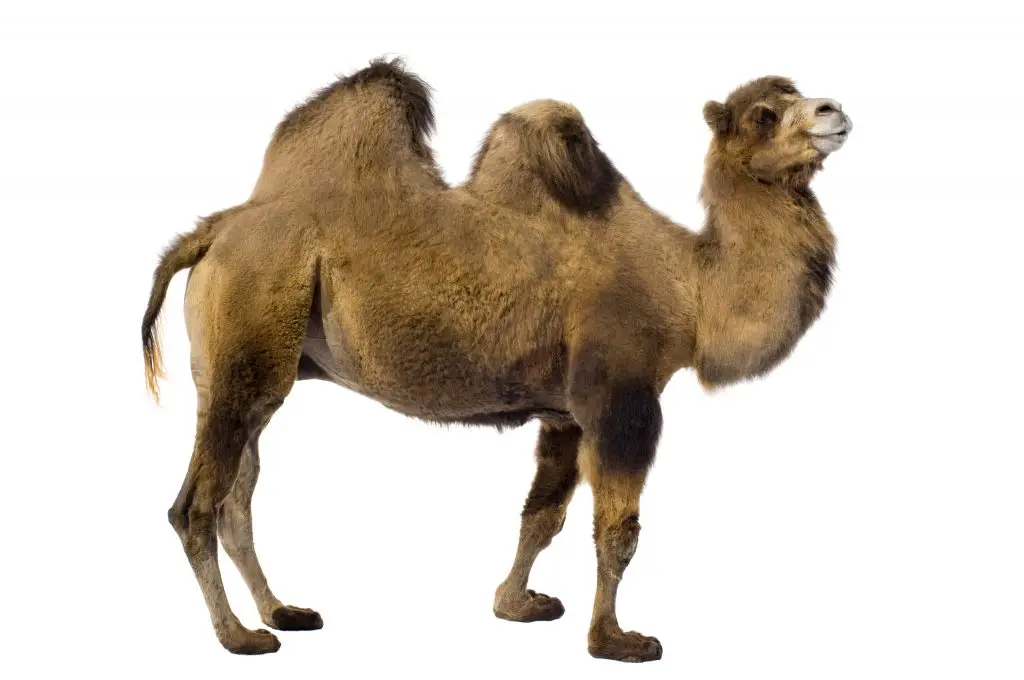
The Bactrian Camel is more commonly found across central Eurasia, which had them in prime position for being the backbone of the Silk Road trading route. They are one of the best pack animals in the world in terms of weight carried, domesticity and distance traveled.
Bactrian Camels are a fully domesticated species with no wild individuals anywhere in the world. These species are the largest camelid species and were domesticated around 2000+ years ago – and have been livestock ever since.
There are pockets of feral Bactrians across the range – as there are feral Dromedary populations also – but both are not wild at all. They can easily hybridize where their ranges overlap (or were kept together in captivity) producing fertile offspring.
Wild Bactrian Camel (Camelus ferus)

The third species is little known – mainly because it was never domesticated. This 100% wild species of camel is listed as Critically Endangered and is only found in small pockets of northwest China and southwest Mongolia. They are slightly smaller and less hairy than the domesticated Bactrians – but just as hardy. They are one of the only animals in the world that can drink saltier water than the sea without any ill effects.
The Wild Bactrian isn’t the wild version of the domestic Bactrian – they evolved from completely different ancestors – but their ranges, appearance, and behaviors do overlap. They often find themselves battling summer temperatures of up to 50oC (122oF) and down to -30oC (-22oF) in winter. A true survivor.
Can You Ride On A Camel?
Both the domestic Bactrian and the Dromedary can be trained to accept riders. They are both generally placid creatures as adults and tolerant of carrying great weights over long distances. So a human passenger is not a problem.
However, an untrained or very young camel – or a camel in pain or discomfort – might be a different matter entirely!
Alternatively – you can actually go camel racing. Dromedary camels are very fleet of foot and can run at decent speeds – even with riders. There are different breeds of camel (as with horses) and some are believed to be better or faster than others.
Starting their racing careers with basic training at age 3 – they can be quite troublesome – but gradually come up to speed. They can easily outrun a horse in a desert and have long been used in battles through the centuries.
Do Both Camels and Dromedaries Have the Same Number of Humps?
Camels and dromedaries differ when it comes to humps. While dromedaries have a single hump, camels can actually have one or two humps. This distinction in the number of humps on a camel is what sets them apart. Despite this difference, both animals are well-adapted to survive in arid environments.
Are Camels Grumpy?
Yes, Camels can be very grumpy and strong-willed during training and when young. Although they are a domesticated species – they still have their own character – and can certainly make it known when they are displeased. Luckily, this is all well known by their keepers and training is slow and steady with the odd tantrum anticipated and overcome. Usually.
Just like other camelids – they have a range of noises and body language to show their mood or displeasure for you to keep your eye out for. Ears back or raised heads and grunting can be precursors to a wet sloppy face-full of part chewed stomach contents. So watch out for that one!