The American elk, known as wapiti, is among the largest animals found in North America. They roam from Canada’s northern parts to Mexico’s diverse terrain, doing so coast to coast. Such a wide span shows their ability to live in many places.
Historically, the American elk’s living areas have changed a lot. This is because of too much hunting and losing their homes. Yet, efforts to protect them have helped to keep and grow their living spaces. Bringing elks back to places they vanished has also made a big difference.
Today, these elks can be found in many different places thanks to work to keep them safe. People are working hard to make sure they have a good future.
Introduction to the American Elk
The American elk is a stunning animal in the deer family. Its large body and antlers make it stand out. These features make it the second tallest North American deer, just below the moose.
History and Etymology
The history of the elk’s name is quite interesting. Early European settlers called the moose “elk,” causing confusion. This mix-up led to the elk’s name being kept separate.
Native American tribes called the elk “wapiti.” This name comes from the Shawnee and Cree languages. It means “white rump,” pointing to the elk’s rear end markings.
Physical Characteristics
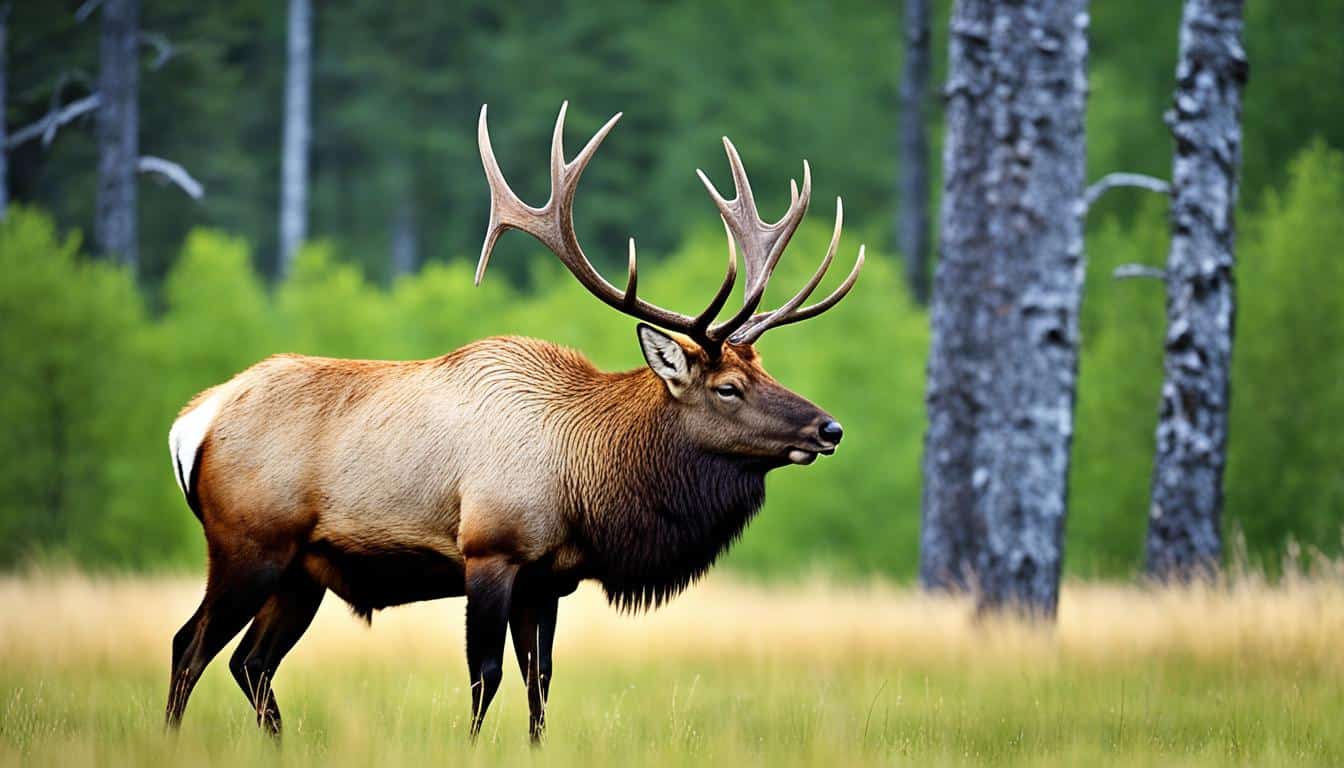
American elks, or wapiti, have striking physical features. Male elks, called bulls, have big antlers. These antlers can reach up to four feet across.
The elk’s bugle is a sound of the wild, signaling mates and warning rivals. Their impressive antlers and bugles show how unique and well-studied the elk is.
Historical Range of the American Elk
The American elk was once all over North America, from the deep Canadian woods to Mexico’s mountains. They also lived from the east’s shores to the western coast. Their home showed how flexible and tough they were as a species.
Pre-European Settlement
Before Europeans came, elks lived in many types of places. They were in thick forests, wide-open grasslands, and high mountains. Native tribes greatly respected elks, counting on them for food and including them in their stories.
Changes Over Time
When Europeans arrived, everything changed. Elk got hunted too much. The land was also changed for farming and cities. This made elk numbers drop a lot, even making some kinds disappear locally. But, in the 20th century, people started to help elk. They brought them back to some places and protected their homes. Elk numbers are now better across their old range.
Modern Range of the American Elk
The American elk now lives in many areas of the United States. They are most common from the Rocky Mountains to the Pacific Coast. Thanks to conservation efforts, their numbers have grown. This also helped their homes recover.
Current Distribution
In the west, states like Colorado, Montana, and Oregon are home to many elk. Places like Wyoming and Idaho also see big numbers of these animals. Efforts to improve their living spaces have really paid off for elk populations.
Populations by State
| State | Estimated Population |
|---|---|
| Colorado | 290,000 |
| Montana | 140,000 |
| Oregon | 125,000 |
| Wyoming | 110,000 |
| Idaho | 107,000 |
| Kentucky | 13,000 |
| Tennessee | 5,000 |
In places like Kentucky and Tennessee, elk have made a comeback. This was possible through successful reintroduction projects. Such work is key for keeping elk in their traditional lands. It ensures they can be found in many different areas across America.
What is the range of the American elk?
The current American elk range mixes past and present efforts to save these animals. These strategies help preserve the places they live. A long time ago, elk lived over a large part of North America. But, now, how we use the land has changed these places. So, we work on making new homes for them.
One big win for elk habitat restoration is fixing paths that were broken by us. Keeping these travel paths clear is key to letting elk move naturally. It also helps keep their gene pool diverse. We watch carefully how elk move to plan better spaces for them and make sure they have enough room.
Preferred Habitats of the American Elk
The American elk lives in many places across North America. Knowing where they like to be helps in protecting them. It also aids in managing their populations well.
Forests and Woodlands
American elk love dense forests and open woodlands. These places give them cover from predators and bad weather. They’re great for sleeping sites. Elk also enjoy forest edges for good grazing spots. This keeps their shelter and food needs in balance.
Grasslands and Meadows
Elk thrive in vast grasslands and meadows too. These areas are rich with food, especially in the warm months. They offer a variety of grasses and forbs, which are key to the elk’s diet and health. This is why they support large elk populations.
Winter and Summer Ranges
Elk move to different places in summer and winter. In summer, they go to high, green meadows and cooler areas. Winter sees them in lower valleys, finding food despite the cold. Their ability to adapt to changing seasons shows how they use all kinds of habitats throughout the year.
| Habitat Type | Season | Characteristics |
|---|---|---|
| Forests and Woodlands | Year-Round | Provides shelter, optimal grazing at edges |
| Grasslands and Meadows | Summer | Abundant food resources |
| Winter Ranges | Winter | Lower valleys, closer to food sources |
American Elk Migration Patterns
Migration is key for elk to cope with the changing seasons. They move between their summer and winter homes. This is due to the need for food and reacting to the weather. Their travels over long distances illustrate the awe of elk migrations.
Elk often travel hundreds of miles to find the best places to eat and breed. Knowing where they go helps protect their living areas. This supports efforts ensuring they can continue to travel these crucial paths.
Impact of Human Activities on Elk Range
American elk face significant challenges due to human interaction. Land use changes have brought both problems and chances for elk herds.
Urban Development
Cities and towns have grown, taking up the wild spaces elk need. This growth forces elk into smaller areas and blocks their traditional paths.
This can lead them into towns, looking for food, and causing problems. It puts people and elk at risk.
Agricultural Activities
Farms have also changed the elk’s world. Fields used for growing plants reduce the space elk have to roam.
Fences can block their way, and farm chemicals can harm them. It’s vital that farming protects elk homes.
| Human Activity | Impact on Elk | Consequences |
|---|---|---|
| Urban Development | Habitat Reduction | Increased human-elk conflicts |
| Agricultural Activities | Habitat Loss and Fragmentation | Disrupted Migration Routes |
| Conservation Efforts | Habitat Protection and Improvement | Enhanced Elk Populations |
Conservation Efforts
Many are working hard to protect elk habitats. Projects focus on saving their homes and creating safe passages for them.
Education and farming that considers wildlife are key. These actions help not just elk but also the natural balance of our ecosystems.
Regions with Significant Elk Populations
American elk are found in many areas of the U.S. Some places have a lot of them.
Rocky Mountains
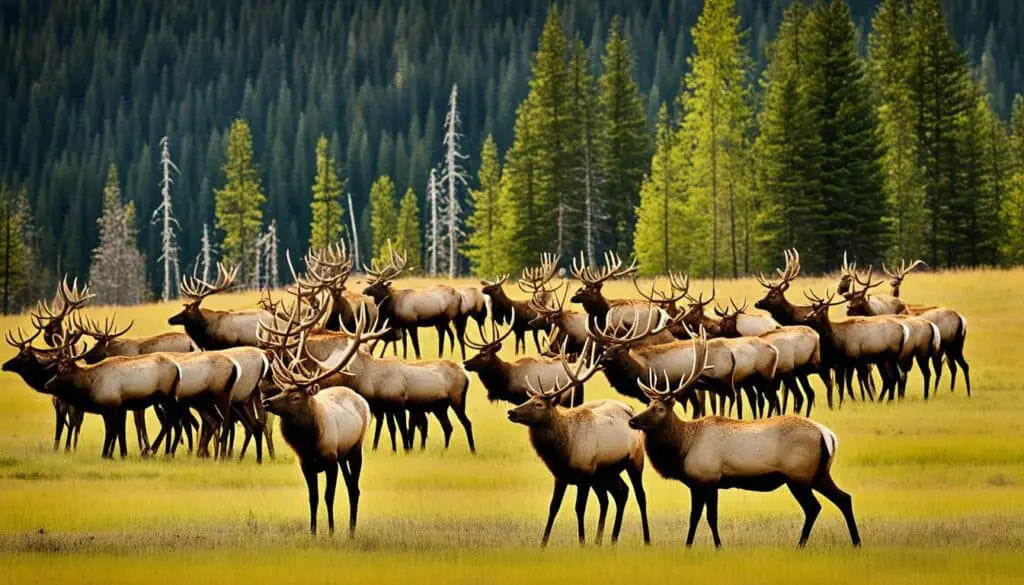
The Rocky Mountains stand out as a key area for elk. It offers vast lands and various plants. Places like Montana, Wyoming, and Colorado see many elk thanks to lots of food and hiding spots. The challenging landscape is ideal for their movements through the year.
Pacific Northwest
The Pacific Northwest is also a major elk haven. Its dense forests and friendly weather are great for elk. States like Oregon and Washington are famous for their elk. These animals enjoy lots of food and places to stay hidden.
Reintroduced Populations in Eastern U.S.
In the East, elk are making a comeback thanks to human efforts. Places like Kentucky, Pennsylvania, and North Carolina now have elk again. This work helps elk return to their former lands. It’s a big step in saving these creatures and their homes.
| Region | Key States | Noteworthy Facts |
|---|---|---|
| Rocky Mountains | Montana, Wyoming, Colorado | High elevation habitats support substantial herds. |
| Pacific Northwest | Oregon, Washington | Rich forests offer excellent forage and cover. |
| Eastern U.S. | Kentucky, Pennsylvania, North Carolina | Successful reintroduction projects have restored elk populations. |
Elk in Yellowstone National Park
Elk in Yellowstone are iconic wildlife in the U.S. They are part of a big effort to protect nature. With the help of many, they have found a way to live with us and still be wild.
Keeping an eye on the elk numbers and their homes is a job for many rangers and scientists. They make sure the elk have enough to eat and places to live in peace. This care not only helps the elk but keeps the park’s whole nature healthy.
Elk have lots of room to move in Yellowstone. This shows that efforts to keep it wild are working. People help by making sure elk have what they need and can move around without problems.
People keep track of the elk here closely, like how many are born each year and how many survive. See the table below for some key numbers about the elk. This helps everyone learn about the work needed to look after these animals in such a big, special place:
| Metric | Details |
|---|---|
| Herd Size | Approximately 10,000–20,000 |
| Annual Calf Births | 1,000–4,000 |
| Mortality Rate | 15–20% per year |
| Predator Management | Wolves, bears monitored |
| Visitor Encounters | Frequent but regulated |
| Habitat Utilization | Forests, meadows, river valleys |
As you visit Yellowstone, think about the elks’ story. Their success shows how nature and people can work together well. Thanks to careful watching and planning, these amazing beings can keep living here, giving joy to us all.
Conservation Status of American Elk
The American elk is considered ‘Least Concern’ by the IUCN. Yet, we must still watch over them closely. This is because they face threats like habitat loss, diseases, and climate change.
To help protect the elks, many actions are taken throughout North America:
- Building and protecting their homes to ensure they have what they need.
- Watching the elks closely to know how they are doing.
- Stopping diseases from harming them by using strict methods.
Protecting the elks involves looking at a few important things. It means keeping their homes safe. And making sure there are enough laws to stop too much hunting. Plus, learning a lot about how they live and work with the people living nearby. All this helps keep the elks safe, making sure they stay around for a long time.
But, saving the elks is not easy. It takes smart, science-based plans. These plans are always changing to face new dangers and protect the elks the best we can.
Reintroduction Programs for American Elk
Reintroduction programs are key to the comeback of American elk. They aim to bring back elk to places they used to live. This helps keep the environment healthy. But, these programs have both good and tough times to deal with.
Success Stories
Kentucky stands out in making elk come back. They worked hard and now have a big elk community. It’s one of the largest groups in the east. By working together, states, environmental groups, and new supporters made this happen. Their plan was smart, letting elk return to their old homes.
Challenges and Future Plans
The work’s not over, though. Elk still face big challenges. Issues like not enough space, sickness, and keeping their family tree varied are tough. Plans are made to keep the success going. This means making more room for elk, and taking care of their health and issues with people. It’s all about working with local folks and keeping the money coming to help the elk.
American Elk and Their Role in Ecosystems
The American elk, known as wapiti, are important for keeping their environment healthy and balanced. They are a keystone species. This means they greatly shape the land through their eating habits, which control plant growth.
Elk’s role in nature is key for keeping ecosystems diverse. They are important for several reasons. They are food for some animals and help spread seeds and nutrients. This helps plants grow well and keeps the soil healthy. Their existence helps make their homes rich and varied.
It’s crucial to manage and protect elk for the environment’s sake. Doing so helps more than just the elk. It supports the whole balance of nature. They play a big part in their areas and beyond, showing why their conservation is critical.
FAQ
What is the range of the American elk?
Historically, American elk roamed from Canada to Mexico, coast to coast. Today, they mainly live in the western U.S. and parts of Canada. Efforts have seen them reintroduced in some eastern areas.
What regions have significant elk populations?
Elk flourish in the Rocky Mountains and the Pacific Northwest. They also do well in the eastern U.S., including Kentucky and Pennsylvania, thanks to reintroduction.
Which habitats do American elk prefer?
Elk like to live in dense forests, open woodlands, and vast grasslands. They choose high places in summer and lower spots near food in winter.
What are the migration patterns of American elk?
Elk move between their summer and winter homes. This happens as the weather and food change. They travel far to find the best places to live.
How have human activities impacted elk ranges?
Human actions, like building cities and farming, have hurt elk homes. This makes it hard for them to move and find food. But, protecting their habitats helps elk numbers grow and spread.
How are conservation efforts helping the American elk?
Efforts for elk conservation protect their places to live and include careful hunting. They also encourage farming that helps elk and bring elk back to places they used to be.
What is the historical range of the American elk?
Long ago, elk lived from Canada to Mexico and all over America. Their home and numbers have changed a lot because of hunting and losing their habitats.
How is the conservation status of the American elk?
Right now, the American elk is seen as not in too much danger by the IUCN. But, we must keep watch and protect them from things like losing their homes, sickness, and climate change.
What role do American elk play in ecosystems?
As a key part of their ecosystems, elk help keep the balance. They eat plants, which affects the land and helps other animals by shaping their homes and food.
What are some successful reintroduction programs for American elk?
Places like Kentucky have seen big growth in elk numbers thanks to reintroduction. Programs there focus on making good homes for elk, keeping their genes diverse, and working with the local community.
How have elk populations changed over time?
All the way from when Europeans first came to now, elk numbers have gone up and down. Efforts to protect them in the 20th century have helped their numbers grow again.
What are some challenges in elk reintroduction programs?
Getting elk back means we need to find and keep good homes for them, make sure they have different genes, and watch out for sickness. It also means getting everyone near where the elk will be to agree. Future plans are looking at how to make these challenges less hard.
What makes Yellowstone National Park significant for elk?
Yellowstone is a safe place for elk where they can live well. It shows how places can be managed so that animals and people can both enjoy it. This helps keep elk healthy there.