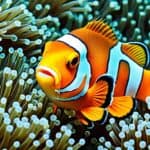
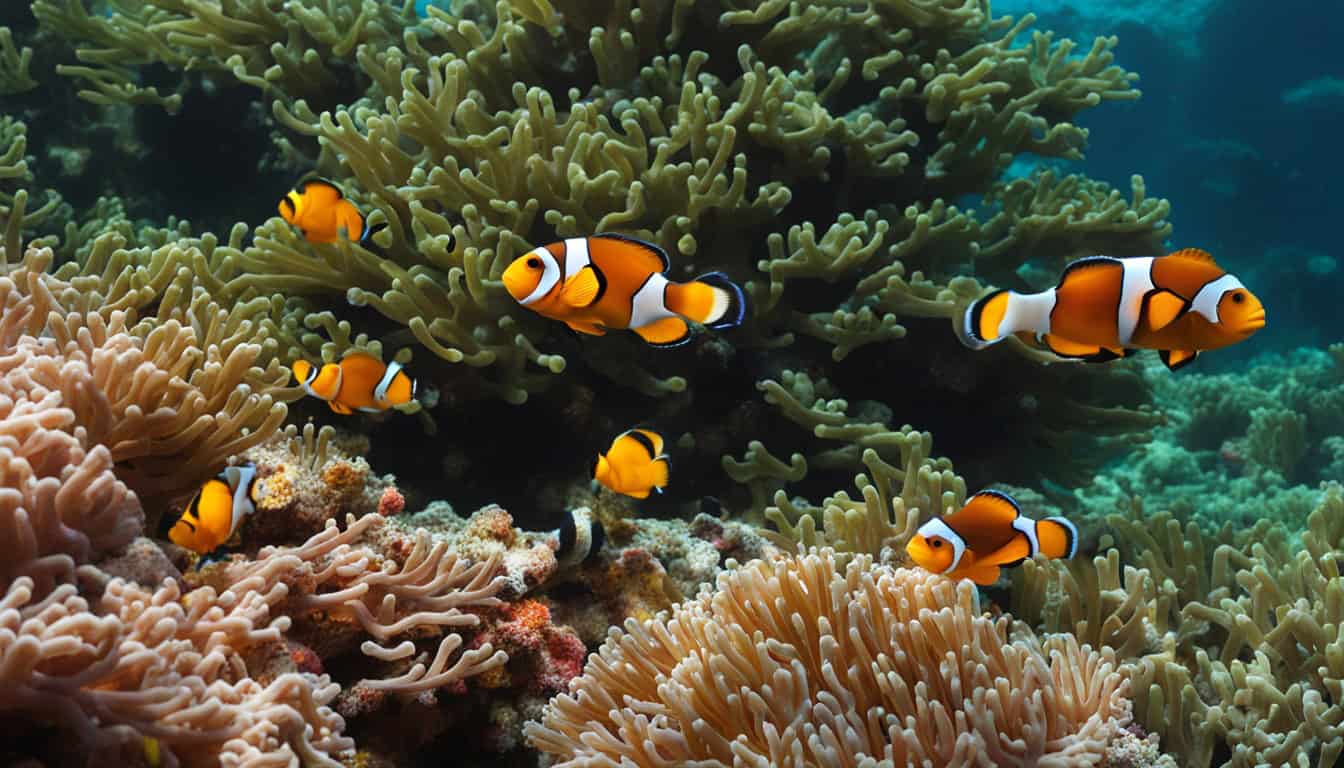
Clownfish, known scientifically as Amphiprioninae, have won the hearts of many aquarium fans with their bright colors and unique looks. If you’re wondering about their lifespan, it’s key to look at how long they live and their life expectancy. This can change a lot based on where they live. In the best conditions, these fish can live from 3 to 30 years.
But, things like their home, care, and genes are very important for how long they live. This article will dive into the details of how long clownfish live and how their life differs in the wild and in tanks.
Understanding Clownfish and Their Habitat
Learning about clownfish and their home can really deepen your connection with these amazing creatures. Clownfish live in warm, shallow waters, making their homes in the colorful coral reefs. By exploring their various species and roles in nature, we can see how important they are to the ocean.
Common Species of Clownfish
There are over thirty types of clownfish, each with its own look. Some well-known ones are:
- Ocellaris clownfish
- Percula clownfish
- Maroon clownfish
Each type fits into a special spot in their coral reef homes, adding to the area’s rich life.
Natural Habitat and Distribution
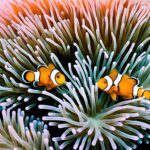
Clownfish call the coral reefs of the Indian and Pacific Oceans their home. They live in shallow waters, where the reefs give them shelter and places to breed. Their bright colors stand out against the coral, making them a joy to see in the wild.
Symbiotic Relationships with Anemones
The anemone symbiosis of clownfish is quite interesting. This partnership protects the clownfish from predators and helps the anemone by bringing nutrients from the fish’s waste. This shows how marine life is connected, and knowing this is key to keeping aquariums healthy.
How long do clownfish live?
Clownfish live for different lengths of time based on their environment and care. Knowing how long they usually live helps you take better care of them.
Average Clownfish Lifespan
Clownfish usually live between 6 to 10 years in the wild. Some can live longer than this with the right conditions. Things like their genes, what they eat, and their tank can affect how long they live.
Clownfish Lifespan in the Wild vs. Captivity
In the wild, clownfish can live up to 6 to 10 years. They live longer because they have a special relationship with sea anemones that protect them. But in captivity, they usually live only 3 to 6 years. This is because they might not get the right care or environment in tanks. Still, with good care, some people have had clownfish live up to 10 years or more in captivity.
Factors Affecting Clownfish Lifespan
Your clownfish’s lifespan can be influenced by many things. It’s important to know these factors to help them live longer and be healthier. Here are the main things to consider:
Genetic Factors
The genes of your clownfish greatly affect its lifespan. Captive-bred clownfish are different from those in the wild. They have traits that can make them more resilient but also less diverse genetically. This can affect how long they live.
Environmental Factors in Aquariums
Keeping your aquarium right is key. Things like water quality, temperature, and tank size matter a lot. You should check things like pH and ammonia levels often.
Too many fish or mean tankmates can stress them out and shorten their lives. So, planning your aquarium carefully is important.
Care and Maintenance Requirements
Looking after your clownfish right is crucial. Changing the water and keeping an eye on its condition is important. A clean tank means less stress for your fish, which helps them live longer.
Pay attention to these details to help your clownfish stay healthy and live a long life.

Clownfish Aging Process
Clownfish grow older and go through changes that affect their health and behavior. It’s important to know how to spot these signs to help them live longer and happier in your tank. Changes in how they act, what they eat, and how they look are key clues to their aging.
Signs of Aging in Clownfish
Look out for these signs to see if your clownfish is getting older:
- Decreased activity levels: Older clownfish swim less and like to hide more.
- Changes in appetite: Eating less can mean they’re not feeling well.
- Altered coloration: If their colors fade or their skin looks different, they might be aging or stressed.
- Increased susceptibility to diseases: Older clownfish get sick easier because their immune systems are weaker.
Health Considerations as They Age
As clownfish get older, they face more health issues. Regular check-ups are key to spotting diseases early. Here are some health concerns to keep in mind:
- Weakening immune responses: Older clownfish fight off illnesses less well, so catching diseases early is crucial.
- Nutritional needs: Older clownfish might need different food to stay healthy.
- Stress management: They need a calm place to live to stay well.
Tips for Promoting Clownfish Longevity
To make your clownfish live longer, focus on creating the best environment and feeding them right. Make sure your tank is big enough. A 30-gallon tank is perfect because it gives them room to swim and reduces fighting among fish.
Optimal Tank Size and Setup
Setting up your tank right is key to your clownfish’s health. The right tank size keeps the water clean and supports natural behavior. Adding live rock and anemones makes the tank look good and feels like home for your fish.
Feeding and Nutrition for Clownfish
Feeding your clownfish well is crucial for their long life. Give them a mix of high-quality flakes, pellets, and frozen foods. This diet keeps their immune system strong and helps them live longer.
Maintaining Stable Water Conditions
Keeping the water stable is important for your clownfish. Check and adjust the temperature, pH, and nitrate levels often. Regular water changes and good maintenance help create a healthy home for your fish, leading to a longer life.
FAQ
How long do clownfish typically live?
Clownfish can live from 3 to 30 years, depending on their care and environment. In the wild, they usually live 6 to 10 years. But in captivity, they often live about 3 to 6 years. With the right care, some can live over 10 years.
What factors affect clownfish lifespan?
Many things affect how long clownfish live. Their genes, the environment, and how well they are cared for all play a part. Good water quality, the right temperature, and enough space in the tank are key. Keeping their tank clean and stress-free is also important.
What are the signs of aging in clownfish?
Aging clownfish may move less, eat less, and change color. They might also get sick more easily. It’s important to watch their health closely as they get older.
How can I promote the longevity of my clownfish?
To help your clownfish live a long life, keep them in a big tank with stable water. Feed them a mix of flakes, pellets, and frozen foods. Clean their tank regularly to keep it healthy.
Do clownfish have different lifespans based on their species?
Yes, different clownfish species can live different lengths of time. This depends on their genes and how well they adapt to their environment. For example, Ocellaris and Maroon clownfish have their own special needs.
What should I consider when setting up a tank for clownfish?
When making a tank for clownfish, think about the tank size (at least 30 gallons for more fish). Keep the temperature steady (75-82°F) and the pH and nitrates right. Add places for them to hide and choose tankmates carefully to keep them happy and healthy.