
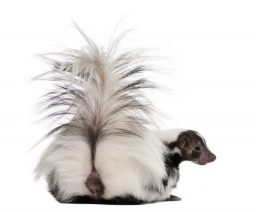
Skunks are famous for spraying other animals, and humans, with their powerful scent. They can fire this up to 10 feet away – so make sure you stand well back.
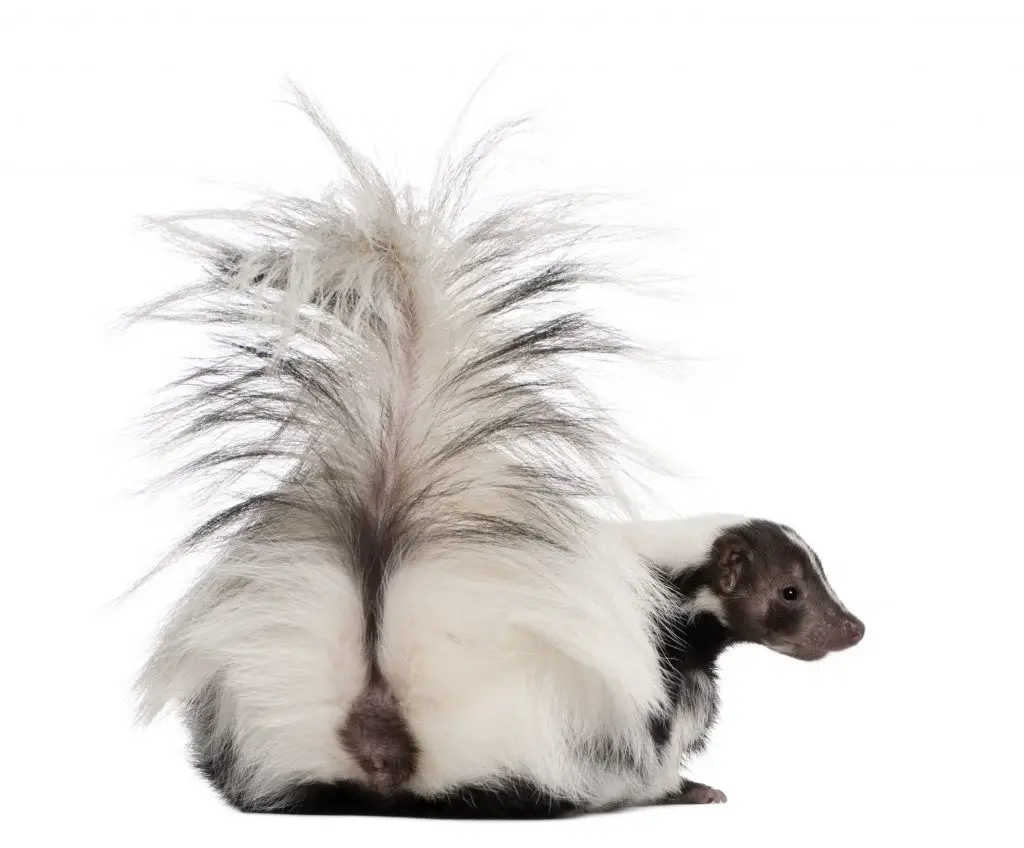
How Far Do Skunks Spray Their Odor?
Skunks are the most adorable-looking mammals and adorn our screens with their striking color patterns – but we all know their secret weapon. Even though they might have really cute faces, and one of the fluffiest tails on the planet – no one dares get close enough to stroke one. And in fact – you may need to be even further away than you think.
Skunks can spray their atrocious – and long-lived – scent up to 10ft away in any direction – and with great accuracy. In their defense – if posturing, hissing, and tail wagging haven’t proved effective in deterring a predator – they will need to spray. And they do it lightning fast too.
Why Do Skunks Smell So Bad?
Skunks have evolved this terrible odor as a type of defense mechanism. They belong to a family of stinky animals anyway – the mustelids (which includes ferrets and wolverines) – but the skunks just took it to the extreme.
Often animals have one or more traits that help them as a species to communicate better or to defend themselves – and the mustelids went the sticky smelly route. Using powerful scents, they can mark their ranges and deter intruders – they can also use it to find a mate. So although we find their smell absolutely rotten – it doesn’t affect their friends and family quite so much.
The chemicals in their scent include elements called ‘thiols’ which are sulfur-based – a smell that humans find ‘urgh-inducing’. Something that causes our noses to wrinkle and for us to quickly up and leave. And that is just the skunk itself. If you get sprayed – it will make your eyes water for sure.
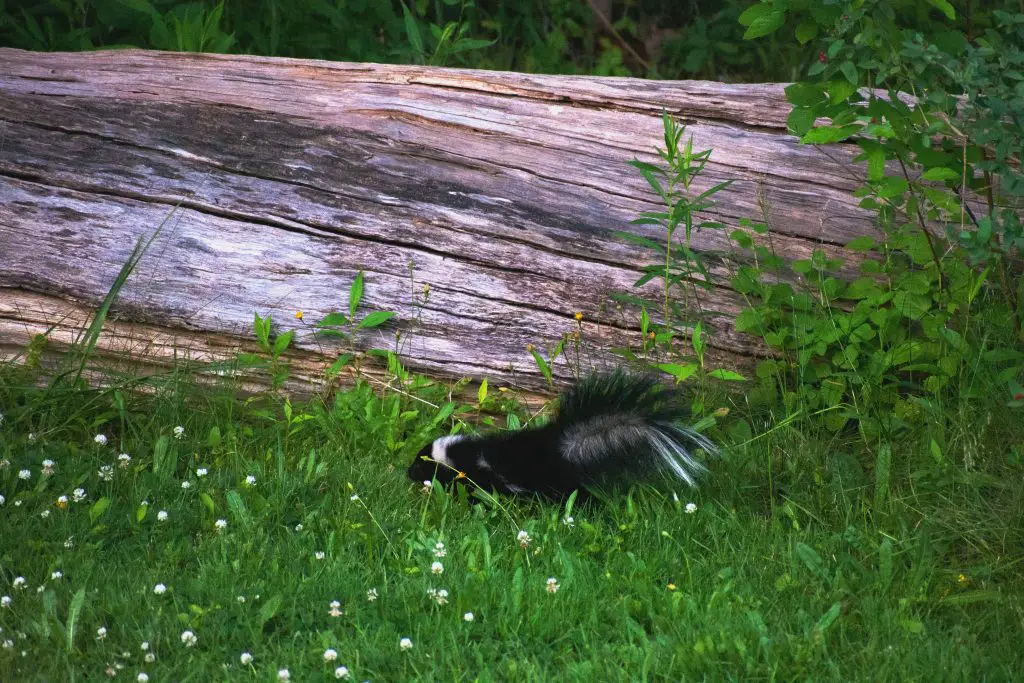
Are Skunks Poisonous?
Technically skunks themselves are not poisonous. Touching or eating a skunk will not in itself kill you. Skunks may carry diseases though (like rabies) which could – so don’t go touching skunks. Even dead ones.
Anyhow – their spray is a completely different matter.
Skunk spray could actually kill a human or dog in very rare circumstances as they have 7 known volatile chemicals present in this viscous liquid. Any chemicals that harm or kill humans are called poisons – so technically you could say that skunks are poisonous when considered as a whole.
Their spray is similar-acting to tear gas and contains a battery of chemicals that can cause – among other things – temporary blindness. It triggers gagging, coughing, nausea, and can even induce vomiting. It can also feel like it is burning the eyes and skin.
Just to make sure it is an experience you won’t forget – this oil-based spray will sink into, and stick onto, all surfaces – especially the skin, fur, and clothes. The sooner you can get it off the better, but high concentrations and prolonged contact can cause serious illness.
There is also a condition called ‘skunk toxic shock syndrome’ in pets where the chemicals called thioacetates adversely affect healthy blood cells in the animal causing serious illness – potentially leading to death if untreated.
Do Skunks Attack Humans?
Although skunks have a powerful weapon against humans – they really don’t use it that often.
Skunks have what we call aposematic coloration – a way of showing that they are potentially dangerous by means of striking color patterns. We all know skunks are boldly black and white – and so easy to identify. If you have ever been skunked before – you aren’t going near one again!
This coloring is in place so that skunks don’t always have to fight off attackers. It works so well that skunks are hardly ever found with attack wounds on them. Everyone knows to avoid them.
They can fight if they want – and are very feisty in nature – like most related species (just think wolverine again). And they do give plenty of warning. So, first, there is the coloring – they make sure you have seen them for sure (as they are nocturnal so this is mainly about the moving white parts). However, if you weren’t sure, there is usually a bit of tail-wagging and foot-stomping too – may be some hissing or back-arching.
Moving away as soon as possible though is the most pleasant option for everyone.