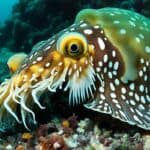

Scallops have a special way of sensing their environment. They belong to the family Pectinidae and live in saltwater. From shallow coasts to deep oceans, they have adapted to their surroundings. Their nervous system helps them detect light, movement, and changes in chemicals around them.
This skill is key for their survival. It helps them avoid predators and find food. By understanding how scallops sense their environment, we can appreciate their unique abilities.
Let’s dive into the scallops’ sensory system. You’ll see how they interact with their habitat. This shows their importance in marine ecosystems.
Introduction to Scallops and Their Habitat
Scallops are amazing sea creatures that live in many places. They know how to adjust to different environments, which helps them stay healthy and spread out. You can find scallops all over, especially in the Indo-Pacific and along the U.S. coasts. This shows how well they can live in various places.
Scallops like to live on sandy bottoms, in seagrass, and near rocks. This lets them avoid predators and find food easily. Most scallops don’t stay in one spot. They move around, which helps them survive in changing sea environments.
Scallops are great at living in different marine environments. They are important in their ecosystems. They help with nutrient cycling and are food for many sea creatures.
| Scallop Species | Habitat Type | Geographical Distribution |
|---|---|---|
| Atlantic Sea Scallop | Sandy and muddy bottoms | Northwest Atlantic Ocean |
| Bay Scallop | Seagrass beds | East Coast of the United States |
| Pectinidae | Rocky substrates | Indo-Pacific region |
Understanding Scallops’ Sensory System
Scallops have a unique way of sensing their underwater world. They have three pairs of ganglia in their nervous system. This lets them process and react to their environment. These ganglia manage movement and how they sense things.
Scallops have many sensory organs along their mantles’ edges. They have hundreds of simple eyes. These eyes help scallops know what’s around them. Their sensory organs can detect light, movement, and chemical signals in the water.
Scallops can understand their environment and spot dangers thanks to their scallops environmental perception. This helps them stay safe from predators. It’s key for their survival, letting them quickly respond to changes in their home.
Scallops use their advanced senses to move and live in the water. This skill helps them stay strong in their ocean homes.
The Role of Scallops’ Eyes in Environmental Detection
Scallops have a unique way of seeing the ocean. Their eyes help them survive and understand their surroundings.
Structure and Function of Scallop Eyes
Scallops can have up to 200 simple eyes along their mantle. These eyes help them see light and dark. They work a lot like human eyes, letting scallops see changes around them.
This helps them avoid dangers quickly. It’s a big help in staying safe.
How Scallops Detect Movement and Light
Scallops can spot movement and changes in light with their eyes. When a predator comes near, they can react fast. They either close their shells or swim away quickly.
This shows how well they can handle changes in their environment. It’s key to their survival.

Environmental Awareness and Sensitivity of Scallops
Scallops play a big role in marine ecosystems. They are very sensitive to changes in water quality and temperature. Pollution or changes in salinity can greatly affect their numbers. They need stable conditions to survive and grow.
Response to Changes in Water Quality
Scallops can quickly respond to changes in their environment. They can move to better areas or change their behavior. This helps them survive and shows how important they are to their ecosystem.
Adaptation to Various Marine Habitats
Scallops have adapted to live in many different marine habitats. They can be found in seagrass beds or on rocky shores. This shows how well they can survive in various environments. By adapting, scallops help keep their ecosystems healthy.
FAQ
How do scallops sense their environment?
Scallops have a special nervous system that helps them know their surroundings. They have hundreds of simple eyes along their mantle. These eyes help them see light, movement, and changes in chemicals around them.
What kind of habitats do scallops prefer?
Scallops live in many marine places, like sandy bottoms, seagrass beds, and rocky areas. They can live in shallow coastal waters and deep ocean too. This makes them very adaptable.
What are the main features of a scallop’s sensory system?
Scallops have a well-developed nervous system with three pairs of ganglia and up to 200 simple eyes. These help them see light, movement, and changes in their environment. This helps them stay safe from predators.
How do scallops use their eyes for detection?
Scallops use their eyes to notice changes in light and movement. If they sense danger, they can swim away or close their shells for safety. This makes them very aware of their surroundings.
How do scallops respond to changes in their environment?
Scallops are very sensitive to changes in their environment. They can feel changes in water quality and temperature. This lets them move to better places or change their behavior to survive.
What adaptations allow scallops to thrive in different habitats?
Scallops are very adaptable. They use different strategies to live in various marine habitats. By responding to changes, they can find the best places to live and keep their populations healthy.