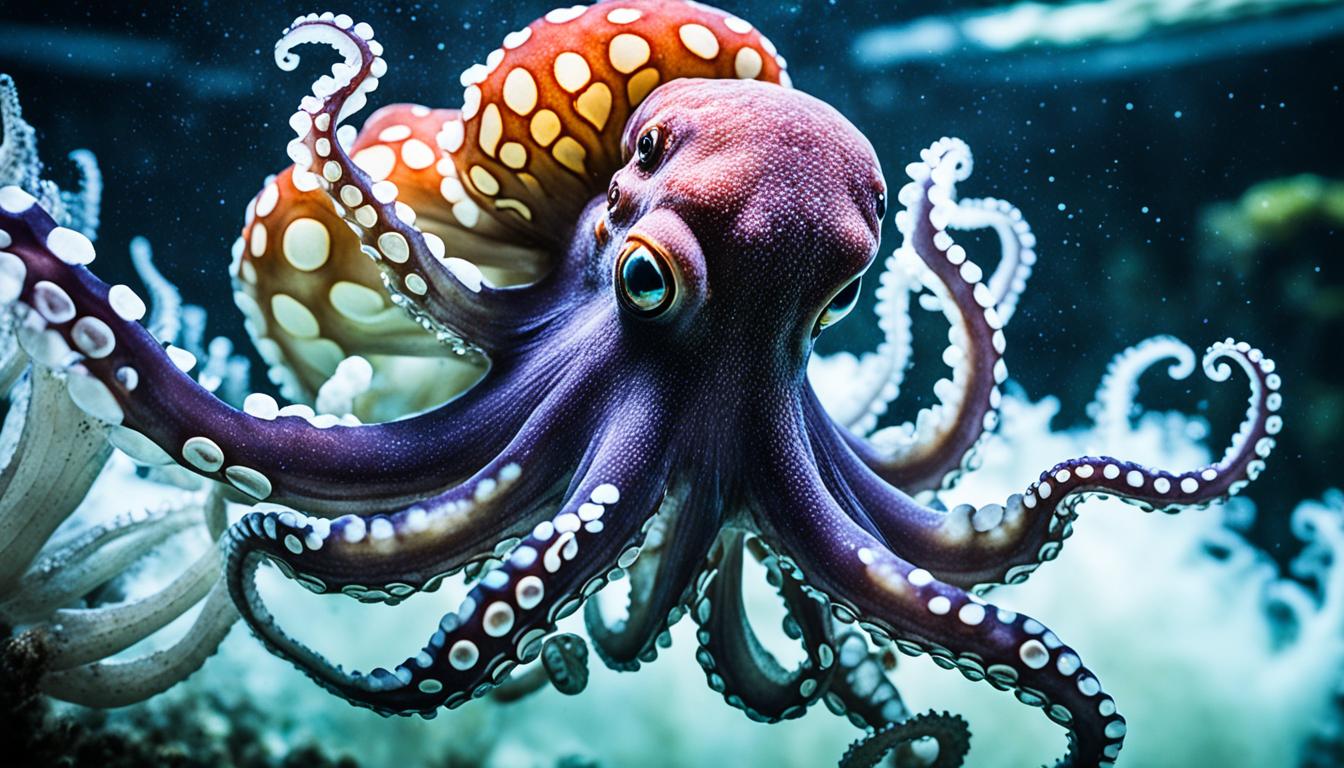
Ever wonder how octopuses protect themselves? These amazing creatures have many ways to stay safe from predators like dolphins, sharks, and eels. They use their special body parts to come up with clever ways to defend themselves. Let’s dive into the different ways octopuses keep themselves safe and learn more about their unique features.
Overview of Octopus Defense Mechanisms
Octopuses have amazing ways to survive in the ocean. They use many strategies to avoid predators. These include physical and behavioral tactics, as well as chemical defenses.
They can move quickly and fit into small spaces thanks to their flexibility. This helps them escape danger fast. If caught, they can even cut off a limb to save themselves.
Octopuses also change color and pattern to hide from predators. This helps them blend in with their surroundings. When threatened, they release ink to confuse predators. This makes it hard for predators to catch them.
Physical Defenses of the Octopus
The octopus uses many ways to keep safe from predators. It has amazing ways to move, be strong, and avoid danger. These defenses help it survive under the sea.
The Flexibility of Their Bodies
Octopuses are known for their flexibility. They don’t have bones, so they can bend and squeeze into small spots. This lets them slip away from danger fast.
They can hide in tiny spaces, like between rocks. This makes them hard to catch. Their flexibility also helps them sneak up on prey or avoid danger.
Jet Propulsion for Quick Escape
When in danger, octopuses use jet propulsion to get away fast. They push water out of their bodies to move quickly. This lets them change direction suddenly and escape predators.
This method is very effective for quick getaways. It helps them stay safe in the ocean.

Octopus Camouflaging Tactics
Octopuses are experts at hiding, using advanced ways to avoid predators. They change color and texture to fit in with their surroundings. This helps them stay hidden in the ocean. Their tactics include changing color and creating patterns, which are key to their survival.
Color Change and Blending In
Octopuses change color with cells in their skin called chromatophores. These cells can get bigger or smaller to change the color and how dark or light it is. By looking like coral, sand, or other sea things, they hide from predators. This helps them not only to defend themselves but also to sneak up on prey.
Patterning for Disguise
Octopuses also use patterns to hide. These patterns look like the sea floor, like stripes or spots. Some even look like other sea creatures. This makes them harder to spot, showing how smart they are at hiding.
| Technique | Description | Benefit |
|---|---|---|
| Color Change | Uses chromatophores to change color intensity. | Makes them blend in, avoiding predators. |
| Patterning | Creates patterns that look like the surroundings. | Offers more camouflage, confusing threats. |
| Mimicry | Looks like other sea creatures with certain patterns. | Improves protection by tricking predators. |
How Do Octopuses Defend Themselves?
Octopuses have amazing ways to defend themselves underwater. They use ink as a key strategy. When threatened, they release ink to confuse predators. This ink makes it hard for predators to see or smell them, giving the octopus a chance to escape.
Use of Ink as a Protective Measure
The ink cloud confuses predators in two ways. It hides the octopus and messes with the predator’s sense of smell. This shows how octopuses use their biology to stay safe.
Utilizing Scent to Confuse Predators
Octopuses also use scent to defend themselves. They release chemicals that confuse predators’ noses. This trick works well against fish that rely on smell to hunt. By confusing predators, octopuses can escape and find safety. Their use of scent shows their smart ways to deal with threats.
FAQ
How do octopuses defend themselves against predators?
Octopuses have many ways to defend themselves. They can change color, release ink, move fast, and hide in small spots. This helps them avoid predators like dolphins, sharks, and eels.
What are the physical defenses of an octopus?
Octopuses have a unique body that can bend and squeeze into tight spots. They can also move quickly away from danger.
How do octopuses use camouflage for protection?
Octopuses change their skin color and patterns with special cells called chromatophores. This lets them blend in with their surroundings, making it hard for predators to see them.
What is the role of ink in octopus defense?
When octopuses feel threatened, they release ink. This ink makes it hard for predators to see or smell them. It gives the octopus a chance to get away.
Can octopuses mimic other marine organisms for protection?
Yes, some octopuses can look like other sea creatures. This trick can confuse predators and help protect them.
What is autotomy, and how is it relevant to octopus defense?
Autotomy is when an octopus cuts off a limb to get away from a predator. The detached limb distracts the predator, letting the octopus escape.
How effective are chemical defenses in octopuses?
Octopuses can release chemicals that mess with predators’ sense of smell. This can give them a few seconds to get away safely.