
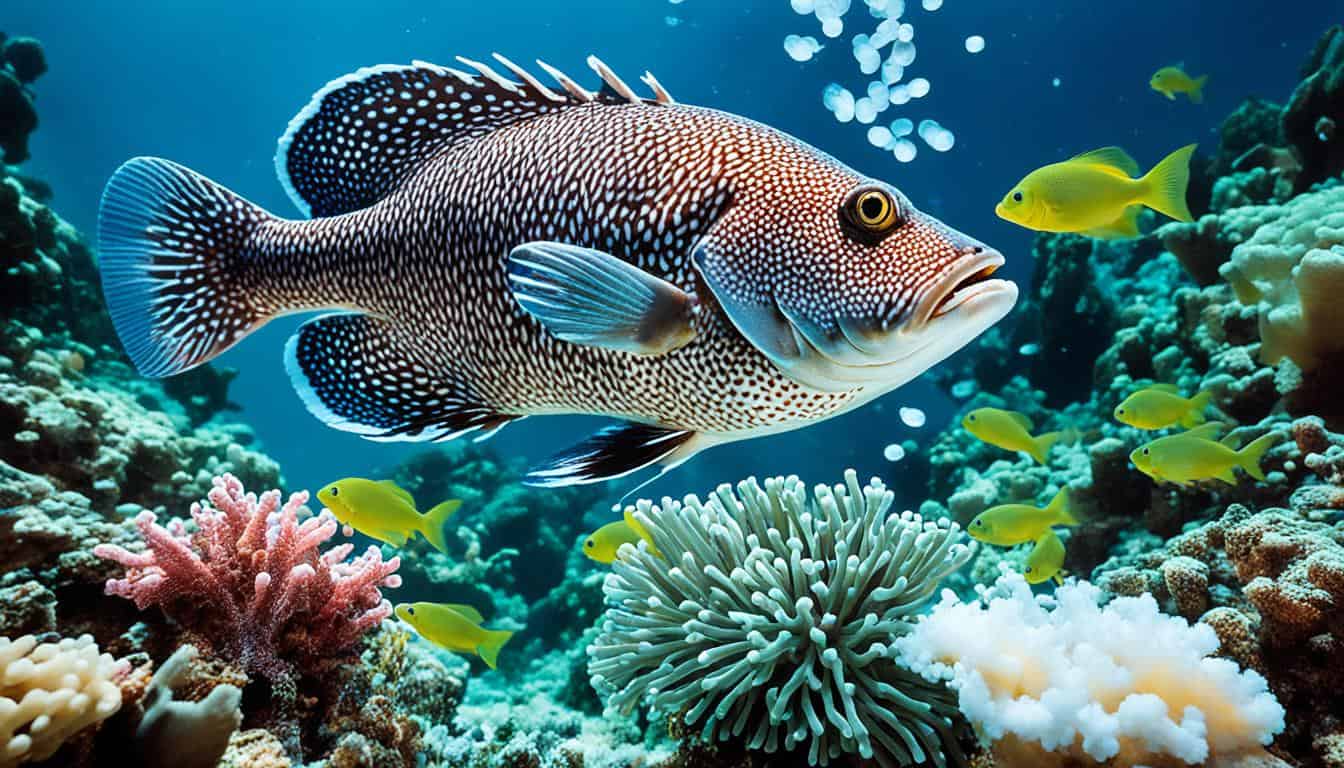
Learning about how groupers reproduce helps us understand their importance in the ocean. These fish live in warm and tropical waters. They play a big role in keeping coral reefs healthy. Let’s dive into their breeding habits and how they mate to see why they matter.
Groupers are part of the Epinephelidae family. They live in places with warm and tropical waters. Their breeding habits and mating behavior are key to the health of coral reefs.
As we learn more about grouper reproduction, we see how important they are. Many grouper species are in danger because of overfishing and damage to their homes. We need to protect them to keep the ocean healthy.
Understanding Grouper Reproduction
Grouper reproduction is a complex process that is key to their survival. Adult groupers gather in large numbers to spawn, which increases the chances of successful fertilization. This helps keep their populations strong. They do this during specific times of the year, often tied to the moon’s cycles, at certain locations.
Environmental factors greatly affect grouper breeding. Things like water temperature, salt levels, and where they live affect where they choose to spawn. This flexibility helps them find the best places for breeding.
Groupers pick specific times and places for spawning as part of their breeding strategy. Knowing about these habits helps marine biologists and conservationists protect these amazing fish. By studying their breeding, we learn about the behaviors that help their future generations survive.
Grouper Breeding Habits
Groupers have special ways of breeding that are key to their survival and growth. They come together in large groups every year to spawn. This helps them reproduce better because it lets males and females interact more.
The size and timing of these gatherings vary by species. This affects how well they reproduce. For instance, the Nassau grouper gathers in big groups during certain times of the year. The Goliath grouper, however, doesn’t gather as predictably.
Lunar cycles and ocean currents affect when they mate. This makes sure their breeding matches the environment well.
These big groups increase the chances of successful fertilization. They also help keep the species genetically diverse. Knowing how groupers breed shows why we need to protect their breeding areas.
| Species | Aggregation Size | Spawning Season | Environmental Cues |
|---|---|---|---|
| Nassau Grouper | Large | Winter | Lunar Phases |
| Goliath Grouper | Variable | Year-round | Water Temperature |
| Black Grouper | Moderate | Spring | Seasonal Changes |
How do groupers reproduce?
Learning how groupers reproduce is key to understanding their survival and growth. They have complex ways of breeding that help them reproduce successfully. These behaviors involve many groupers working together.
Annual Spawning Aggregations
Groupers have a special way of breeding called synchronized spawning. This happens every year during big gatherings. Many males and females come together, making it more likely for eggs to be fertilized.
These gatherings can have hundreds to thousands of groupers. It’s a big event for their survival. It also shows how social they are in their homes.
Spawning Seasons and Locations
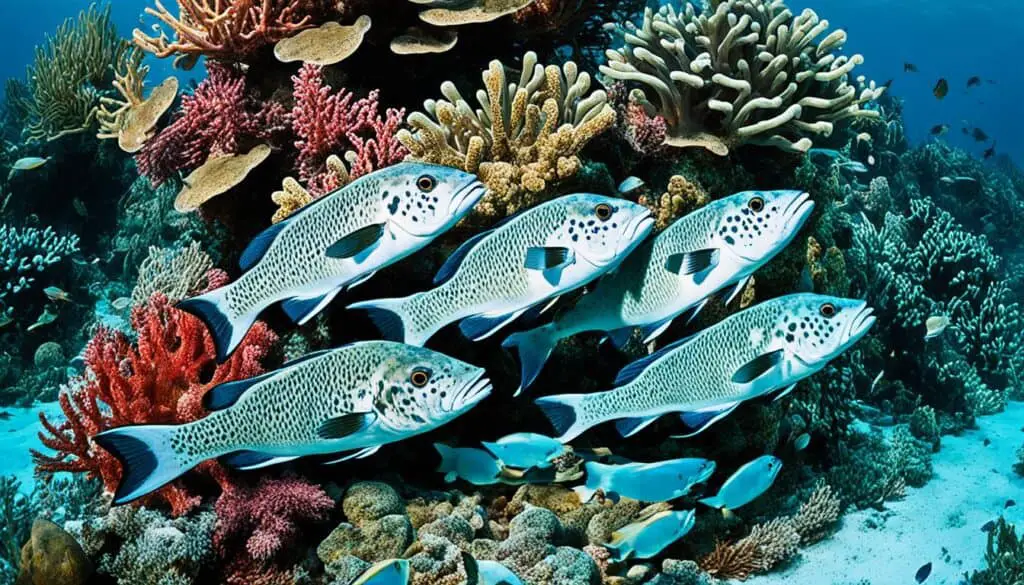
When groupers breed can vary a lot between types. For instance, Goliath groupers breed in late summer to fall. They pick special reef spots for breeding. These spots have the right shelter and food for their babies.
Knowing when and where groupers breed is important for protecting them. Saving these breeding places helps their numbers stay strong.
| Species | Spawning Season | Preferred Locations |
|---|---|---|
| Goliath Grouper | Late Summer to Fall | Reef Areas |
| Black Grouper | Year-round peaks in Spring | Coral Reefs |
| Red Grouper | Late Winter to Early Spring | Rocky Bottoms |
Groupers’ Mating Behavior
Groupers’ mating behavior is quite interesting. Male groupers show off to become the top males before they mate. This helps the strongest males reproduce more, which affects grouper numbers.
In the Gag grouper, sex changes are common during mating. When there are more females than males, some females turn into males. This helps balance the number of males and females in the group.
This shows how important social groups are for groupers. It highlights how they live and interact with each other. Groupers’ mating behavior is key to their success in reproducing.
| Aspect | Description |
|---|---|
| Dominance Displays | Males perform specific behaviors to assert their dominance during mating seasons. |
| Sex Change | Dominant females can become males, adapting to ensure effective reproduction. |
| Social Structure | The interactions among groupers determine their mating success and overall population dynamics. |
| Spawning Aggregations | Groupers gather in large numbers to breed, with social ranks influencing mating accesses. |
Grouper Fertilization Process
The grouper fertilization process is a fascinating example of marine reproductive strategies. Groupers use external fertilization, where both eggs and sperm are released into the water at the same time. This method helps mix genetic material from different individuals. It also increases genetic diversity in grouper populations, which is key for their health and survival.
External Fertilization Explained
Groupers gather in large numbers to spawn in specific areas during certain times of the year. When the female groupers release their eggs, the males release sperm into the water. This ensures fertilization happens almost right away. This method is common among many fish and depends on the right environmental conditions to work well.
Impact of Environmental Conditions
The success of grouper fertilization depends a lot on the environment. Things like water temperature, salinity, and current strength can affect how well fertilization happens. Pollution and habitat damage can also hurt their ability to reproduce. So, it’s important to understand and manage these environmental factors to help grouper populations and their habitats.
FAQ
How do groupers reproduce?
Groupers go through stages like spawning, fertilization, and growing up. They often spawn together in big groups yearly. This helps them fertilize eggs better.
What are the breeding habits of groupers?
Groupers have special breeding habits. They meet in big groups every year to spawn. These meetings happen at certain places and times, often with the moon’s help, to increase their chances of success.
What is the spawning process of groupers?
During spawning, groupers release eggs and sperm in the water. This lets different fish mix their genes. It helps make their populations more diverse.
How does mating behavior affect grouper reproduction?
Mating in groupers is complex. Males compete and show off to each other. Some even change sex to help balance the population during spawning.
When do groupers spawn?
Groupers spawn at different times, depending on the type. For example, Goliath groupers spawn from late summer to fall. The time and place of spawning are key for their young to survive.
What factors influence grouper fertilization success?
Many things affect how well groupers fertilize their eggs. Things like water temperature, salt levels, and currents matter a lot. Pollution and damage to their homes also play a big role.
How does the spawning aggregation size vary among grouper species?
The size and timing of spawning groups change with each grouper type. Some, like the Nassau grouper, have big, regular gatherings. Others, like the Goliath grouper, don’t gather as much.