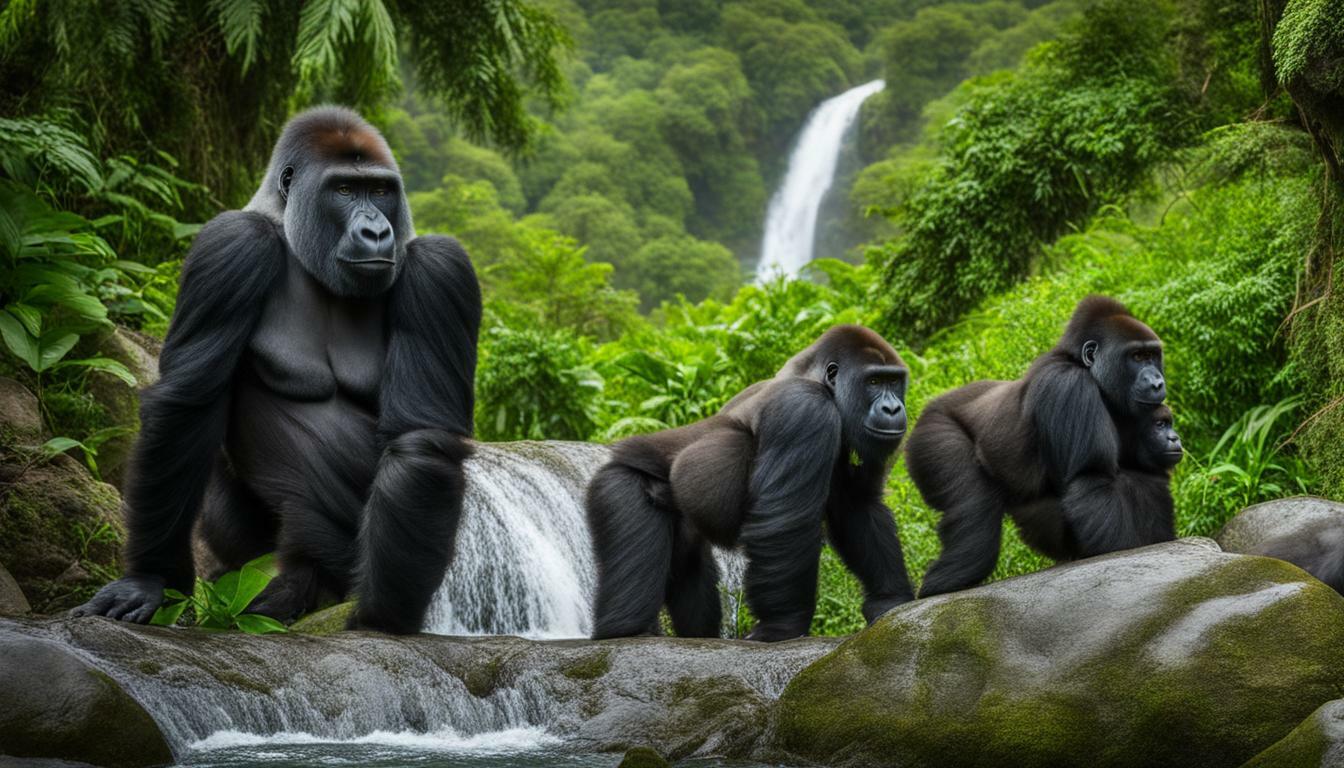
Gorillas, the largest primates, exhibit unique behaviors in their natural habitats that have captivated researchers for years. These majestic creatures are the focus of ongoing studies, aimed at unraveling the secrets of their behavior in the wild. From playful antics in water to intricate communication methods, gorillas continue to astonish scientists with their fascinating behaviors.
Key Takeaways:
- Gorillas engage in playful behavior in water, similar to humans.
- Understanding gorilla sleep patterns is crucial for their well-being.
- Gorillas construct comfortable sleeping nests for a cozy sleep environment.
- Studying gorilla behavior provides valuable insights for conservation efforts.
Researchers have discovered fascinating secrets about gorilla behavior in the wild. One study focused on mountain gorillas in Uganda and found that they engage in playful behavior in water, much like humans. The gorillas were observed splashing and playing in the water, exhibiting enjoyment and happiness. This behavior is rare for wild animals, as fun activities are typically social. Another study examined the sleep patterns of gorillas, revealing that they require sufficient sleep for physical and mental well-being. Factors such as age, climate, habitat, and food availability can influence their sleep duration. Gorillas construct comfortable sleeping nests made of leaves and branches, ensuring a cozy and secure sleep environment. Understanding gorilla sleep patterns is essential for conservation efforts, as sleep deprivation can have negative effects on their health and well-being. Overall, studying gorilla behavior provides valuable insights into their lives and aids in the development of conservation strategies.
Wild Gorilla Social Dynamics: Group Dynamics and Communication
In their natural habitats, gorillas display complex social behavior and communicate through a variety of vocalizations, gestures, and body postures. Through these interactions, they establish and maintain intricate group dynamics that contribute to their survival and well-being.
One of the fascinating aspects of wild gorilla social dynamics is their hierarchical structure. Gorilla groups, known as troops, are typically led by a dominant silverback male who oversees the activities and protection of the group. The silverback maintains his position through displays of strength and assertiveness, as well as his ability to engage in conflicts, if necessary, to maintain his authority.
Gorilla communication in the wild is diverse and sophisticated. They utilize vocalizations, such as grunts, roars, and chest beats, to convey various messages. Each vocalization carries a distinct meaning, serving as a form of social bonding, warning, or territorial declaration. Aside from vocalizations, gorillas also communicate through an array of physical expressions. They use facial expressions and body postures to signal their intentions, emotions, and social status within the group.
Table 1: Types of Gorilla Vocalizations
| Vocalization | Meaning |
|---|---|
| Grunt | Communication within the group |
| Roar | Warning signal |
| Chest beat | Display of dominance |
Furthermore, gorillas engage in non-verbal communication through various gestures. For example, they use actions like chest pounding, stomping, and arm waving to convey emotions such as aggression, playfulness, or submission. These gestures play a crucial role in maintaining social harmony and resolving conflicts within the troop.
Understanding wild gorilla social dynamics and communication is vital for conservation efforts. It helps researchers and conservationists develop strategies to protect these magnificent creatures and their habitats. By deciphering their intricate communication methods and social structures, we can ensure the long-term survival of gorillas in the wild.
Unveiling Gorilla Feeding Patterns and Foraging Behavior
Understanding the feeding patterns and foraging behavior of gorillas provides valuable insights into their nutritional needs and how they interact with their environment. Researchers have conducted numerous studies to explore these aspects of gorilla behavior in the wild, uncovering fascinating findings that shed light on their dietary preferences and foraging strategies.
One study focused on the feeding habits of mountain gorillas in Uganda, revealing their unique dietary choices. These gentle giants primarily consume vegetation, feeding on leaves, stems, and shoots. However, they also display a preference for specific plant species, such as bamboo shoots and fruits. This selectivity in their diet suggests that gorillas have developed specialized foraging techniques to maximize their nutritional intake.
Furthermore, researchers have observed gorillas engaging in innovative foraging behaviors. They have been observed using tools like sticks to extract termites from their nests and even using rocks to crack open nuts. These behaviors demonstrate their intelligence and adaptability in finding food sources in their environment.
| Eating Habits | Preferred Foods | Foraging Techniques |
|---|---|---|
| Gorillas primarily consume vegetation | Bamboo shoots, fruits | Using sticks to extract termites from nests |
| Cracking open nuts with rocks |
Understanding gorilla feeding patterns and foraging behavior also highlights the delicate balance between their nutritional needs and the availability of food sources. Gorillas are herbivores, and thus, the abundance or scarcity of certain plant species can impact their feeding habits. Conservation efforts should take into account the preservation and restoration of their preferred food sources to ensure their continued well-being.
“Gorillas primarily consume vegetation, including leaves, stems, and shoots. However, they also have preferences for certain plant species, such as bamboo shoots and fruits. This selectivity suggests specialized foraging techniques and an ability to adapt to the environment.” – Gorilla Behavior Expert
In conclusion, studying gorilla feeding patterns and foraging behavior provides valuable insights into their nutritional needs, dietary preferences, and the strategies they employ to obtain food in their natural habitat. By understanding these aspects of gorilla behavior, researchers and conservationists can develop more effective strategies to protect these incredible creatures and ensure their survival for future generations.
The Mysteries of Gorilla Reproduction in the Wild
Gorilla reproduction in the wild involves intricate courtship displays, long gestation periods, and devoted maternal care. These majestic creatures have fascinating reproductive behaviors that have intrigued researchers for years. One study conducted in the rainforests of Central Africa observed male gorillas performing elaborate displays to attract females. These displays often include chest-beating, vocalizations, and impressive displays of strength. It’s a captivating sight to witness, as the males compete for the attention of the females.
Once a female gorilla is successfully courted, she will undergo a gestation period that lasts around eight and a half months. This is similar to the human gestation period, highlighting the close evolutionary relationship between gorillas and humans. The mother will then give birth to a single baby gorilla, which relies heavily on her care and protection in its early years.
Gorilla mothers are incredibly devoted to their young, providing them with constant love and protection. The bond between a mother gorilla and her offspring is heartwarming, as she spends hours playing, cuddling, and grooming her baby. This devoted maternal care is crucial for the baby’s survival and development. It’s a testament to the intelligence and emotional depth of these incredible primates.
Understanding gorilla reproduction in their natural habitat is crucial for conservation efforts. By studying their courtship displays, gestation periods, and maternal care, researchers gain valuable insights into their population dynamics and genetic diversity. This knowledge is essential for developing effective conservation strategies and ensuring the long-term survival of these majestic creatures in the wild.
| Gorilla Reproduction | Key Points |
|---|---|
| Courtship Displays | Intricate displays to attract females |
| Gestation Period | Around eight and a half months |
| Maternal Care | Devoted care and protection from mothers |
Gorilla Habitat and Behavior: Insights for Conservation
The study of gorilla behavior in relation to their habitat provides crucial information for conservationists aiming to protect these incredible creatures and their natural environments. Researchers have discovered fascinating secrets about gorilla behavior in the wild, shedding light on their habitat requirements and territoriality.
One key finding is that gorillas are highly territorial animals, with distinct home ranges that they fiercely defend against intruders. This territoriality is crucial for their survival, as it ensures access to food resources and mating opportunities. Understanding these territorial behaviors is essential for conservation efforts, as it helps identify areas that are critical for gorilla populations and prioritize their protection.
Additionally, studying gorilla habitat provides insights into the specific environmental conditions necessary for their survival. For example, researchers have found that gorillas prefer dense, forested areas with ample vegetation and water sources. These habitats provide them with the necessary food and shelter, as well as protection from predators. Conservation efforts can focus on preserving and restoring these habitats to ensure the long-term survival of gorilla populations.
| Gorilla Habitat Requirements: | Conservation Strategies: |
|---|---|
| 1. Dense, forested areas | – Protect existing forests – Reforestation initiatives |
| 2. Ample vegetation and water sources | – Establish protected areas – Ensure access to clean water |
| 3. Protection from predators | – Implement anti-poaching measures – Collaborate with local communities |
Furthermore, considering the impacts of human activities on gorilla habitat is crucial for effective conservation. Activities such as deforestation, mining, and agriculture can significantly degrade their habitats and disrupt their behavior. By raising awareness and advocating for sustainable practices, conservationists can work towards minimizing these negative impacts and promoting coexistence between humans and gorillas.
Gorilla Habitat and Behavior: A Call for Action
Protecting gorilla habitat and understanding their behavior is not only essential for the survival of these majestic creatures but also for the preservation of biodiversity and the ecosystems they inhabit. Conservation organizations, researchers, and local communities need to collaborate and take action to ensure the long-term conservation of gorillas.
By implementing conservation strategies that address the specific habitat and behavioral needs of gorillas, we can contribute to their well-being and create a sustainable future for these remarkable creatures in the wild.
Conclusion
By unraveling the secrets of gorilla behavior in the wild, researchers are contributing to the conservation of these magnificent creatures and their delicate ecosystems. Through careful observation and scientific study, fascinating discoveries have been made that shed light on the lives of gorillas and aid in the development of effective conservation strategies.
One study conducted in Uganda focused on mountain gorillas and revealed their playful nature in water. Much like humans, these gorillas engage in water activities for fun, splashing and playing with apparent enjoyment and happiness. This behavior is rare for wild animals, highlighting the social and intelligent nature of gorillas.
Another study explored the sleep patterns of gorillas, uncovering the importance of sufficient sleep for their physical and mental well-being. Factors such as age, climate, habitat, and food availability influence their sleep duration. Gorillas construct comfortable sleeping nests using leaves and branches, providing a cozy and secure sleep environment. Understanding their sleep patterns is crucial for conservation efforts, as sleep deprivation can negatively impact their health and overall well-being.
Studying gorilla behavior not only reveals intriguing aspects of their lives but also provides valuable insights for conservation. By understanding their social dynamics, feeding patterns, and reproductive behaviors in their natural habitat, conservationists can develop targeted strategies to protect these incredible creatures and their habitats. Through ongoing research and conservation efforts, we can ensure the survival of gorillas and the preservation of their fragile ecosystems for generations to come.
What is the Relationship between Gorilla Behavior and their Habitat and Distribution?
The relationship between gorilla behavior and their habitat and distribution is critical for gorilla conservation. Gorillas adapt their behavior according to their specific gorilla habitat and distribution exploration. Factors such as food availability, climate, and social dynamics influence their behavior. Understanding this relationship helps plan effective conservation strategies to ensure their survival.
FAQ
Q: What did researchers discover about gorilla behavior in the wild?
A: Researchers have discovered fascinating secrets about gorilla behavior in the wild. One study found that mountain gorillas in Uganda engage in playful behavior in water, similar to humans. Another study revealed their sleep patterns and the importance of sufficient sleep for their well-being.
Q: Do gorillas enjoy playing in water?
A: Yes, the study conducted on mountain gorillas in Uganda showed that they do enjoy playing in water. They were observed splashing and playing in the water, exhibiting enjoyment and happiness.
Q: Do gorillas require sufficient sleep?
A: Yes, sleep is essential for the physical and mental well-being of gorillas. Factors such as age, climate, habitat, and food availability can influence their sleep duration. Gorillas construct comfortable sleeping nests made of leaves and branches to ensure a cozy and secure sleep environment.
Q: Why is understanding gorilla sleep patterns important for conservation?
A: Understanding gorilla sleep patterns is crucial for conservation efforts. Sleep deprivation can have negative effects on their health and well-being, so it is essential to protect their sleeping habitats and ensure they have sufficient rest.
Q: How does studying gorilla behavior aid in the development of conservation strategies?
A: Studying gorilla behavior provides valuable insights into their lives, helping researchers understand their social dynamics, feeding patterns, reproductive behaviors, and habitat requirements. This knowledge is vital for developing effective conservation strategies and ensuring the survival of wild gorilla populations.