
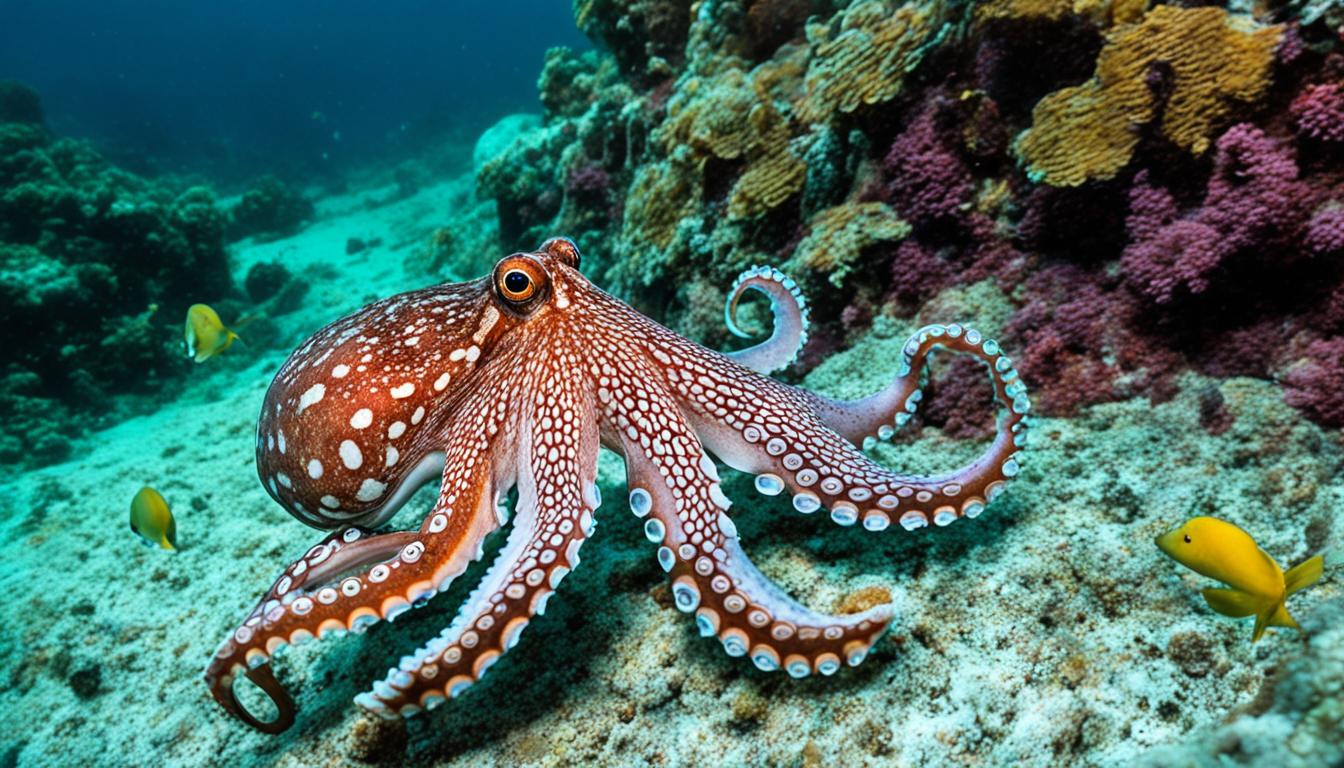
Many people wonder if octopuses are dangerous. It’s important to know about octopus safety and cephalopod safety if you’re near them. Most octopuses don’t want to be around humans and don’t see us as food. But, some can sting with venom that you should be careful about.
This article will tell you about their behavior, the risks, and how to stay safe around them. You’ll learn how to enjoy these amazing creatures without getting hurt.
Understanding Cephalopod Behavior
Octopuses are incredibly smart and have interesting ways of acting. They show a mix of curiosity and instinct in their underwater world. Knowing how they act is key to keeping both humans and octopuses safe.
The Mysterious Nature of Octopuses
Octopuses live in a world full of mystery. Their arms with suckers and strong beaks might look scary, but they’re mostly for catching food and defending themselves. They usually like to check things out rather than fight. You might see them looking at objects with curiosity, showing they’re smart and alert.
Curiosity Over Aggression
Are octopuses dangerous? Most times, they’re just curious when they meet a diver. If an octopus wraps its arms around you, it’s usually because it’s curious, not because it wants to harm you. They often let go once they realize you’re not a threat or not food. This shows the need to respect their space and understand they’re not dangerous. Being careful and aware helps when dealing with octopuses, leading to good experiences.
Are Octopuses Dangerous? Examining Species
Have you ever wondered if octopuses are dangerous? It’s important to know about the different types of octopuses to understand their risks. Most are harmless, but some have venom that can be dangerous. Let’s look at these species closely.
Non-Venomous Species
Many octopuses are not venomous and are safe around humans. The Giant Pacific Octopus and the Common Octopus are examples. They are usually calm and don’t pose a threat.
- Giant Pacific Octopus: Known for its size and gentle demeanor.
- Common Octopus: Exhibits curiosity rather than aggression.
Knowing about these non-venomous octopuses helps us appreciate them more. It also makes us less scared when we’re near the ocean.
Venomous Species and Their Risks
On the other hand, some octopuses can be dangerous because of their venom. The blue-ringed octopus is one of the most dangerous. It lives in the Pacific and Indian Oceans and can deliver a deadly venom.
- Blue-Ringed Octopus: Contains a venom that can lead to life-threatening consequences within minutes.
- Other Venomous Species: While not as deadly as the blue-ringed octopus, other venomous species still require caution.
It’s important to know about these dangerous octopuses. Bites are rare, but knowing the risks helps keep you safe.

| Octopus Species | Venomous | Risk Level |
|---|---|---|
| Giant Pacific Octopus | No | Low |
| Common Octopus | No | Low |
| Blue-Ringed Octopus | Yes | High |
Octopus Venom: What You Need to Know
It’s important to understand octopus venom to know about cephalopod behavior and the risks of meeting them. Knowing about their venom and its effects on humans helps avoid danger.
Types of Venom in Cephalopods
All cephalopods have venom, but not all are dangerous. The strength of octopus venom changes with each species. Here’s a look at some well-known octopus venoms:
| Species | Type of Venom | Effects on Prey |
|---|---|---|
| Blue-Ringed Octopus | Neurotoxin | Paralysis |
| Common Octopus | Digestive Enzymes | Breaks down prey tissues |
| Giant Pacific Octopus | Weak Neurotoxin | Mild pain and irritation |
Impact of Octopus Venom on Humans
Human encounters with octopuses can be risky, depending on the species. Most bites cause pain and swelling. Symptoms can include:
- Minor irritation
- Severe discomfort
- Nausea
- Fainting
Only a few documented fatalities have resulted from octopus venom, showing most encounters are not dangerous.
Knowing how to stay safe around octopuses can reduce risks. If you meet an octopus, understanding their behavior helps you act wisely. Keep a safe distance to avoid bites and their effects.
The Risks of Octopus Encounters
When you dive or snorkel in tropical waters, knowing the risks of octopus encounters is key to staying safe. Octopuses usually don’t attack humans, but it’s smart to be careful to avoid accidents. Learning about the octopus species in your area helps you spot dangers and stay safe.
Recognizing Potential Hazards
Knowing how octopuses behave can lower the risks of running into them. These creatures like to stay hidden and avoid people, but they can defend themselves if they feel threatened. Keep a safe distance and don’t touch or bother them to have a safe time.
Historical Incidents and Evidence
Old stories often show that octopuses aren’t as dangerous as people think. Most bites happen when people surprise or get too close to them. By looking into these stories, you learn how to meet octopuses safely. This knowledge helps you stay safe and respect these amazing sea creatures.
FAQ
Are octopuses dangerous to humans?
Most octopuses are not dangerous to humans. They usually avoid us and don’t see us as threats or food. But, some like the blue-ringed octopus have venom that can hurt.
What should I know about octopus safety?
Know which octopus species you might meet and keep your distance. Don’t touch them unless you’re trained. It’s important to respect their space to avoid getting hurt.
How can I identify venomous octopus species?
The blue-ringed octopus is very dangerous because of its strong venom. Learn about the octopuses in your area by using marine life guides.
What are the risks associated with octopus encounters?
Most times, octopus encounters are safe. But, if you accidentally upset an octopus, it could act out. Knowing how they behave and which ones you might meet can help you stay safe.
What should I do if I get bitten by an octopus?
If an octopus bites you, you might feel pain and swelling. Get medical help if the symptoms are bad or if you think it was a venomous octopus.
Do all octopus species have venom?
Yes, all octopuses have venom. But, how strong it is can vary a lot. Some are harmless to humans, while others can be deadly.
How should I handle encounters with octopuses while diving?
Keep a safe distance from octopuses and don’t move suddenly. Don’t try to touch or bother them. Watching them can teach you about their curious and non-aggressive nature.
Are all bites from octopuses fatal?
No, octopus bites are rarely fatal. They usually just cause pain and swelling. Knowing about the octopus species in your area can help you avoid risks.
What historical incidents should I be aware of regarding octopus encounters?
Old stories often show how rare it is to have a dangerous octopus encounter. They stress the need to understand octopus behavior and where they live. These stories can help you stay safe in the water.