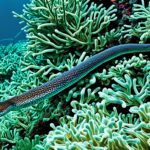
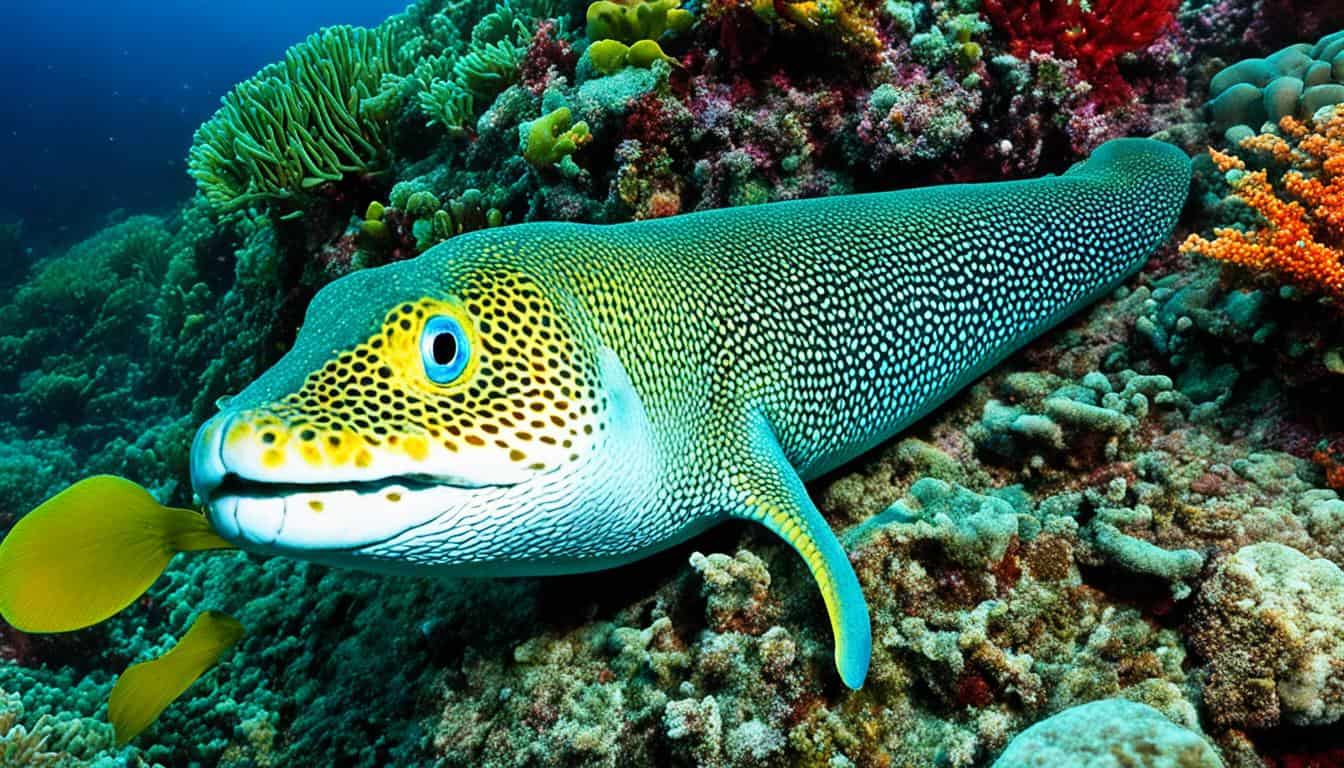
When you dive into the ocean, you might see the interesting moray eel, like the green moray eel (Gymnothorax funebris). These creatures are not endangered yet, but they face threats that could affect their survival. The current status of moray eel conservation shows they are listed as “Least Concern” on the IUCN Red List. However, they deal with issues like habitat damage, climate change, and overfishing.
So, are moray eels endangered? They are not at risk of extinction now, but we need to keep an eye on them. It’s crucial to support conservation efforts to protect these incredible animals for the future.
Introduction to Moray Eels
Moray eels are a fascinating part of marine life. They are known for their snake-like appearance and big dorsal fins. These fish live in many places around the world, especially in coral reefs and rocky areas in warm waters.
You might see different moray eel types like the green moray, blacktail moray, and spotted moray. Each one has its own special features.
Moray eels have bright colors that help them hide and talk to each other. Their long, thin bodies let them move easily in small spaces. They are great hunters and also food for bigger sea creatures.
Moray eels play a big part in keeping the ocean healthy. They help control the number of smaller fish and invertebrates. This keeps the ocean balanced and supports many other sea creatures.
In short, moray eels are known for their unique looks and important roles in the ocean. Learning more about their conservation and the challenges they face will show you why we need to protect their homes.
Are Moray Eels Endangered?
Not all moray eels are endangered, but their conservation status varies. Most are listed as “Least Concern” by the International Union for Conservation of Nature (IUCN). Yet, some species face threats that put them at risk. This shows why we need to focus on protecting these fascinating sea creatures.
Current Conservation Status of Moray Eels
Many moray eels have stable populations because they are not a main target in fishing. But, some species face threats in certain areas. Knowing which moray eels are endangered helps us make better conservation plans.
Global Distribution of Moray Eels
Moray eels live in warm and tropical waters around the world. They call places like rocky reefs, mangroves, and seagrass beds home. You can find them from the Caribbean and Gulf of Mexico to Southern Brazil. They live in both the Atlantic and Pacific Oceans, showing how well they adapt to different environments.
| Region | Common Species | Status |
|---|---|---|
| Caribbean | Green Moray | Least Concern |
| Gulf of Mexico | Bandtail Moray | Least Concern |
| Southern Brazil | Endangered Moray | Endangered |
| Pacific Ocean | Pacific Moray | Least Concern |
Moray Eel Species and Their Habitats
Exploring the world of moray eels shows us how they adapt to their homes. These eels live in oceans all over the globe. Each type has special traits that help them survive in their chosen environments.
Overview of Common Moray Eel Species
Some well-known moray eels include the green moray, blacktail moray, and spotted moray. Each one has its own unique features that shape its behavior.
- Green Moray: This eel is known for its bright colors. It lives in coral reefs, where its color helps it sneak up on prey.
- Blacktail Moray: Found in rocky areas, this eel hides in crevices. It uses these spots to surprise its prey.
- Spotted Moray: With its distinct patterns, this eel likes warm waters. It’s often seen in shallow bays.
Typical Habitats of Moray Eels
Moray eels live in shallow waters, usually less than 100 feet deep. They prefer places with lots of nooks and crannies. These spots help them hide from predators and sneak up on prey.
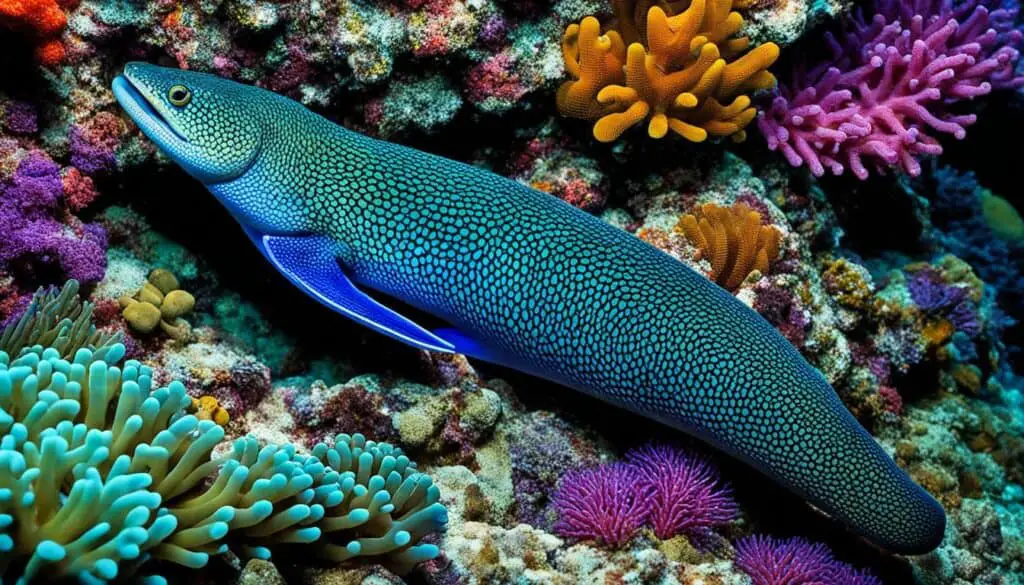
These environments let moray eels catch fish, crabs, and cephalopods. It shows how important complex marine habitats are for their survival.
Threats to Moray Eels
Moray eels face many threats that need our attention. These threats come from changes in the environment, human actions, and overfishing. These issues harm their numbers and where they live.
Climate Change and Its Impact
Climate change is a big threat to moray eels. It changes their ocean homes in bad ways. Rising sea temperatures, coral bleaching, and ocean acidification hurt their food and shelter spots.
This makes it hard for moray eels to survive. Their homes are not safe anymore.
Habitat Destruction and Pollution
Destroying their homes is a big problem for moray eels. Things like coastal development, pollution, and bad fishing hurt their places to live. Pollutants like plastics and chemicals are harmful to them and their food.
This damage to their homes makes it tough for moray eels to live well. It upsets the balance in the ocean.
Overfishing and Bycatch Issues
Moray eels are not usually caught on purpose, but they get caught by accident. This happens when fishermen catch other fish that moray eels eat. When these fish disappear, moray eels don’t have enough to eat.
Getting caught in fishing gear also hurts moray eel numbers. This can lead to a big drop in their population. It makes them even more vulnerable.
| Threat | Description | Impact on Moray Eels |
|---|---|---|
| Climate Change | Rising ocean temperatures and coral bleaching | Alters habitats, reduces food availability |
| Habitat Destruction | Coastal development and pollution | Destroys natural habitats, health risks |
| Overfishing | Depletion of prey species | Leads to food shortages |
| Bycatch Issues | Unintentional capture in fishing gear | Can lead to population declines |
Moray Eel Population Decline
Keeping an eye on moray eel numbers is crucial as we see declines in many places. Even though they’re not yet endangered, we must understand why they’re going down. This helps us stop big problems before they start. We need to focus on saving these eels.
Related Cases and Research Findings
Studies now show that habitat loss and environmental changes hurt moray eel numbers. These issues deeply affect their homes and health. We’re learning more about how to help these eels by studying their habitats and populations.
Factors Contributing to Population Declines
Climate change, pollution, and invasive species are all hurting moray eel populations. These problems make it hard for eels to survive. We must protect their homes to help them thrive. By tackling these issues, we can ensure a future for these eels.
FAQ
Are moray eels endangered?
Moray eels, including the green moray eel, are not endangered. The IUCN lists them as “Least Concern.” This means they are not at risk of extinction right now.
What is the conservation status of moray eels?
Moray eels are mostly “Least Concern,” meaning their populations are stable. But, some species might face threats in specific areas.
What are the common species of moray eels?
Common moray eels include the green moray (Gymnothorax funebris), blacktail moray (Gymnothorax kolpos), and spotted moray (Gymnothorax moringa). Each lives in different marine environments.
Where do moray eels typically live?
Moray eels live in tropical and subtropical waters. They prefer rocky coral reefs, mangroves, and seagrass beds. They usually stay in shallow waters less than 100 feet deep.
What are the main threats to moray eels?
Moray eels face threats like climate change, habitat destruction, pollution, and overfishing. These issues come from commercial fisheries and bycatch.
How does climate change affect moray eels?
Climate change changes moray eels’ habitats through ocean acidification, temperature changes, and coral bleaching. These changes can affect their food and living conditions.
What role do moray eels play in their ecosystem?
Moray eels are important as both predators and prey in marine ecosystems. They help maintain biodiversity and balance in their habitats.
What are conservation efforts for moray eels?
Conservation efforts include restoring habitats, controlling pollution, and promoting responsible fishing. These actions help protect moray eels from overfishing and environmental damage.
Are there any tropical moray eel species that are endangered?
While most moray eels are not endangered, some local species may be at risk. This shows why it’s crucial to keep an eye on their conservation status.